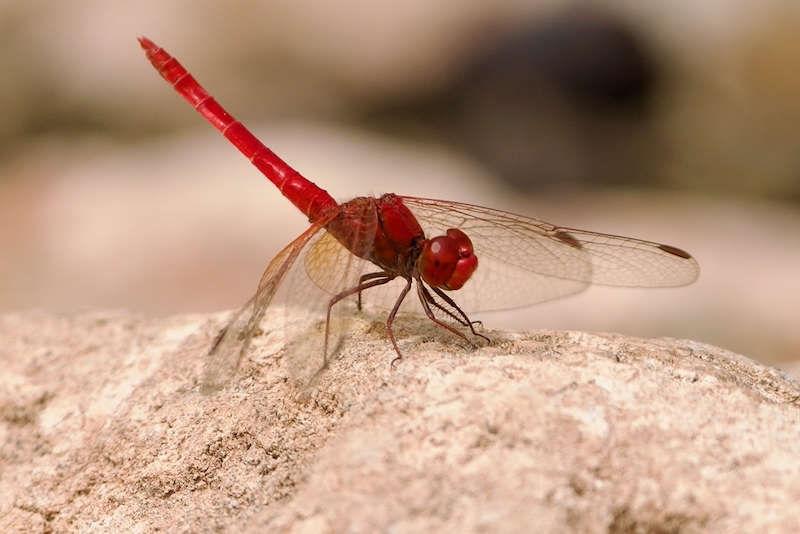
Dragonflies and Damselflies

Both Dragonflies and Damselflies are superb hunting carnivores. A common sight around dams and springs throughout the Flinders Ranges, nymph (juvenile) casings are located at the lower parts of trees and shrubs, or rocks, near the water’s edge. The transition between nymph and adult occurs during the night, with the new adult emerging with a soft, pale exoskeleton which hardens and brightens into the full complement of striking colours by sunrise.
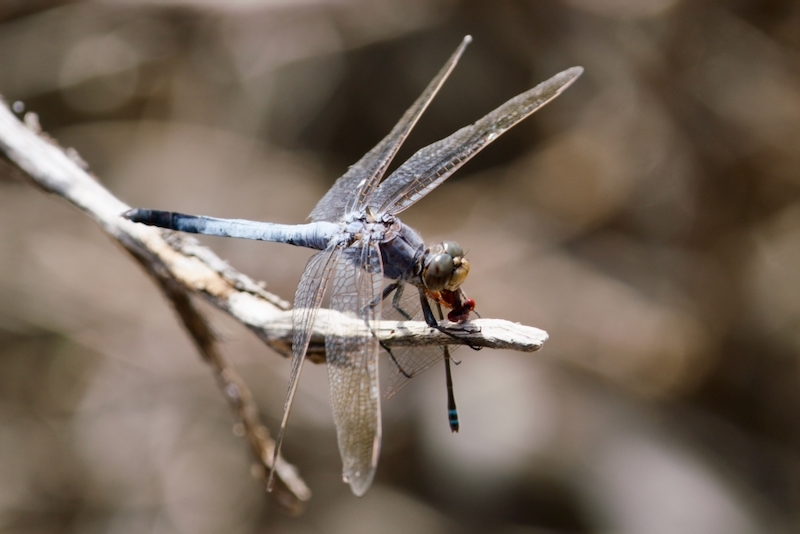
Blue Skimmer Dragonfly (Orthetrum caledonicum) eating a Damselfy
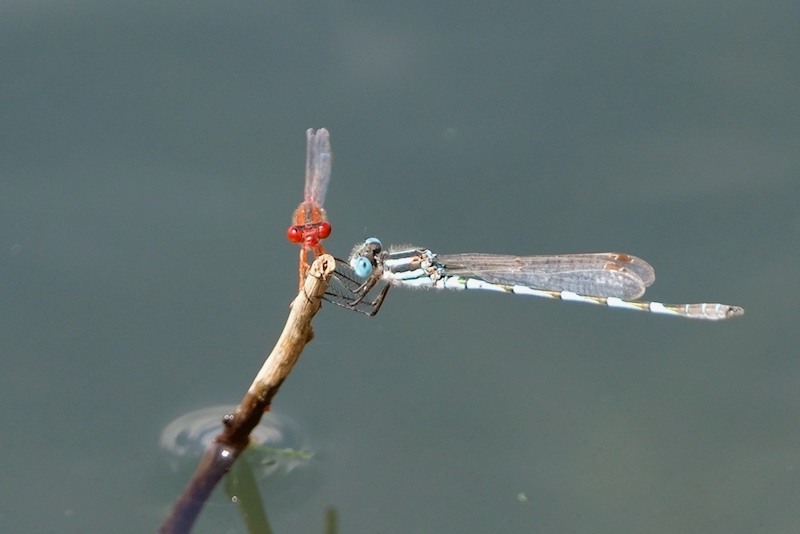
Red-blue Damselfly (Xanthagrion erythroneurum) and Wandering Ringtail Damselfly (Austrolestes leda)
Scarlet Percher Dragonfly (Diplacodes heamatodes)
Red-blue Damselflies (Xanthagrion erythroneurum) mating
Red-blue Damselfly (Xanthagrion erythroneurum)
Wandering Ringtail Damselfly (Austrolestes leda)
Blue Skimmer Dragonfly (Orthetrum caledonicum)
Scarlet Percher Dragonfly (Diplacodes heamatodes)