
Rainbow Bee-eater at Copley in the Flinders Ranges.


Rainbow Bee-eater at Copley in the Flinders Ranges.

The male breeding Variegated Fairy-Wren, seen in the scrub surrounding Copley, is distinguished by a black breast, purple-tinged mantle, and ear tufts that are always lighter in colour than the cap. The non breeding male is a similar colour to female with a black bill.
Continue reading “Variegated Fairy-Wren: Copley”
Common Bronzewing pigeon, Copley, northern Flinders Ranges, in October.

A solitary Black-tailed Native-hen at Copley, northern Flinders Ranges in October.


At Copley Retention Dam in the northern Flinders Ranges, the indigenous Musk Duck (Biziura lobata) can be observed in its natural habitat. Males are larger than females and feature a distinctive fleshy lobe beneath their bill. Known for a unique musk scent emitted from a gland near their rump, these ducks are powerful divers that forage for aquatic animals beneath the water’s surface.


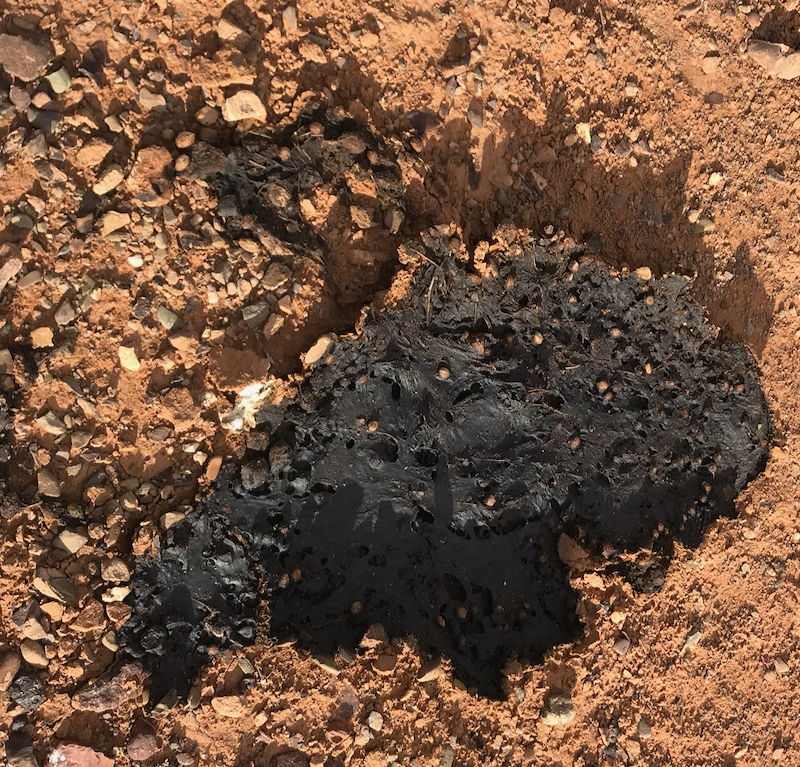
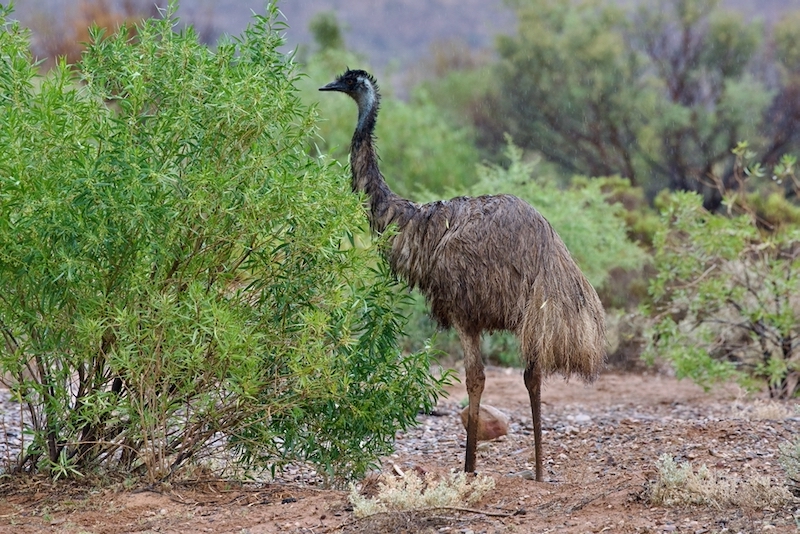
The diverse Emu diet includes the seeds of a wide range of plants in the Flinders Ranges including Sandalwood, Quandong, Nitrebush, Eremophilas, Myoporum and Ruby Saltbush. Emus carry seeds in their gut from 3 hours to 10 months (depending on the type of seed) and can walk 13.5 km daily, making them significant agents of seed dispersal.
The Sharp-tailed Sandpiper (Calidris acuminata) is a migratory shorebird that breeds in the Siberian tundra and spends the non-breeding season across Australia, inhabiting both freshwater and saline inland wetlands as well as coastal tidal flats. This couple were seen at Copley Retention Dam in October.


