
5cm weevil (Leptopius gravis), also known as a Wattle Pig or Elephant Weevil, Beltana.
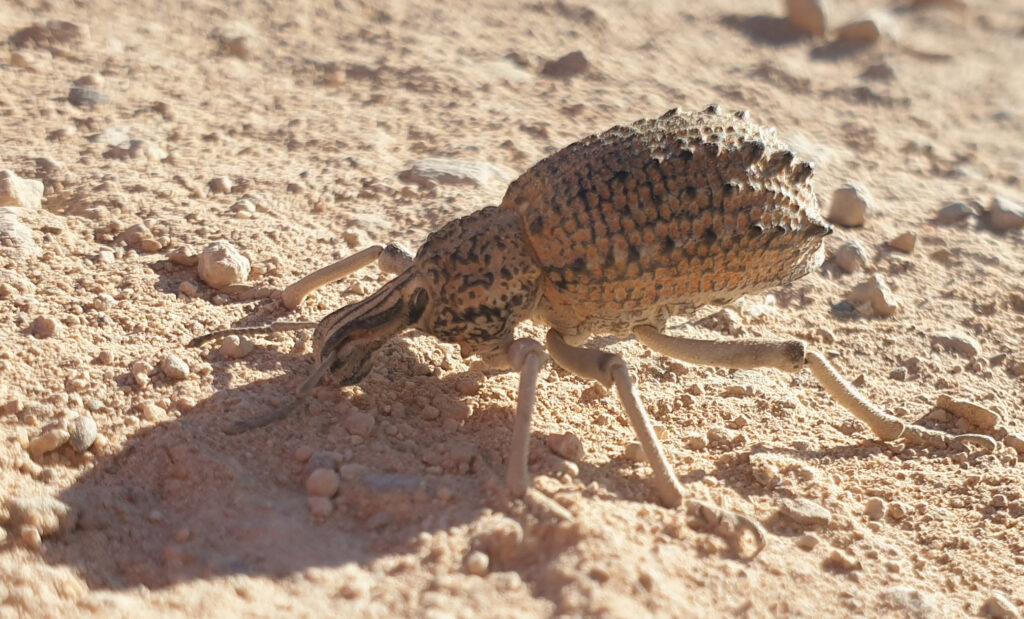
5cm weevil (Leptopius gravis), also known as a Wattle Pig or Elephant Weevil, Beltana.
The Golden Orb-weaving Spider (Nephila edulis) produces a high tensile, highly elastic golden silk strong enough to ensnare small bats and birds. Not only is the silk being used traditionally as fishing line in New Guinea and Vanuatu, Australian Geographic tells us that “there are high hopes for bulletproof vests, as well as violin strings, tennis rackets, nets, textiles and surgical products”.

Spider-hunting Scorpion found in Australia’s arid inland, hunting Trapdoor Spiders by night and taking refuge in the burrows of their prey by day. 3-5cm.

Iridomyrmex ants in a frenzy over a still-moving tail of a large gecko.


Blistered Grasshoppers, also known as Inland Painted Grasshoppers or Blistered Pyrgomorphs (Monistria pustulifera) seen near Beltana in March.


Newly hatched Stink Bug nymphs with their eggs, at Mt Lyndhurst. A gallery of the many Stink Bugs of South Australia can be seen at iNaturalist.
The Convolvulus Hawk Moth larvae pupate underground. The distinct spiralled form is due to the proboscis of the pupa not fusing to the body.

Praying Mantis nymphs under observation by junior field naturalists at Mt Lyndhurst. These day old nymphs look like adult mantids but have no wings or reproductive organs. The egg sac, or ootheca, is 3cm long and the nymphs are approximately 1cm. If the nymphs are not separated soon, they may start cannibalising each other in their second instar.
About 10cm long, this is the caterpillar of an Owlet Moth (family Erebidae). It is feeding on a Broughton Willow in early March. A number of different erebid genera feed on Acacia in the Flinders Ranges, but few have been reared in order to associate the moth species involved. The white eggs on the body behind the head are the eggs of parasites.


The butterfly breeding project in the Leigh Creek School Community Library has branched into the wonderful world of Hawk-moths. These fat babies feed vigourously on local Boerhavia groundcovers and daily donations sweet potato vines, growing up to 12cm.


