Xanthorrhoea covering the top of one of the striking Pinnacle outcrops of Arkaroola’s Mawson Valley.

Xanthorrhoea covering the top of one of the striking Pinnacle outcrops of Arkaroola’s Mawson Valley.
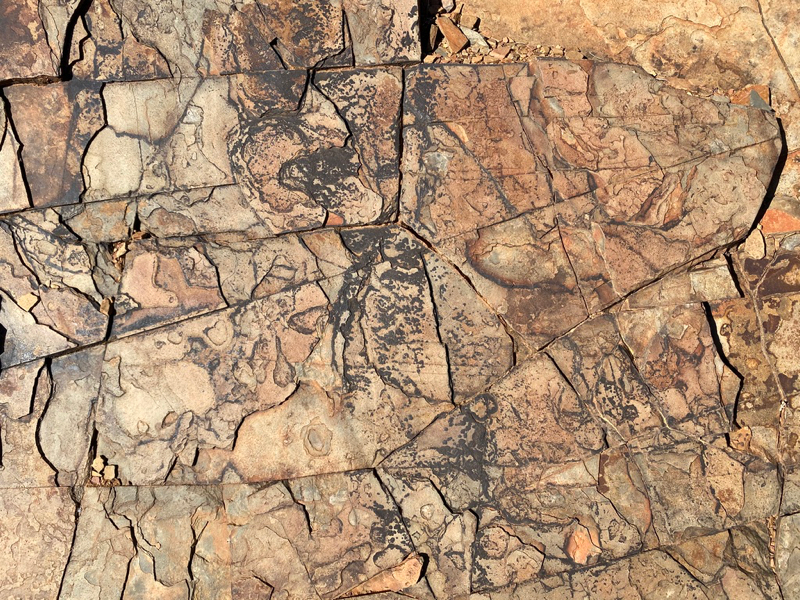
Dark glacial tillite formation in Illawortina Creek along the Four Mile Track between Idninha and Arkaroola. The glacial geology of this area is outlined in The Legacy of Time: The Formation of the Flinders Ranges.


For more information on how to locate this site, see Geological Field Excursion Guides.


The base of the Ediacaran Period is defined by a Global Stratotype Section and Point (GSSP) marked by the Golden Spike in the Elatina Formation in Brachina Gorge. The lower dimictite glacial formation attributed to Snowball Earth is overlaid by the Nuccaleena Formation – a cap carbonate formed in shallow warm waters – displaying a distinct shift in climate that gave rise to Ediacaran biota, preserved in the fossil record of the Flinders Ranges.

A sunrise view to the east from the top of Mt Chambers, Flinders Ranges. The white salt of Lake From can be seen on the horizon.

Spectacular spring fed Moro Gorge at Nantawarrina Indigenous Protected Area in the Gammon Ranges.


These brittle 5-10mm calcium carbonate deposits in Warraweena Conservation Park are found in an overhang in a quartzite gorge.

Quartzite outcrop of the Black Range, Warraweena Conservation Park