
Native succulent Sarcostema viminale ssp astrale also known as Caustic Bush, Milk Bush, Caustic Plant, Lye Bush, Snake Plant, Pencil Caustic, Milk Vine, flowering in Copley in June.

Native succulent Sarcostema viminale ssp astrale also known as Caustic Bush, Milk Bush, Caustic Plant, Lye Bush, Snake Plant, Pencil Caustic, Milk Vine, flowering in Copley in June.
Arabidella trisecta, or Shrubby Cress, flowering in Glass Gorge, Northern Flinders Ranges in June.

Eremophila glabra, commonly known as Tar Bush, at the end of flowering in the Northern Flinders Ranges.

Also known as the Clustered Sea-heath or Bristly Sea-heath, Frankenia serpyllifolia flowering in the sandy clays near Lyndhurst.

Castor oil plant (Ricinus communis) is an introduced species historically cultivated for its oil which is used in food, medicine, industry and, some would argue, as a way of torturing children. Escaping from gardens, it can be seen in some waterways in the Flinders Ranges. Following floods, this stand south of Parachilna is growing up to 4 metres tall.
While flowers lack petals, female flowers have showy red stigmas and male flowers have numerous creamy yellow stamens. Flowering here in March.


Also known as Darling Lily, Andamooka Lily and Flaccid Lily, Crinum flaccidum is a native perennial lily growing from a bulb. Commonly growing in alluvial soils, flood plains and in sand surrounding salt lakes, this spread of Desert Lilies was seen near Stirling North in the Flinders Ranges in Feburary after heavy rains.
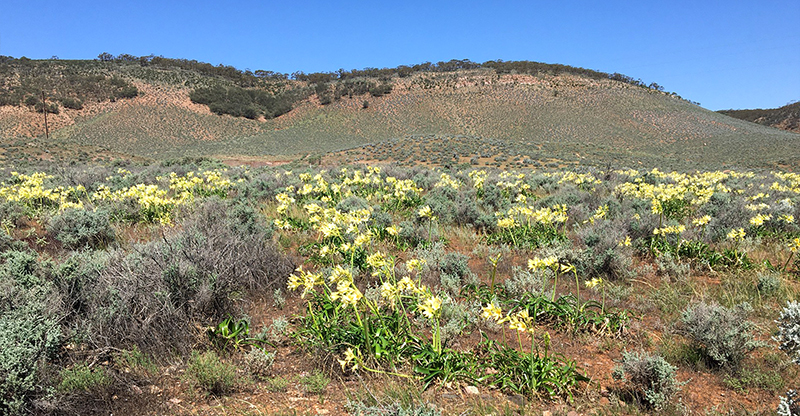
Further Desert Lilies were seen on the same day on the rocky slopes of Pichi Richi Pass, south of Quorn in the Flinders Ranges.

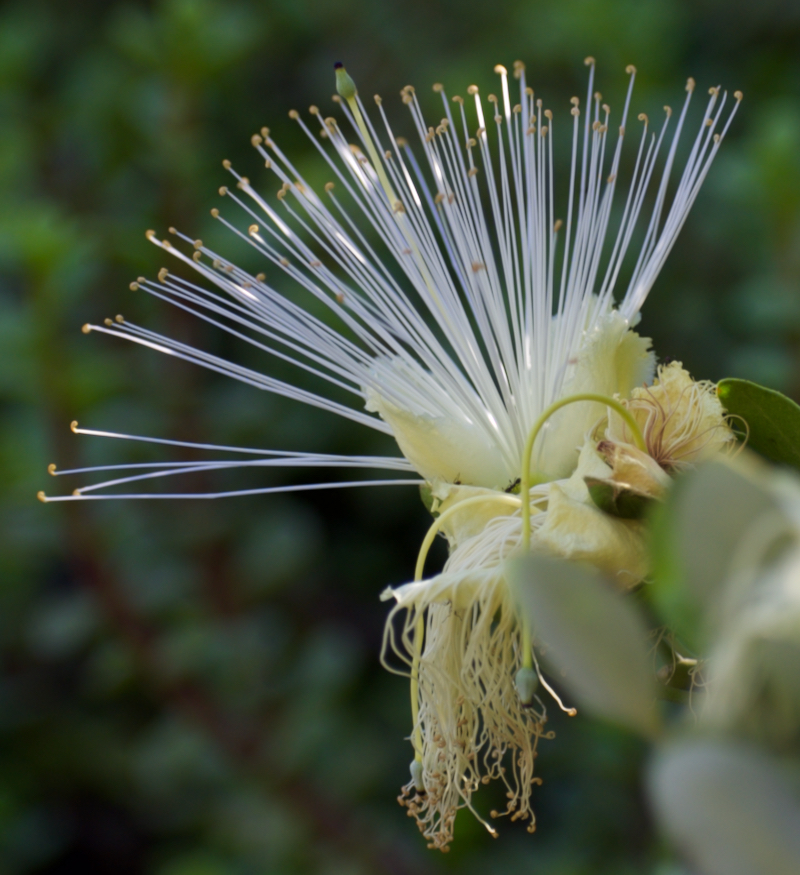
The Iga tree (Capparis Mitchellii) is seen flowering in the northern Flinders Ranges and Gammon Ranges in summer. The Iga a food source for the White Caper Butterfly larvae.
A member of the Capparaceae family, the flowers are among the largest and showiest seen in the area. Budding is profuse and staggered through the flowering season.
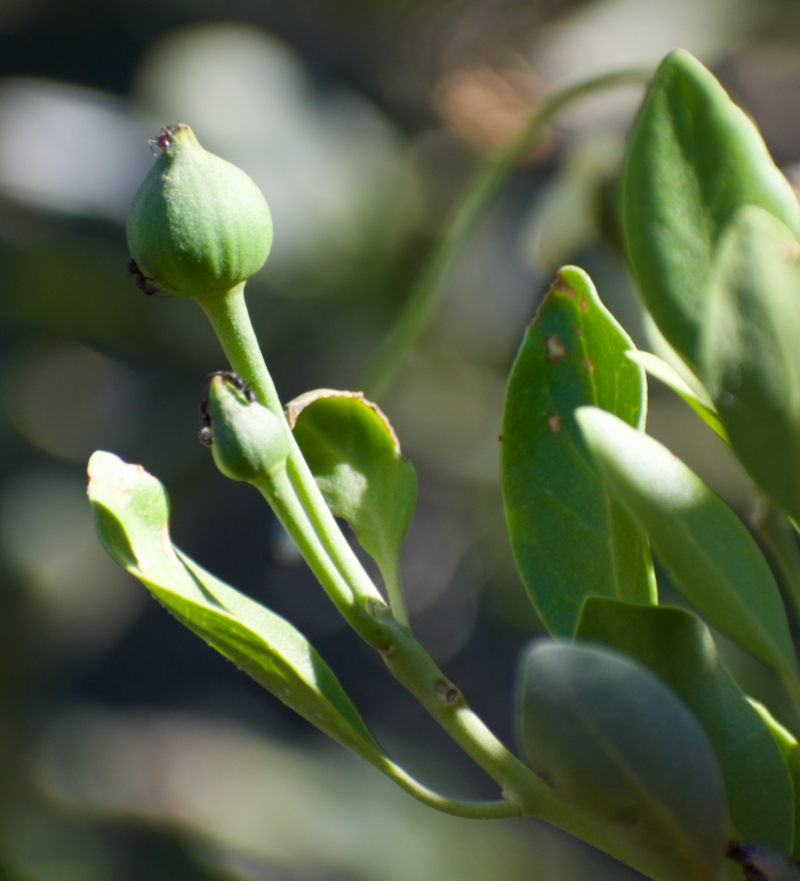
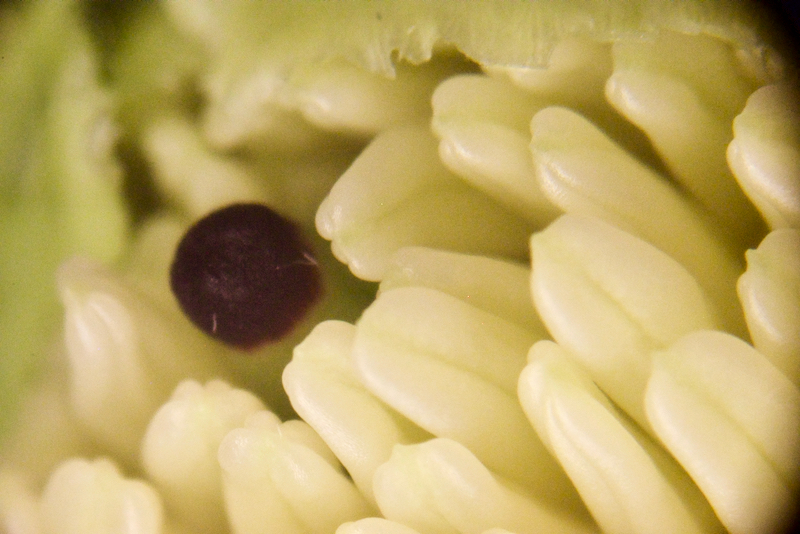
Stamens (male) and stigma (female) developing in the bud (magnification 20x).
A stigma emerges from an opening bud.
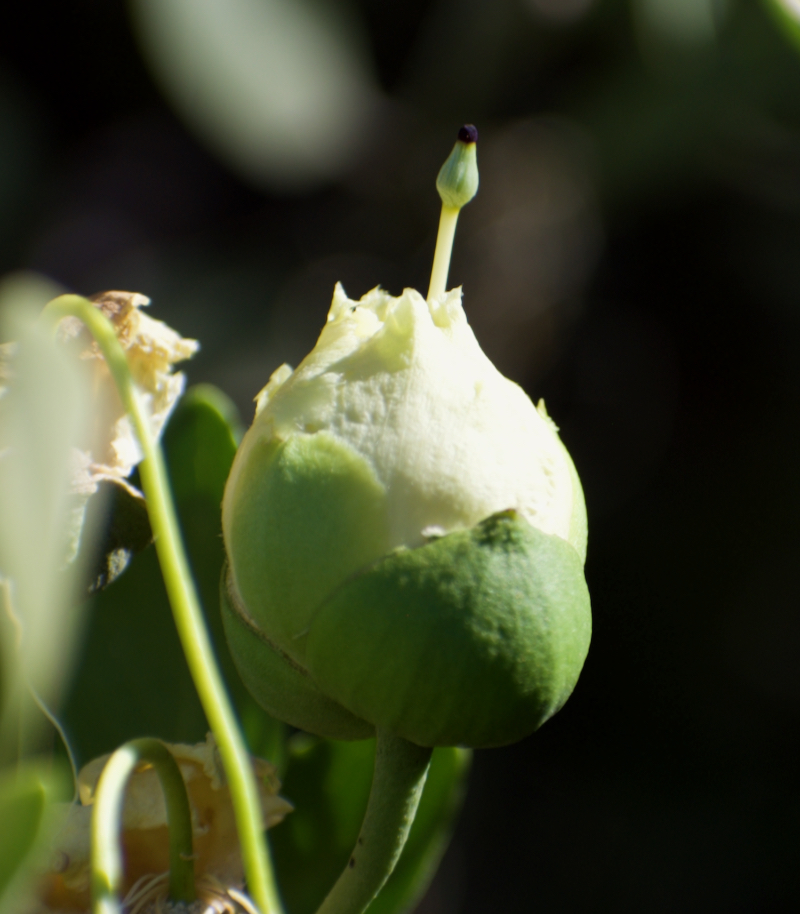
Petals open to a dazzling array of stamens (approximately 50mm long) with the stigma held high, holding their form for sometimes only a single day in the summer heat.
Stemodia florulenta, also known as Bluerod, belongs to the Plaintain family, seen here flowering across the saline edges of Copley Retention Dam in December.


Glischrocaryon flavescens, Yellow Pennants, is an upright perennial flowering and fruiting in Wilpena Pound in December.

Pimelea petrophila, the Rock Riceflower flowering in Wilpena Pound in December.
