
Spiked Mallow (Malvastrum americanum) is an introduced perennial forb seen in clay soils throughout the Flinders Ranges. Large stands such as this one in Copley occur after rains.
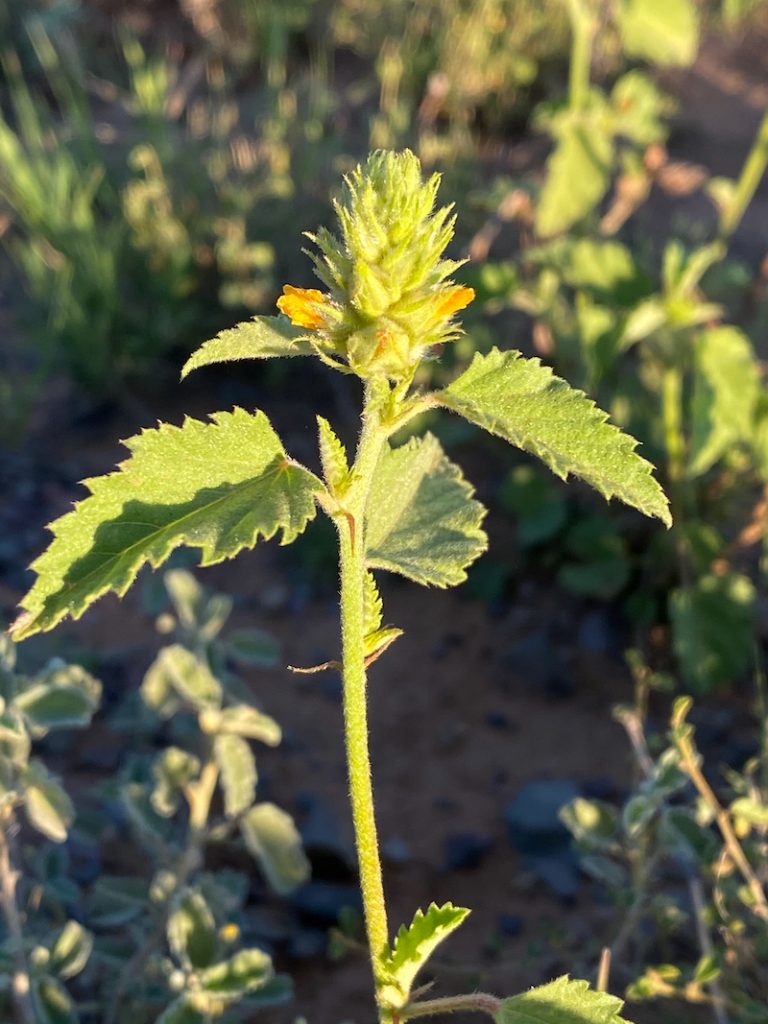
Spiked Mallow (Malvastrum americanum) is an introduced perennial forb seen in clay soils throughout the Flinders Ranges. Large stands such as this one in Copley occur after rains.
Statice (Limonium lobatum, Winged Sea Lavender) is an introduced species of growing concern, flowering here near Hawker in November.

The edible Salty Ice Plant, Mesembryanthemum crystallinum, flowering in Beltana in Spring.

A thriving Senecio magnificus, also known as Showy Groundsel or Perennial Yellow-top, extending into the branches of an Acacia Victoriae.


Harlequin Mistletoe (Lysiana exocarpi) is a stem parasite seen throughout the Flinders Ranges. The sticky seeds are deposited on branches by the Mistletoe Bird and other small birds, where they germinate and attach to the sap wood of the host plant, in this case Acacia Victoriae.

Abutilon halophilum, the Desert Chinese-lantern flowering on the rocky surrounds of Copley Retention Dam, May.


Wild Tobacco flowering on the banks of Copley Retention Dam, May.


The Senna family, known commonly as Cassias, typically begin to flower in late winter, setting off the spring flowering in the Flinders Ranges. This year Limestone Cassias (Senna artemisioides subsp. oligophylla) at Aroona Dam Sanctuary are flowering in mid-February.


