A tufa formation precipitated from calcium rich artesian hot springs can be seen at Muloorina, Lake Eyre South.


A tufa formation precipitated from calcium rich artesian hot springs can be seen at Muloorina, Lake Eyre South.
Flourescent minerals found in the vicinity of a Zinc mine, Puttapa area, Flinders Ranges. Under a long wave UV light, Willemite appears yellow, and Manganocalcite appears red.


The progression of iron oxide (goethite) concretions that have formed due to nucleation around small cracks in siltstone and shale. From the Copley area, northern Flinders Ranges.

Download PDF:
Published by the Geological Society of Australia, South Australian Division.
Excerpt:
One of the best records in the world of sedimentary deposition in the period of geological time between about 800 million and 500 million years ago is exposed in the Flinders Ranges, Mount Lofty Ranges and the Olary region in South Australia. Sandy and silty sediments derived from erosion of older rocks of the Gawler Craton in the hinterland to the west, and island masses of this basement rock rising from an undersea ridge over 200 km to the east, were deposited into an extensive marine basin called the Adelaide Geosyncline in which the seafloor was slowly subsiding along a series of elongated north-south step or graben faults.
During the 300 million years of continuing but intermittent subsidence of the basin floor, a thick pile of sediment accumulated in the geosyncline. This sequence was then compressed and hardened by deep burial and later folded into a high mountain range by a new regime of earth movements.
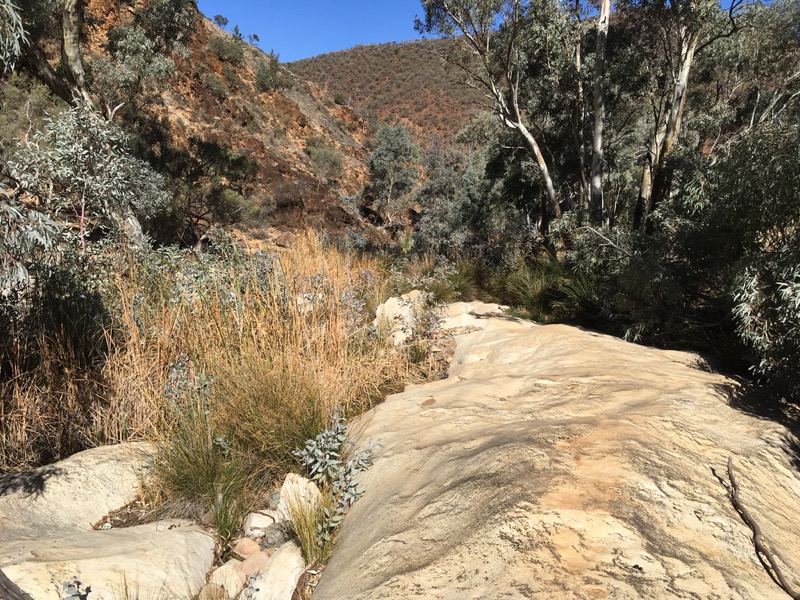
Subsequent erosion has reduced these highlands to their present form and deposited huge amounts of sediment to the east into younger sedimentary basins formed by later crustal down warping. Continue reading “Brachina Gorge Geological Trail”
Step 1. Grind up mineral-rich rocks found in the area, including Hematite, Galena and earthy Malachite and Azurite.


Step 2. Smelting. To smelt iron oxide, charcoal was used to covert the oxygen into carbon dioxide, leaving iron. To smelt galena, lead sulphide, heat alone released the sulphur, leaving lead (seen below).



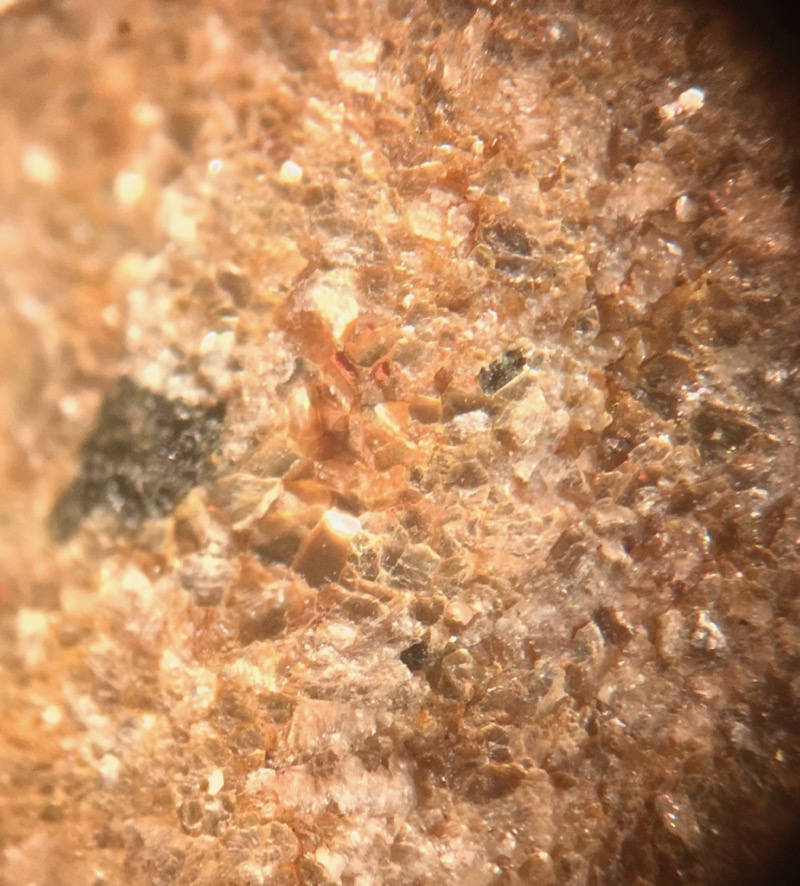
Magnification 40x.