
Reflections of Barraranna Gorge in the waterhole, replenished by floods. See the Flinders Ranges Walks app for a guided 7km walk in Barraranna Gorge.
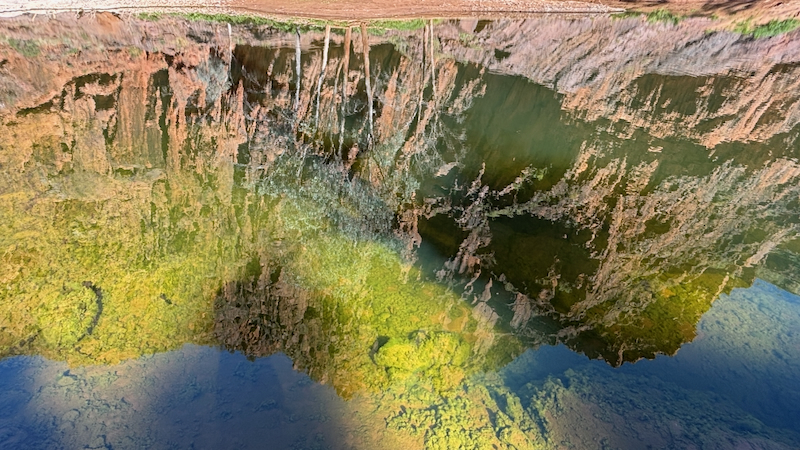
Reflections of Barraranna Gorge in the waterhole, replenished by floods. See the Flinders Ranges Walks app for a guided 7km walk in Barraranna Gorge.
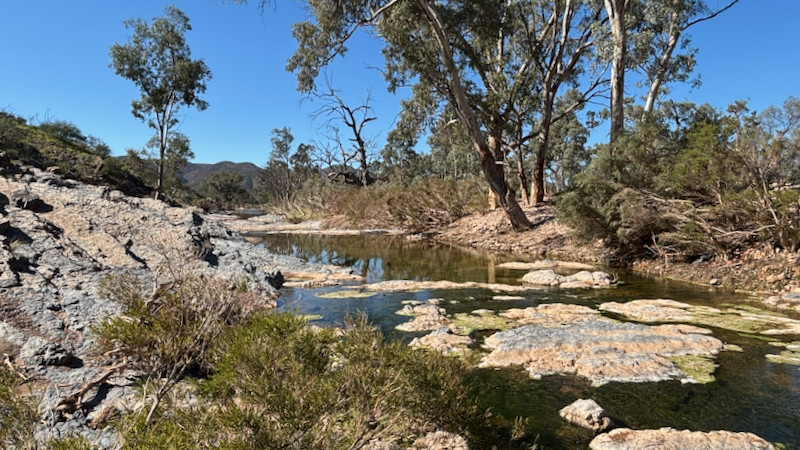
Waters continue to flow at Tillite Gorge, Arkaroola, in early winter after late summer floods.
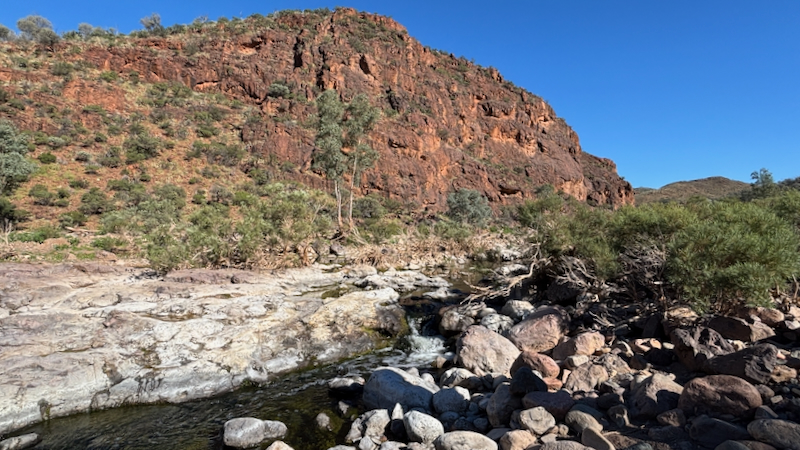
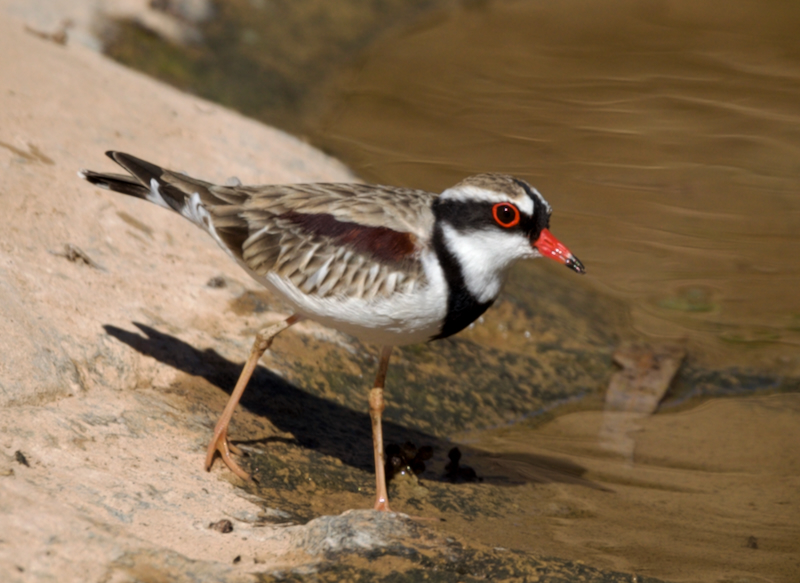
After years of drought, shorebird Eleyornus melanops, the Black-fronted Dotterel made an appearance in Vulkathunha National Park in the northern Flinders Ranges. Sighted here at John Crossing, a spring that has been flowing since recent flooding rains.
This localised calcium carbonate Boxwork on the Copley commons was formed by mineral rich spring water permeating fractures in the sedimentary formation. The minerals transported by water formed a harder wearing substance than the surrounding clay, and gully erosion has exposed the honeycomb Boxwork.


Algae and cyanobacterial colonies growing in the hot springs of Muloorina, east of Marree, resemble those found in Paralana Hot Springs at Arkaroola.


Moro Gorge is a cascading series of spring-fed waterholes located in the Nantawarrina Indigenous Protected Area in the northern Flinders Ranges. The surrounding limestone walls appear to have precipitated from mineral-rich spring water, forming tufa columns and flowstone. Calcrete is also present in the area—a type of limestone conglomerate consisting of pebbles bound within a calcium carbonate matrix.


Putrefaction of a frog’s body, suspended on an algal mat in a shallow spring.

While weathering and seasonal rains can cause waterholes at to silt up, Paralana Hot Springs continue to flow as a shallow stream. Sourced from within a fault zone, the water is around 60 degrees and emits gases such as radon which is heavier than air and hovers around the creek area on still days. A wonderful array of Cyanobacteria, Proteobacteria and algae thrive in the Paralana Hot Springs.


While often little more than shallow pools or soaks, springs are essential for life in the arid Flinders Ranges. When combined with a flushing rain, creeks throughout the Flinders Ranges can house pristine waterholes supporting a wide range of wildlife, including frogs.


Crinia flindersensis (Northern Flinders Ranges Froglet, Flinders Springs Froglet) is a vulnerable species seen here in spring waters. With long toes and fingers, markings are typically bars and stripes across the body and limbs with some variations as seen below.

