Male Emu with chicks in the plains of Hawker, Flinders Ranges, in November.

Male Emu with chicks in the plains of Hawker, Flinders Ranges, in November.
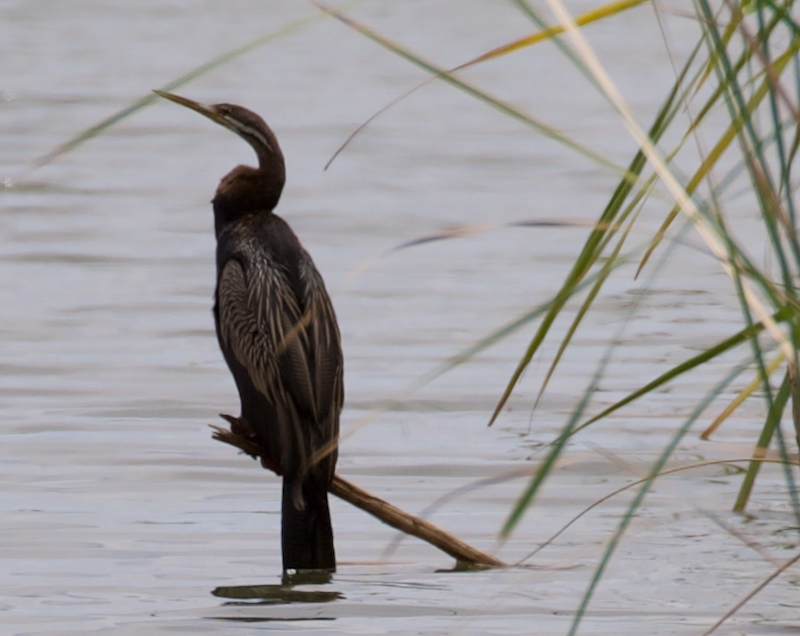
Australasian Darter (Anhinga novaehollandiae) at artesian wetland on Muloorina Station, east of Marree, in November.
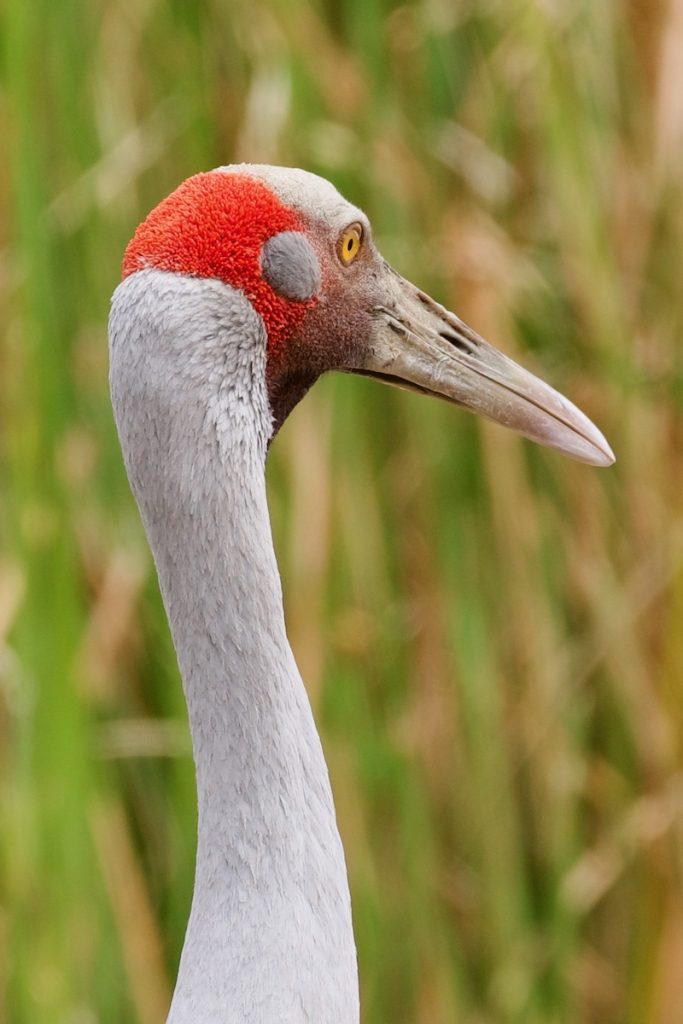
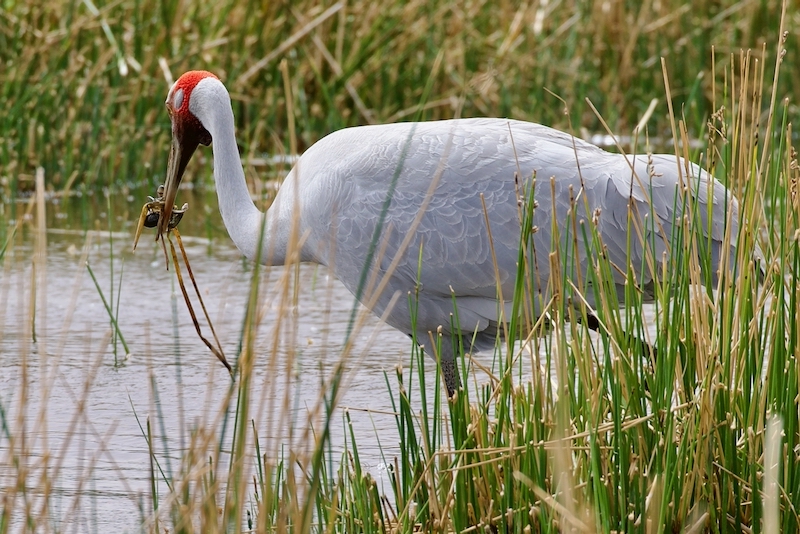
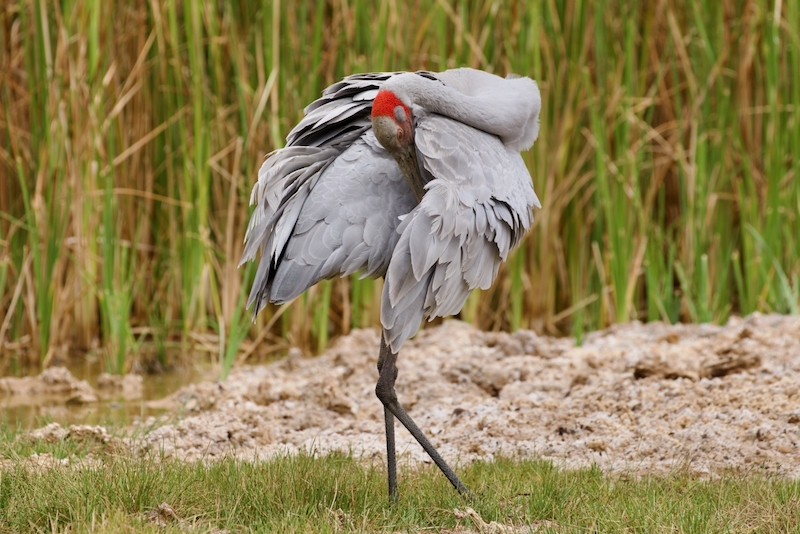
Australia’s largest water bird, Antigone rubicunda, the Brolga, inhabits the tropical regions of northern Australia, the inland wetlands of the Great Artesian Basin and the Murray Darling Basin. It feeds on plant matter, invertebrates and small vertibrates in freshwater and saltwater environments. Seen at the hydrothermal wetlands on Mulooorina Station east of Marree, in November.
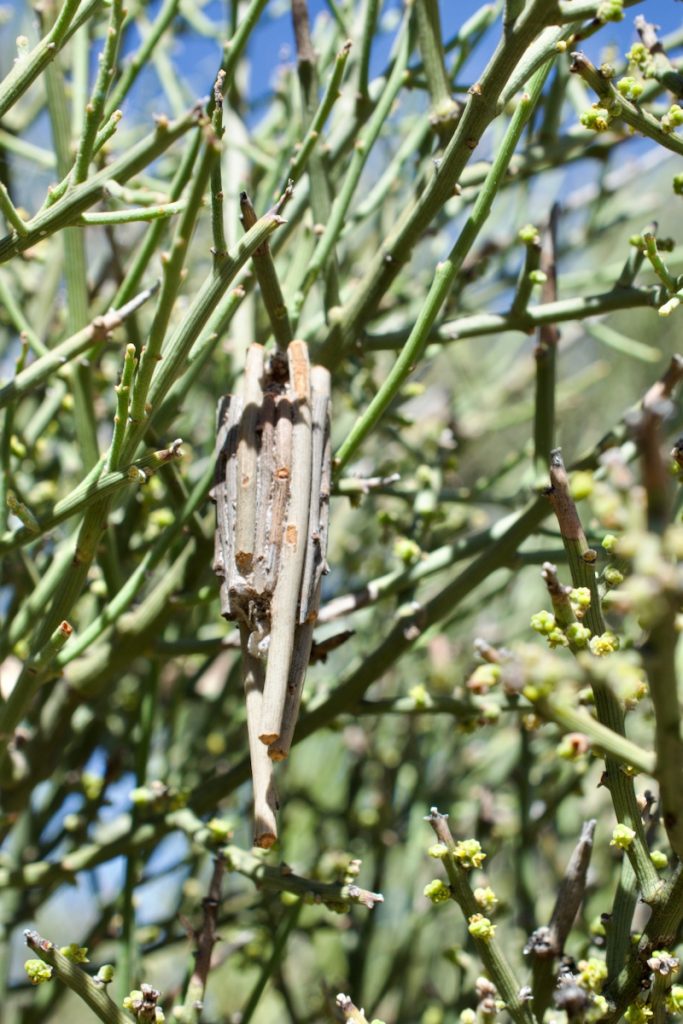
Case Moth larvae on Jointed Cherry, Exocarpus aphyllus, at Copley, in November.
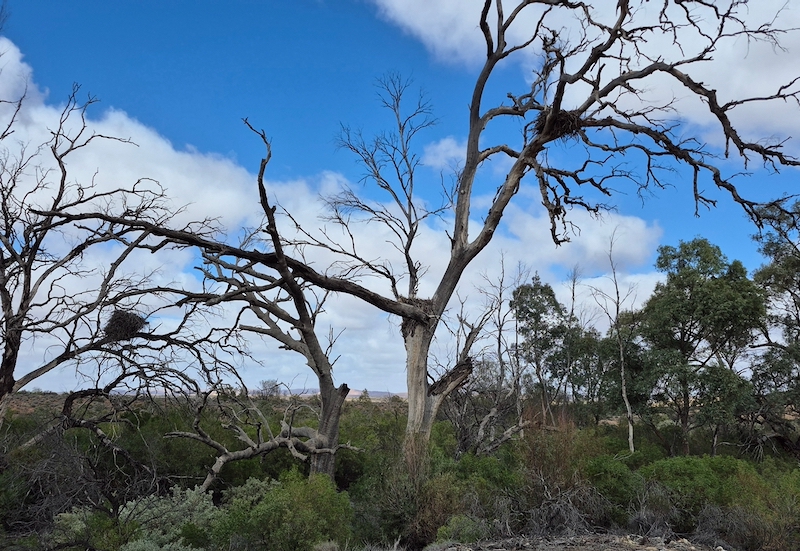
Huge Wedge-tail Eagle nest, approximately one meter in diameter, in a Casuarina tree, Copley.
Three Wedge-tail Eagle nests in a dead Eucalypt tree.
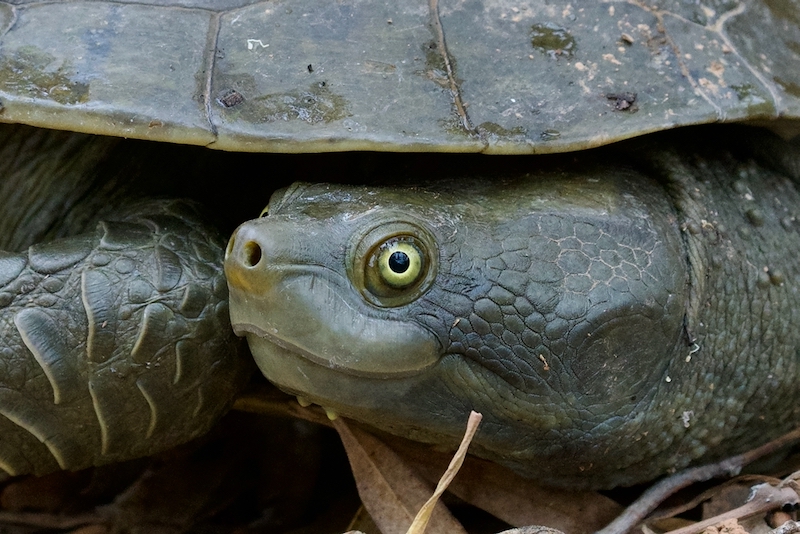
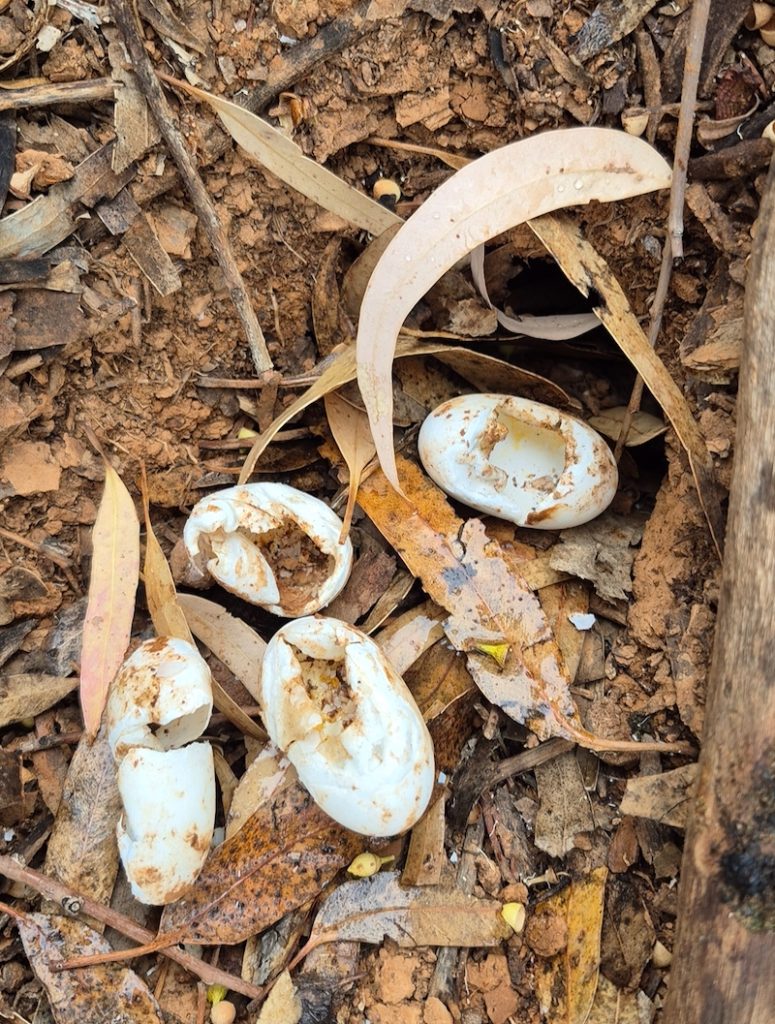
The introduced Murray River Turtles of Aroona Sanctuary dig a shallow hole above the banks of the Aroona Dam to house their eggs. In early November, they were seen in the act of digging nests. There were many other nests at the site, by which time, several were opened with egg shell remains. Incubation can take up to three months, or even the entire summer, with hatching happening after the rains of late summer or autumn. The opened eggs may have been preyed upon by native or introduced predators.

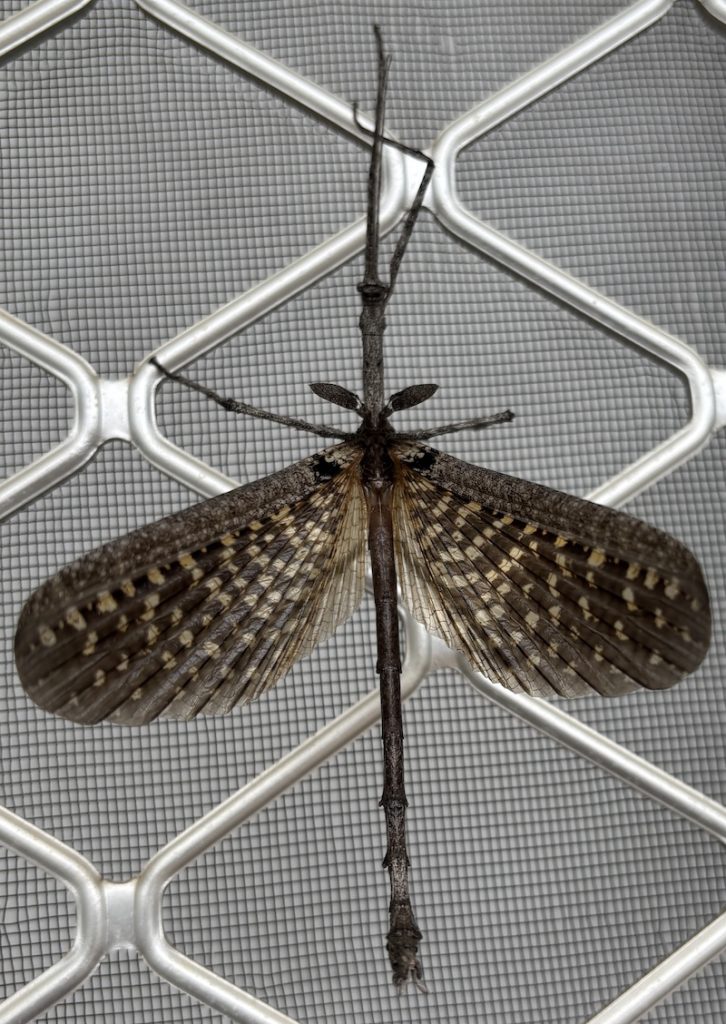
Stick Insect seen in Leigh Creek in November. 150mm.
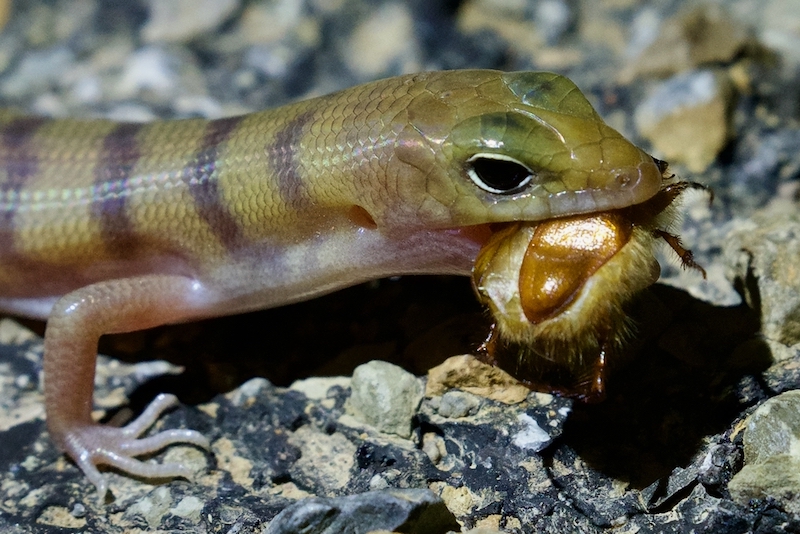
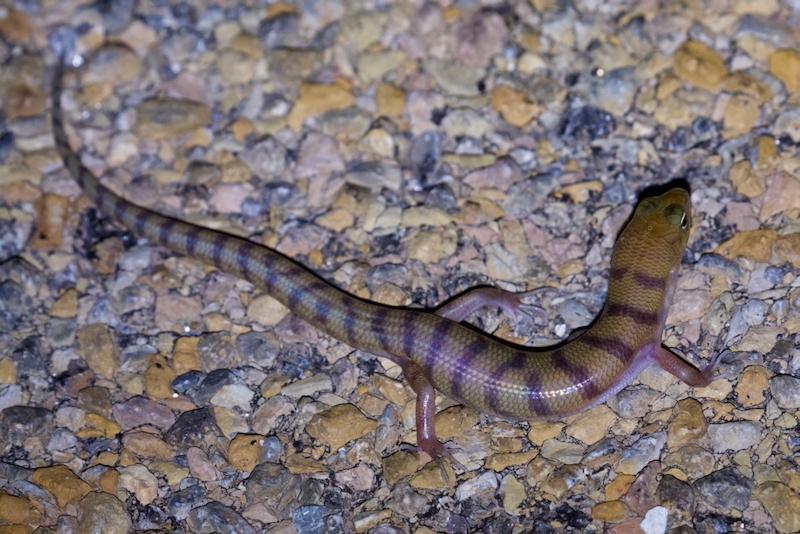
The sand coloured Broad-banded Sand-swimmer Skink has a protective disc over the eye to enable it to burrow through sand while maintaining vision. It is less tolerant of heat than other desert reptiles and is adapted to living underground where it keeps cool and evades predators. It comes out to feed at night, relying on ambient and ground warmth to regulate its temperature.
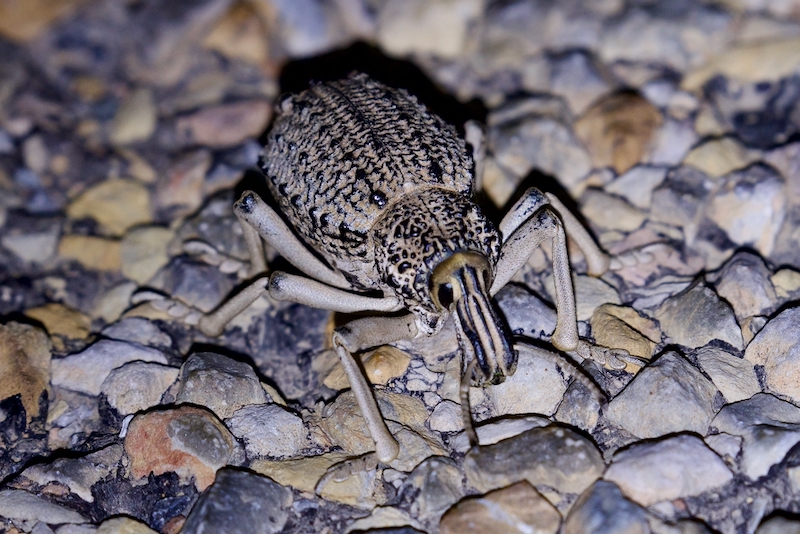
5cm weevil (Leptopius gravis), also known as a Wattle Pig or Elephant Weevil, Copley.