
The progression of iron oxide (goethite) concretions that have formed due to nucleation around small cracks in siltstone and shale. From the Copley area, northern Flinders Ranges.

The progression of iron oxide (goethite) concretions that have formed due to nucleation around small cracks in siltstone and shale. From the Copley area, northern Flinders Ranges.
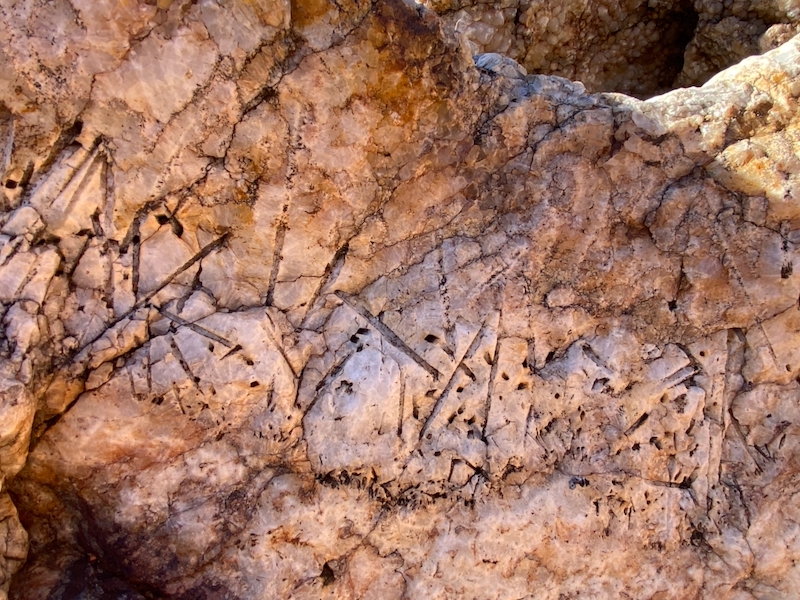
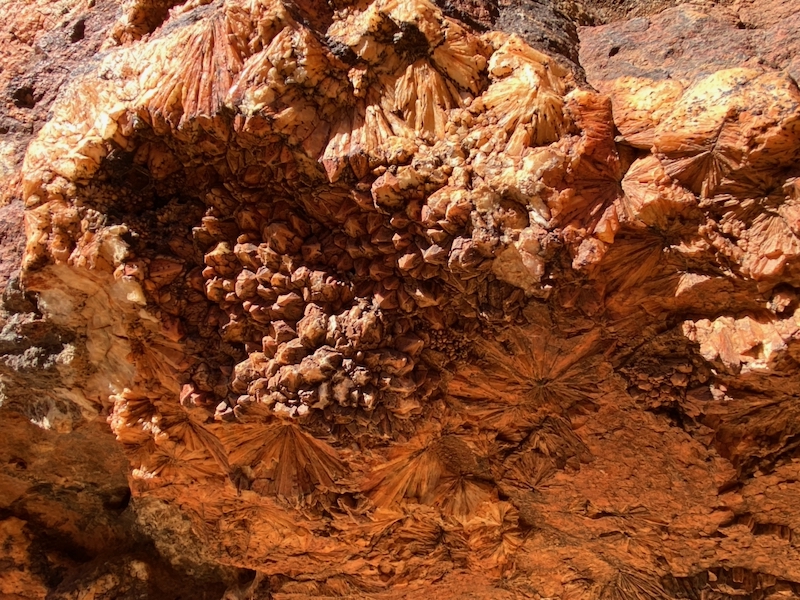
Mt Gee, Arkaroola, is 60m thick slab of crystalline quartz, resulting from hydrothermal activity. The prolific quartz cavities present a great variety of crystal form, colour and growth stages, including nail-hole quartz, only found at Arkaroola.
Iron hydroxides percolating through sandstone can form concentric patterns called Liesegang rings. These palm sized samples were seen in a localised area to the west of Leigh Creek in the Flinders Ranges.


The Akurra trail is a 10.5km (4hr) walk from Leigh Creek township to the picturesque Aroona Dam. Commencing at the health clinic, the path is clearly signposted and includes cultural information. It traverses the magnesite rich Myrtle Springs Formation, the colourful ridge of the Skillogalee Formation, and into the towering dam walls of the Copley Quartzite Formation.

Trail map can be downloaded, and you can also pick up an informative brochure at the Leigh Creek supermarket. On your way back, you can drop into the Leigh Creek Library geological display of local rock and mineral samples.

The dark bands seen between the rock layers are goethite, an iron oxide mineral that forms through the oxidation of iron-rich fluids along bedding planes or fractures in the rock.

Located within the Merinjina Tillite Formation, the smaller embedded rocks were likely deposited in this massive matrix by glacial activity. This tillite has since undergone oxidation, and in some areas, has been partially replaced by botryoidal goethite—a rounded form of iron oxide.

This group of goethite–quartz boulders may have formed from a hydrothermal seam or vent, where silica and sulfur-rich fluids precipitated quartz and pyrite. As pyrite oxidizes, it typically forms sulfuric acid, which accelerates iron oxidation, in this case forming goethite. As the surrounding blocky shale erodes, the more resistant goethite-quartz boulders remain – a common sight in the Flinders Ranges.


Moro Gorge is a cascading series of spring-fed waterholes located in the Nantawarrina Indigenous Protected Area in the northern Flinders Ranges. The surrounding limestone walls appear to have precipitated from mineral-rich spring water, forming tufa columns and flowstone. Calcrete is also present in the area—a type of limestone conglomerate consisting of pebbles bound within a calcium carbonate matrix.


Muddy limestone turbidite, formed from sediment deposits in offshore silty waters during the Cambrian period (around 550 million years ago). The dramatic localised buckling seen here may have occurred in situ during a turbulent underwater event. This rock is part of the Mernmerna Formation in the northern Flinders Ranges.


Laminar manganese-rich limestone of the Nepabunna Formation, formed during the Cambrian period, is now exposed and weathering on the plains north of the Flinders Ranges.

