
Unidentified species of Spergularia, Sand-spurrey, flowering near the damp sand of Finke Creek in the Nothern Flinders Ranges. Let us know if you can identify this!
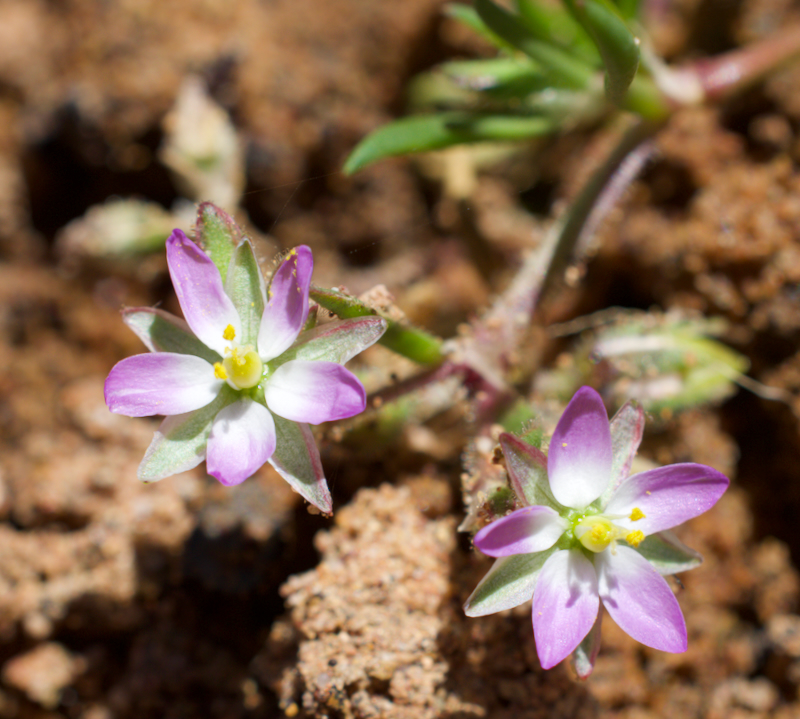
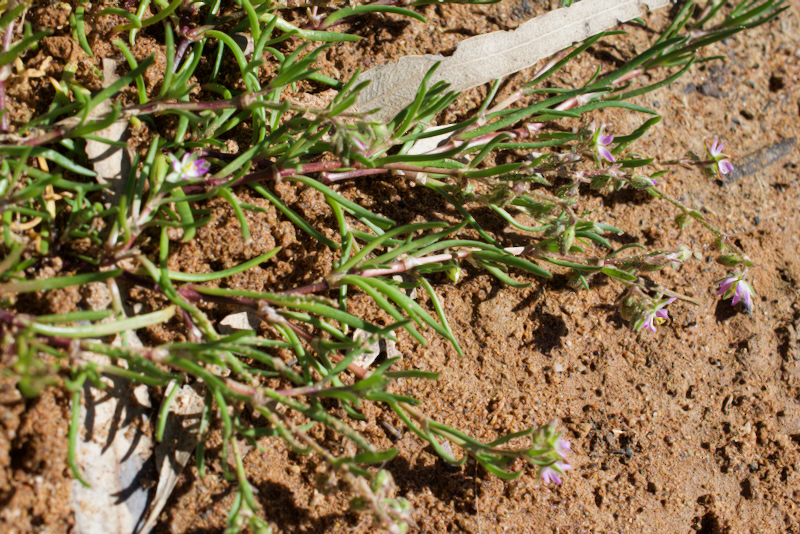
Unidentified species of Spergularia, Sand-spurrey, flowering near the damp sand of Finke Creek in the Nothern Flinders Ranges. Let us know if you can identify this!
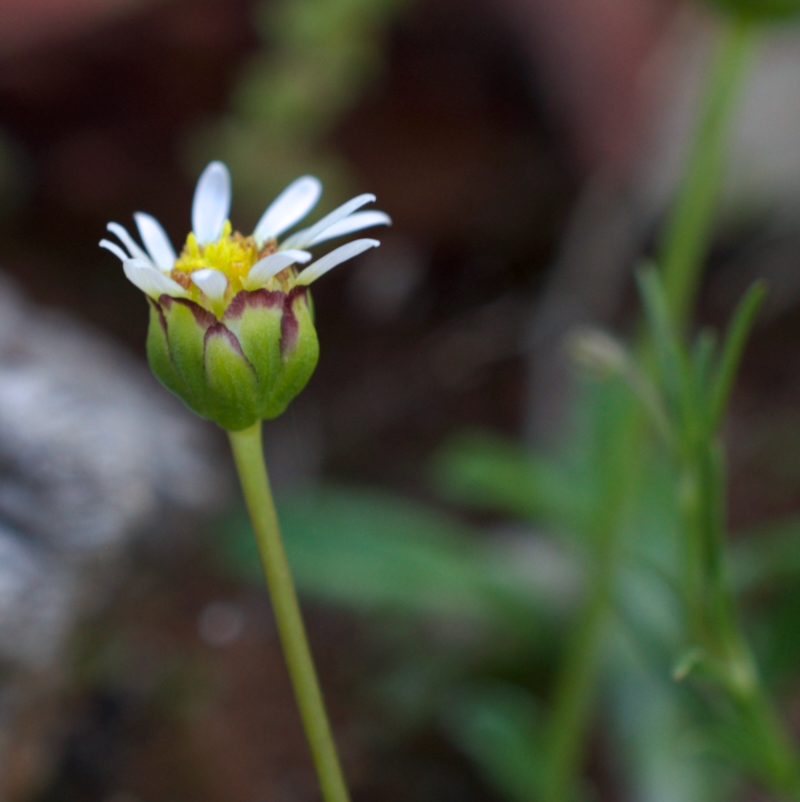
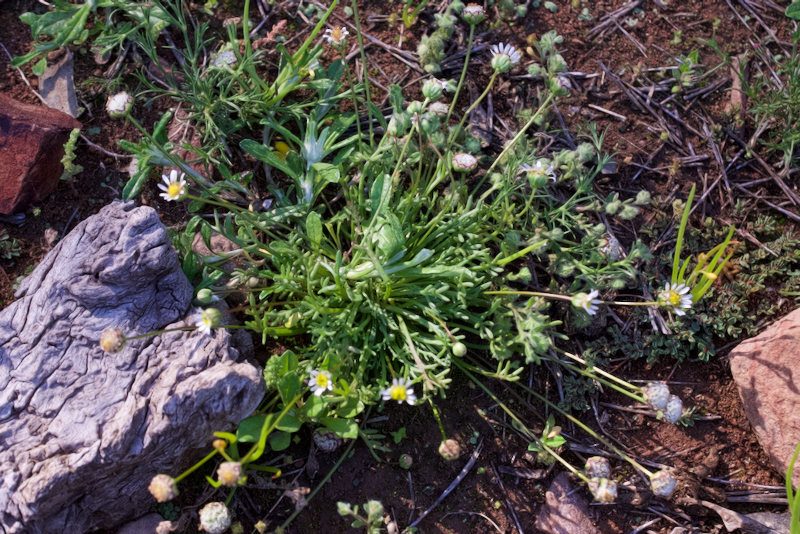
Hard-head Daisy, or Dwarf Daisy (Brachyscome lineariloba) flowering in damp clay near the Finke Creek in the Northern Flinders Ranges in September.
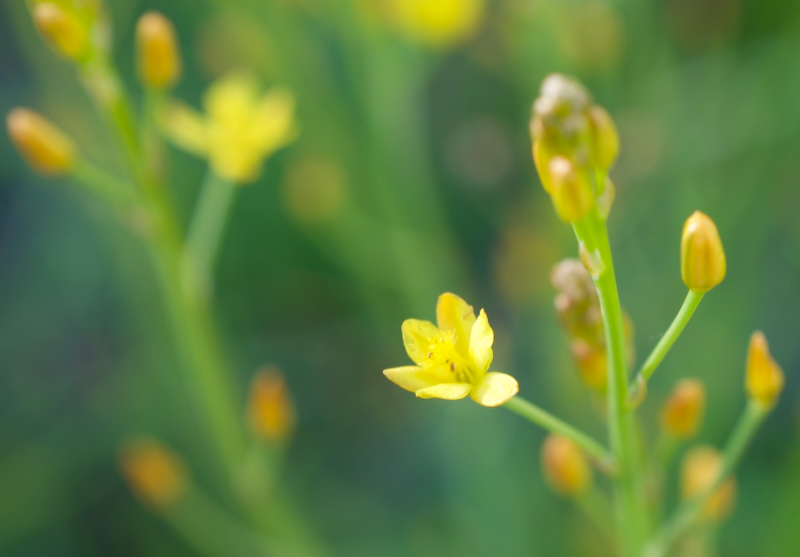
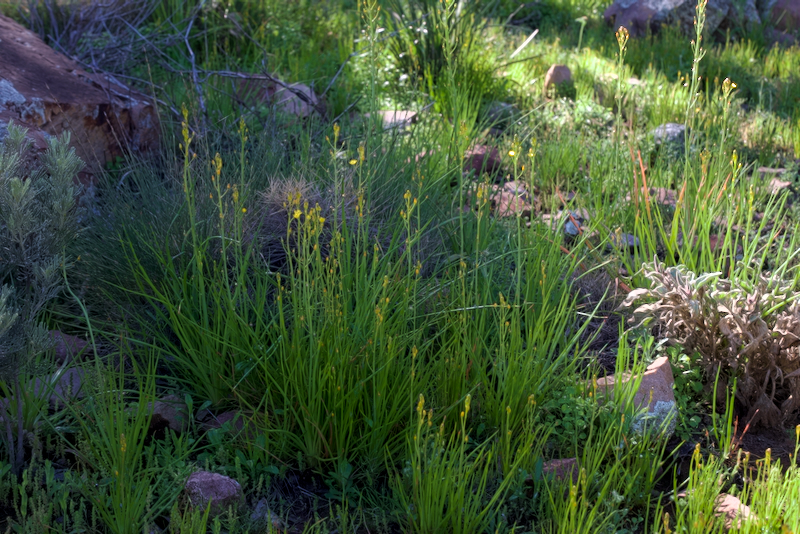
Bulbine Lily flowering near Finke Creek in the Northern Flinders Ranges in September.
Silver Indigo with pink flower (likely to be Indigofera cornuligera subsp. cornuligera) observed flowering in a gorge near Finke Creek in the Northern Flinders Ranges in September.
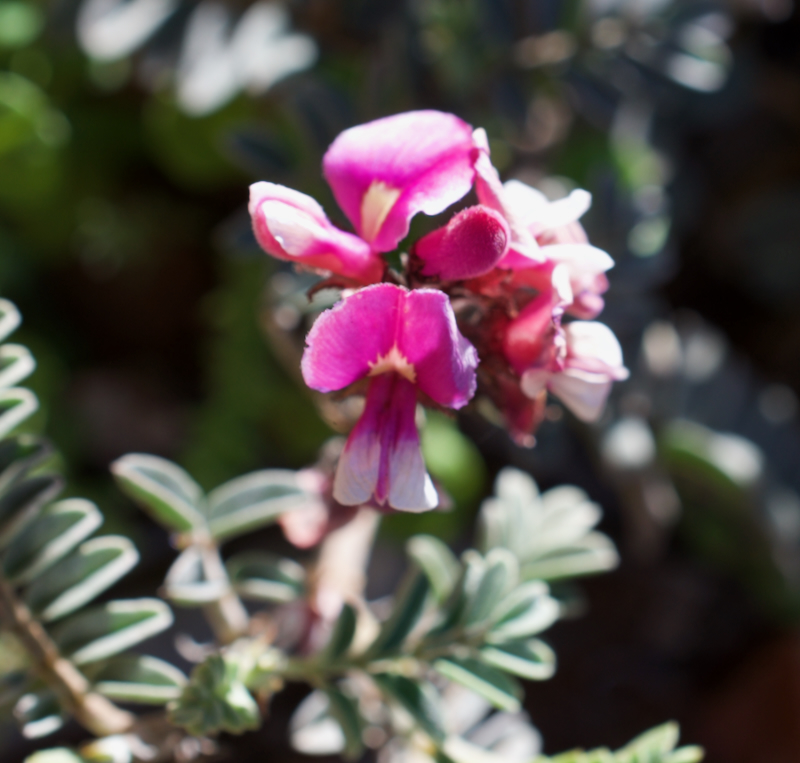
Can you identify this? Let us know!
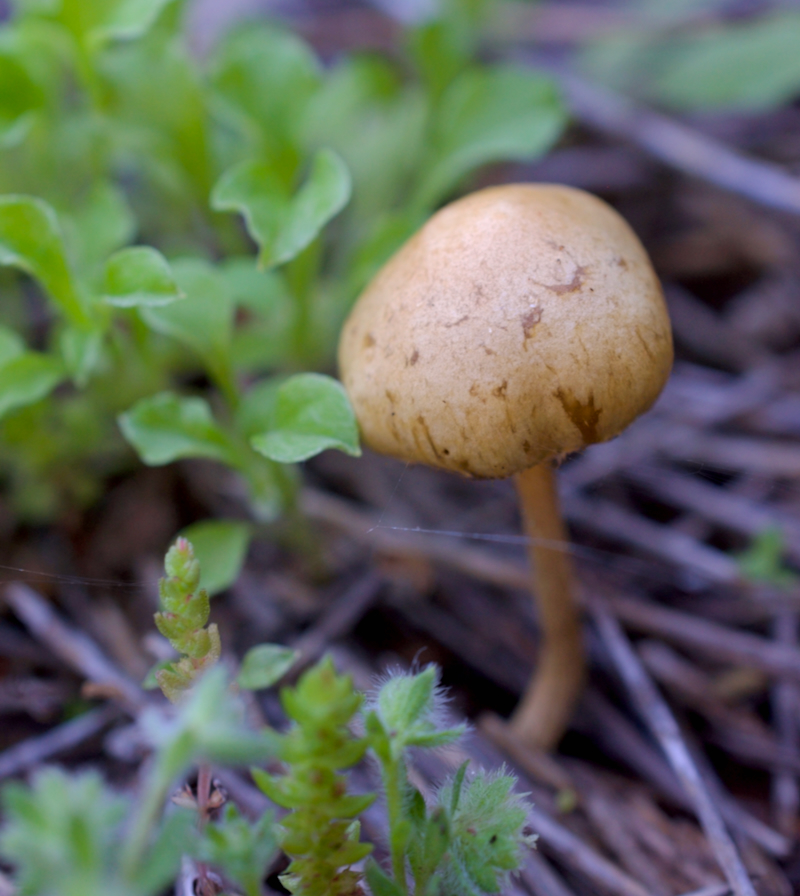
Threads of bright white gossamer have appeared in tangled clumps among the branches of shrubs throughout the Copley–Leigh Creek area. The phenomenon occurred within a day of the arrival of the first warm spring weather and is thought to be a mass emergence of spiderlings using gossamer strands as balloons to disperse on the wind. Let us know if you know what species of spider this is!


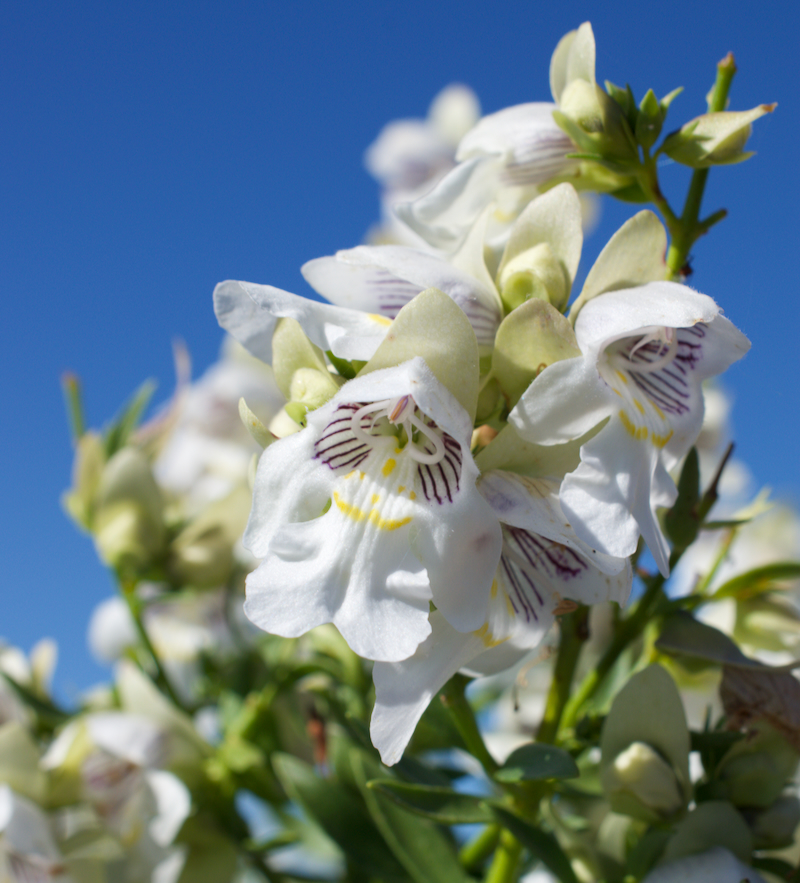
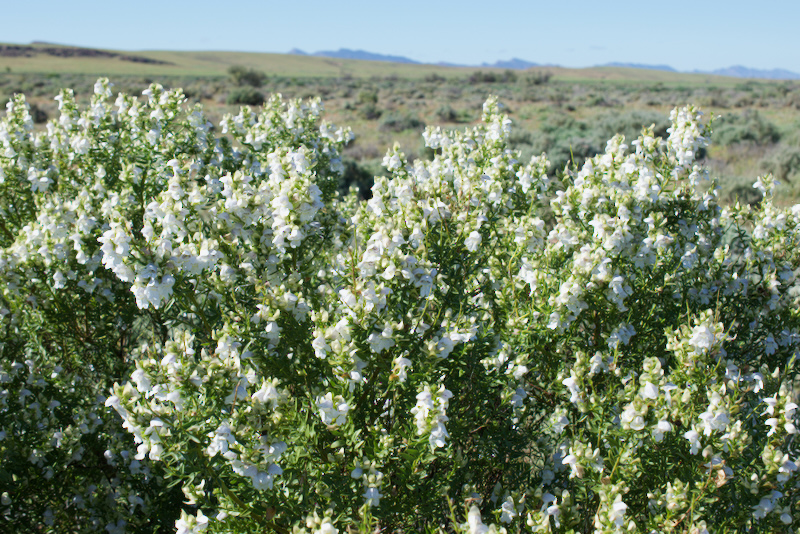
A small cluster of aromatic Prostanthera striatiflora, known as Jockey’s Cap or the Striated Mintbush was observed flowering in early spring in rocky clay north of Nilpena. It is endemic to Australian arid lands, but not a common site in the area.
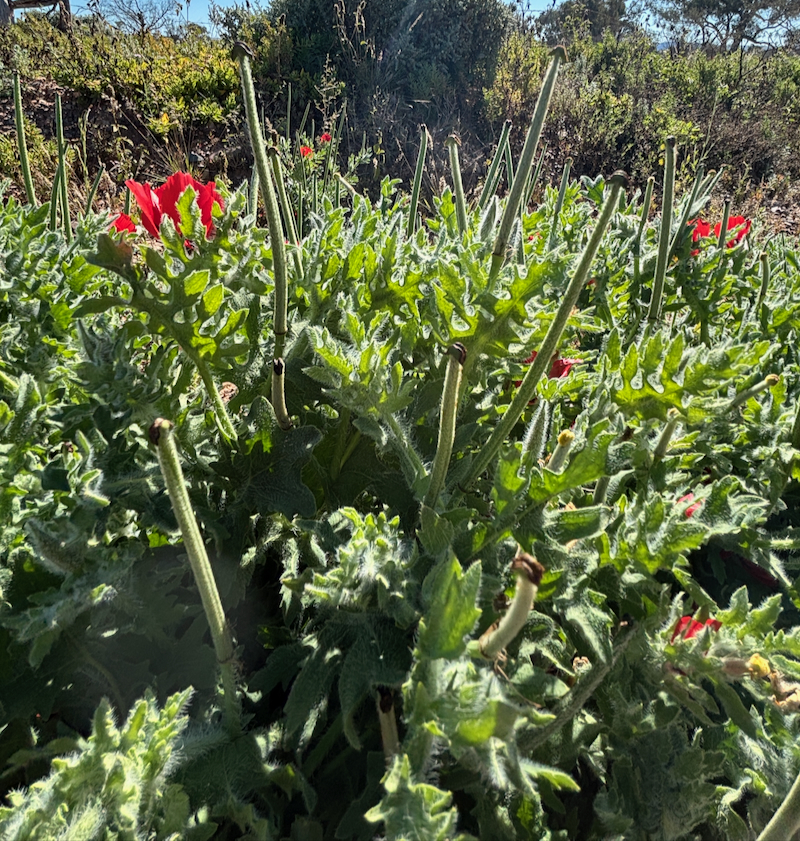
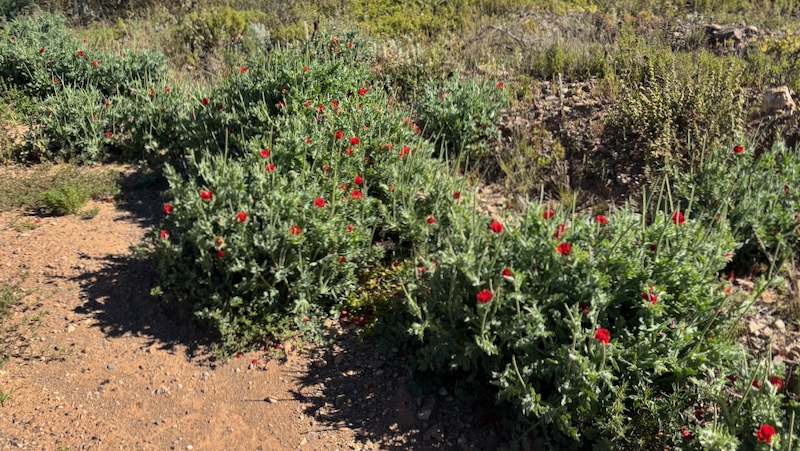
The Red Horned Poppy (Glaucium corniculatum) is a weed species appearing in the Flinders and Gammon Ranges.

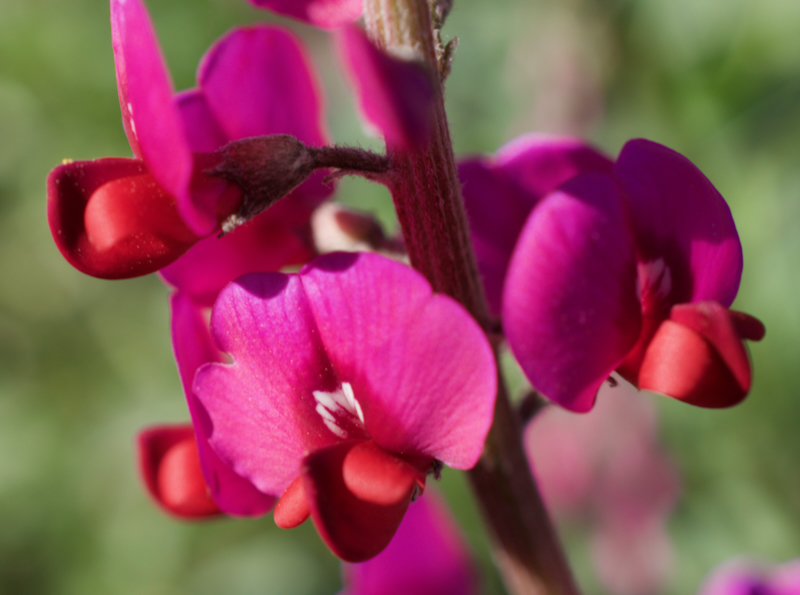
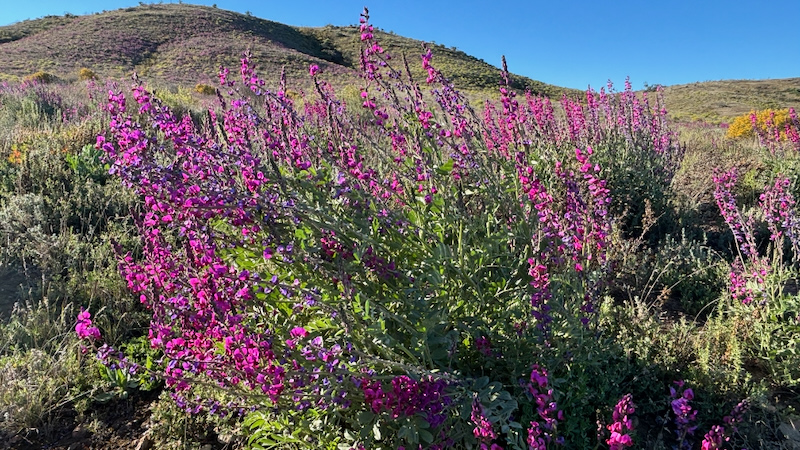
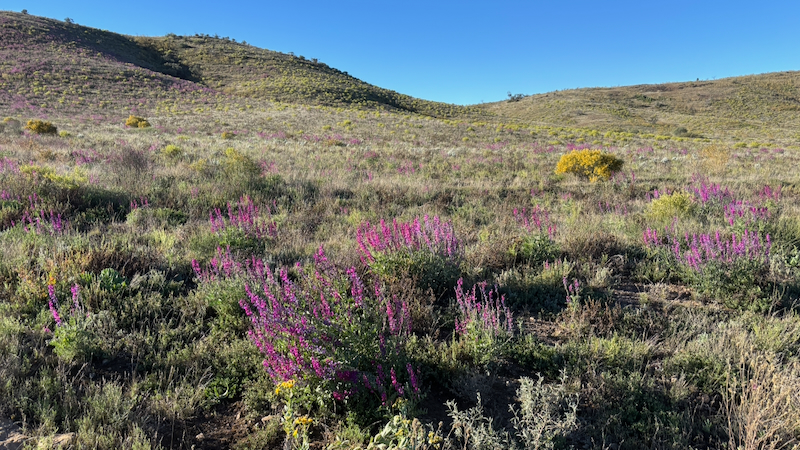
Swainsona tephrotricha, the stunning Ashy-haired Swainson-pea, is endemic to South Australia. It was seen flowering in rocky ground to the east of Nepabunna after rains.
Koch’s Pigface (Gunniopsis kochii) is a compact succulent, indigenous to SA but near threatened in the Flinders Ranges.
Flowering in early spring in sand near Lyndhurst:

