
5cm weevil (Leptopius gravis), also known as a Wattle Pig or Elephant Weevil, Copley.
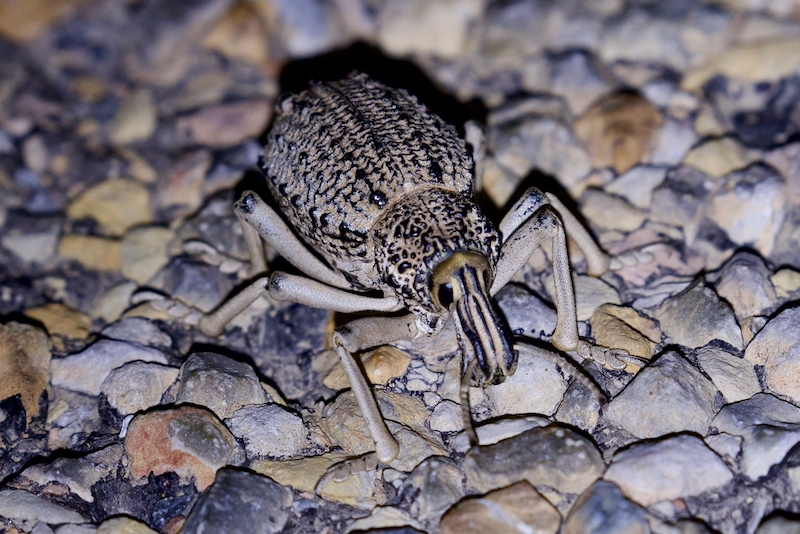
5cm weevil (Leptopius gravis), also known as a Wattle Pig or Elephant Weevil, Copley.
Nyctoziolus Beetle species, known as a Darkling Beetle, spotted at night.


This 20mm Case Moth larvae is wandering around on a motorcycle mirror at speeds up to 80kmh.

The predatory, nocturnal Carab Beetle (Carabidae) spotted at night in the Copley area in October. 30mm long.

Spiny Pachymorpha Stick Insect (Pachymorpha spinosa) spotted at night in the Copley area in October. 70mm long.


Female black and tan Raspy Cricket spotted at night in the Copley area in October. 35mm long.


The wingless ground-dwelling Pareremus tigrinus Raspy Cricket spotted at night in the Copley area in October. 35mm long.


Australia hosts a great diversity of Raspy Crickets. When threatened, they make a raspy, squeaky sound, and winged adults are known to open their wings and raise their front legs in a defensive posture. Raspy crickets can produce silk, similar to that of the silkworm, used to stitch leaves into a shelter, or line burrows made in sand or soil. Foraging at night, they feed on plants and animals. Raspy Crickets belong to the Family Gryllacrididae.
This male black, striped Hadrogryllacris magnifica Raspy Cricket was spotted at night in the Copley area in October. 55mm long.


Ctenostegus, the Spider Hunter Wasp, hunts and paralyses spiders, digs a burrow in the ground and deposits the spider along with some eggs. The spider (in this case a Beautiful Badge Hunstman) becomes living food for the developing larvae underground.

