Sand Monitor (Varanus gouldii gouldii), also known as the Gould’s Goanna or Sand Goanna, paid a visit to the Copley community vegetable garden in the northern Flinders Ranges.

Sand Monitor (Varanus gouldii gouldii), also known as the Gould’s Goanna or Sand Goanna, paid a visit to the Copley community vegetable garden in the northern Flinders Ranges.

Some birds—including raptors, corvids, and kingfishers—regurgitate compact, undigested masses called pellets (or castings). These can contain indigestible material such as seeds, insect exoskeletons, bone fragments, and fur.


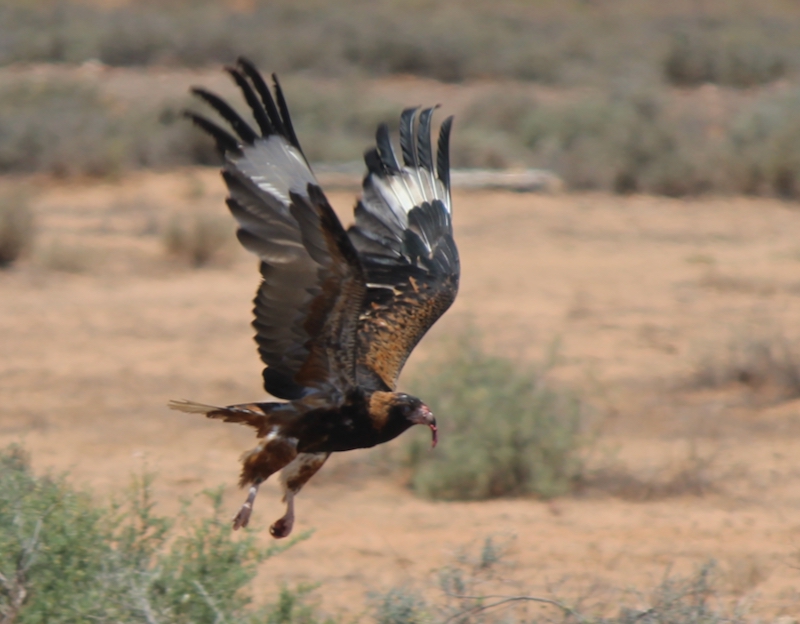
The Black-breasted Buzzard (Hamirostra melanosternon), a hawk species usually found across northern Australia, has recently been observed over Copley in the northern Flinders Ranges. Smaller than the familiar Wedge-tailed Eagle, it stands out with bold white wing panels and sharply defined black “fingers” at the wingtips. Its rust-coloured nape feathers form a small crest, giving it a distinctive profile when perched. The species feeds on carrion, small animals, birds, and insects, and is known to crack open emu eggs with a stone.
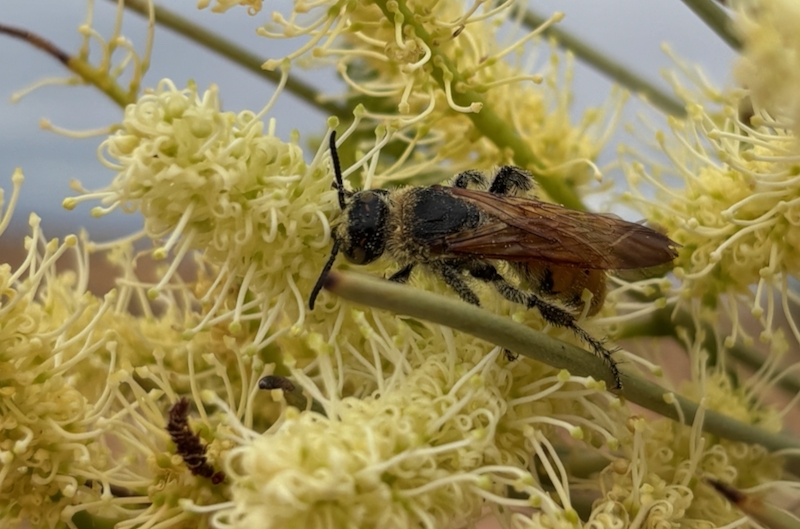
Male Flower Wasp feeding on Grevillea nectar near Lyndhurst in November. Body length approximately 25mm.


Juvenile Eastern Bearded Dragon (Pogona barbata). This species of dragon can have distinctive underside markings from the tip of the snout to the tail.


Female Red-barred Dragon (Ctenophorus vadnappa) at Chambers Gorge, North Flinders Ranges, in November.


The introduced House Sparrow (Passer domesticus) is a common sight in the Flinders Ranges.

A mob of the largest marsupials in the world, the Red Kangaroo (Osphranter Rufus) on the open plains of the Gammon Ranges.


Male Red-capped Robin feeding on a grasshopper at Chambers Gorge, North Flinders Ranges, in November.