Some birds—including raptors, corvids, and kingfishers—regurgitate compact, undigested masses called pellets (or castings). These can contain indigestible material such as seeds, insect exoskeletons, bone fragments, and fur.

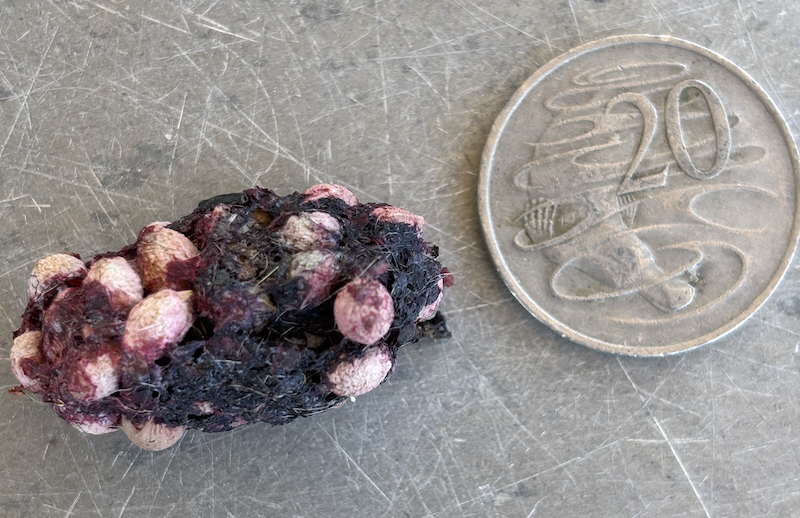
Some birds—including raptors, corvids, and kingfishers—regurgitate compact, undigested masses called pellets (or castings). These can contain indigestible material such as seeds, insect exoskeletons, bone fragments, and fur.
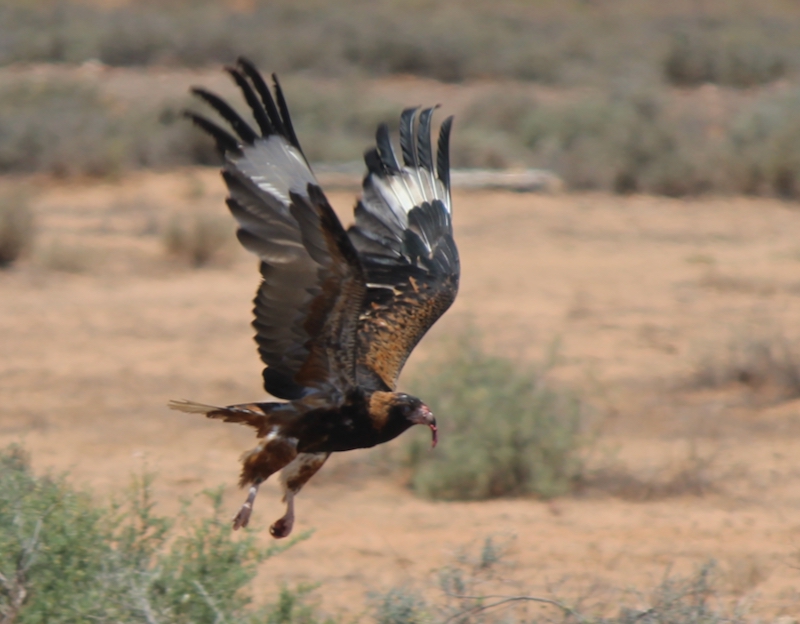
The Black-breasted Buzzard (Hamirostra melanosternon), a hawk species usually found across northern Australia, has recently been observed over Copley in the northern Flinders Ranges. Smaller than the familiar Wedge-tailed Eagle, it stands out with bold white wing panels and sharply defined black “fingers” at the wingtips. Its rust-coloured nape feathers form a small crest, giving it a distinctive profile when perched. The species feeds on carrion, small animals, birds, and insects, and is known to crack open emu eggs with a stone.
The introduced House Sparrow (Passer domesticus) is a common sight in the Flinders Ranges.

Male Red-capped Robin feeding on a grasshopper at Chambers Gorge, North Flinders Ranges, in November.


Grey Butcherbird (Cracticus torquatus) at Chambers Gorge.

Male Emu with chicks in the plains of Hawker, Flinders Ranges, in November.

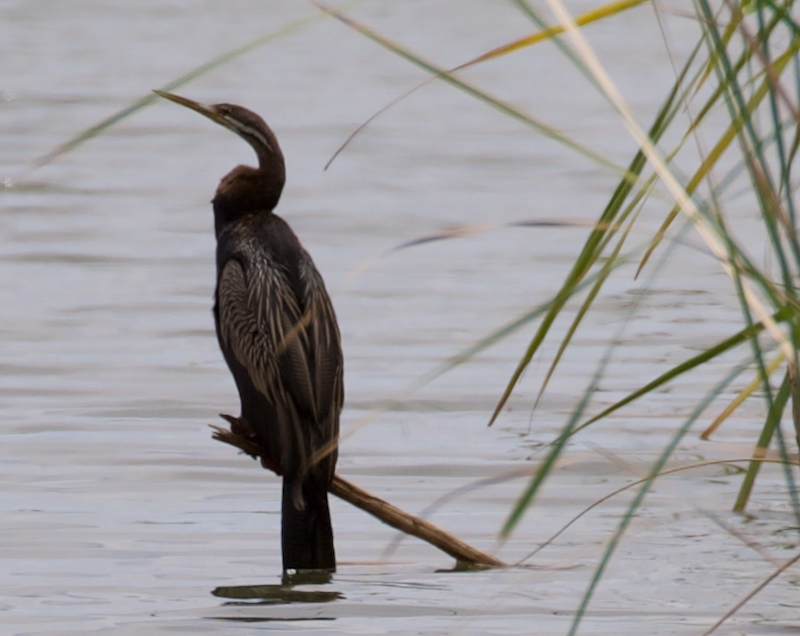
Australasian Darter (Anhinga novaehollandiae) at artesian wetland on Muloorina Station, east of Marree, in November.
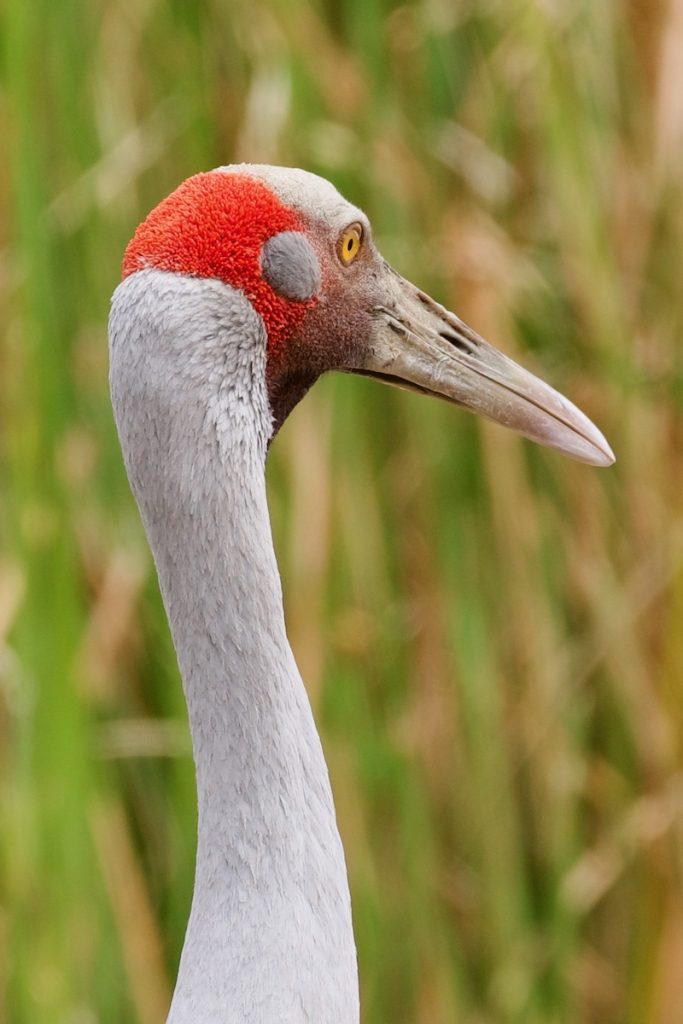
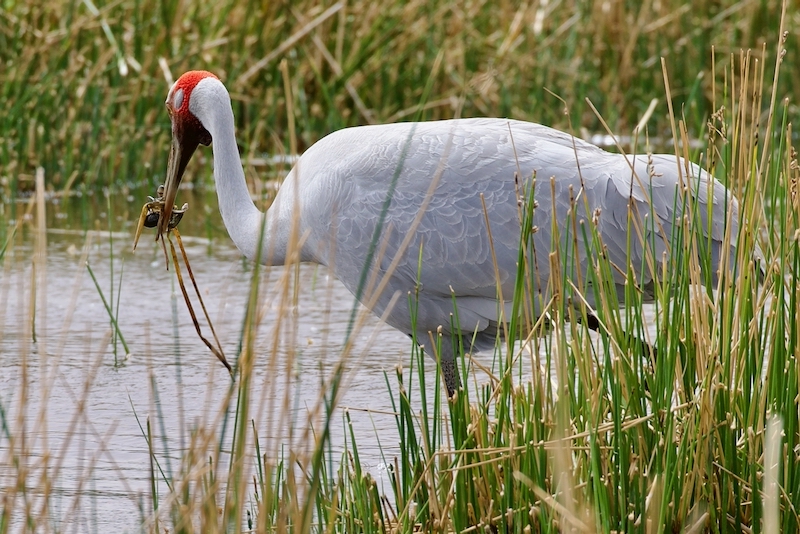
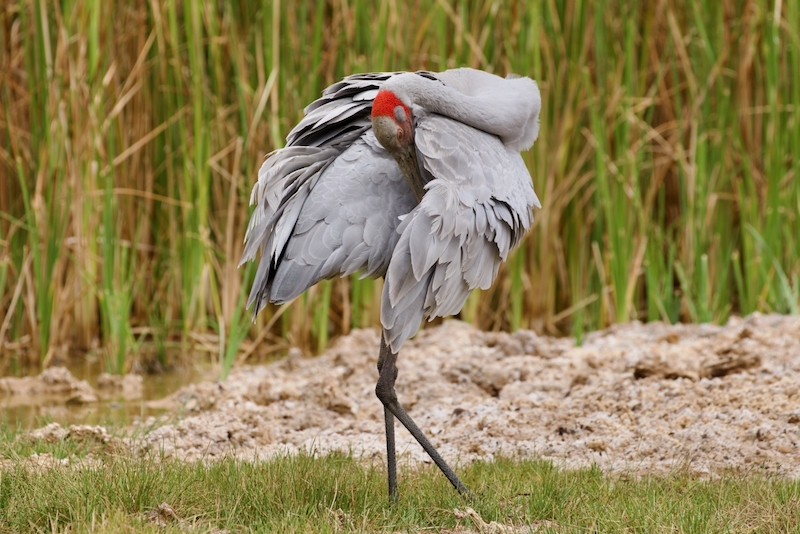
Australia’s largest water bird, Antigone rubicunda, the Brolga, inhabits the tropical regions of northern Australia, the inland wetlands of the Great Artesian Basin and the Murray Darling Basin. It feeds on plant matter, invertebrates and small vertibrates in freshwater and saltwater environments. Seen at the hydrothermal wetlands on Mulooorina Station east of Marree, in November.
Huge Wedge-tail Eagle nest, approximately one meter in diameter, in a Casuarina tree, Copley.
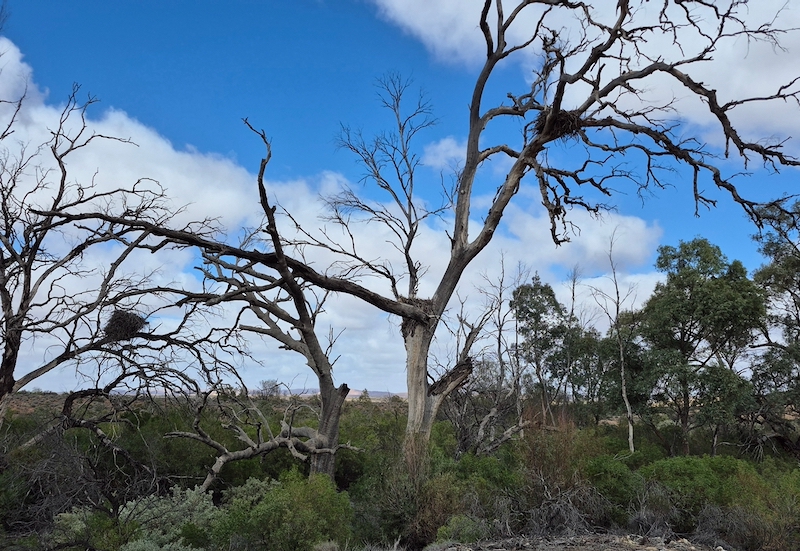
Three Wedge-tail Eagle nests in a dead Eucalypt tree.