
Marsdenia australis, also known as the bush banana, native pear or Mayaka, is a climber producing edible fruit. Flowering in the Flinders Ranges in November.

Marsdenia australis, also known as the bush banana, native pear or Mayaka, is a climber producing edible fruit. Flowering in the Flinders Ranges in November.
African Boxthorn (Lycium ferocissimum), introduced from Africa for spikey hedge fences, is considered a noxious weed. With similarities to Goji Berry, the fruit (when ripened to red) is edible. Seen here fruiting in October at Warren Gorge, near Quorn.

Said to have chocolate (or caramel/vanilla) scented flowers, the Chocolate Lily (Arthropodium strictum) has edible tubers.

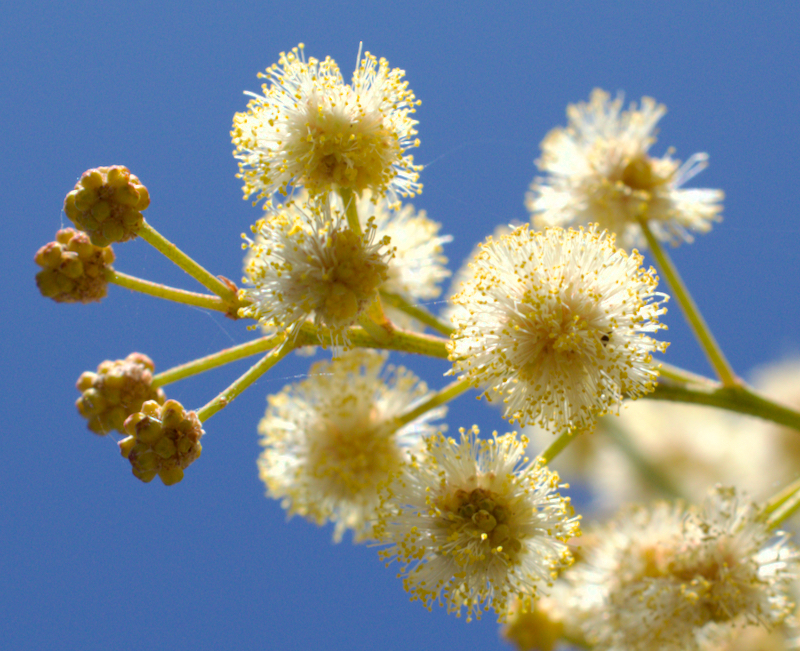
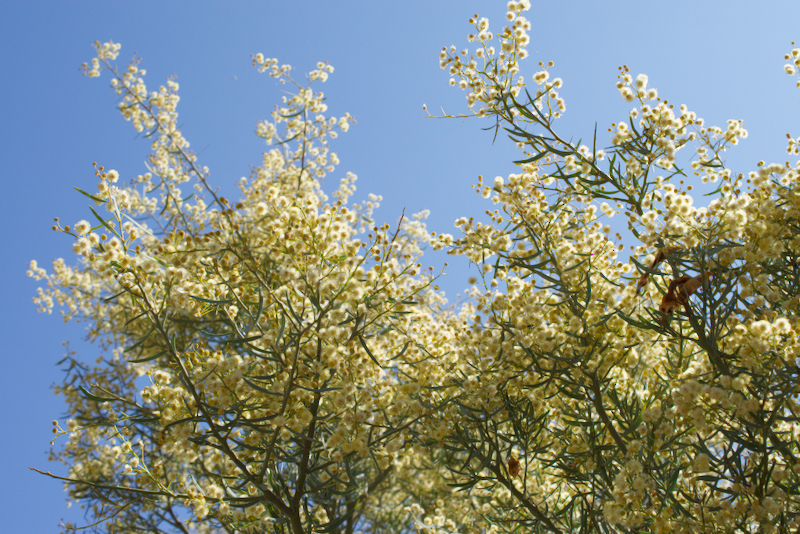
Acacia victoriae is prolific in the Flinders Ranges, flowering profusely in spring. Also known as the Elegant Acacia or Prickly Wattle, seeds are harvested to make flour and the gum is also edible.
Known as the Leafless or Jointed Cherry, Exocarpus aphyllus grows in sand and rocky slopes such as Acacia Ridge at Arkaroola. Small berries are edible.

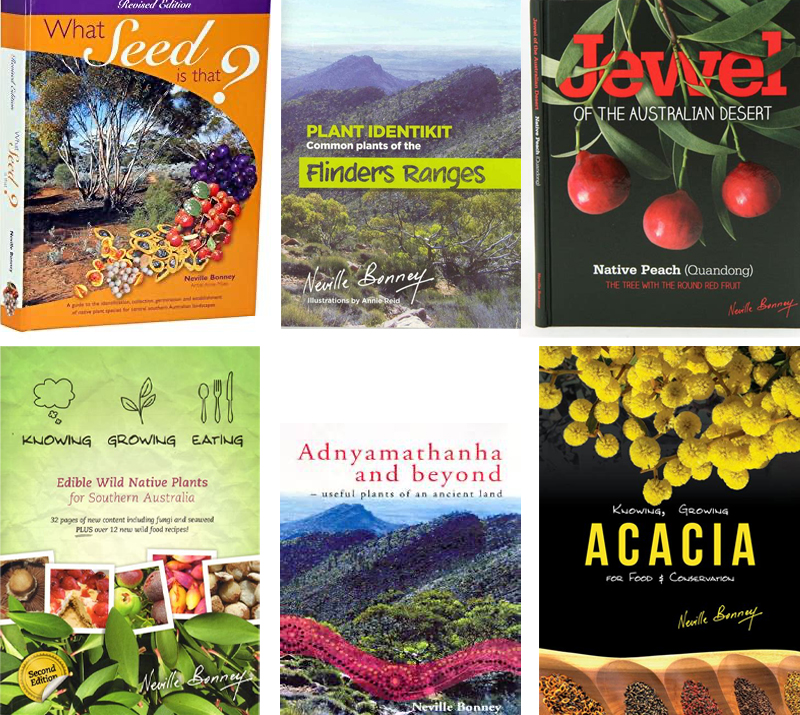
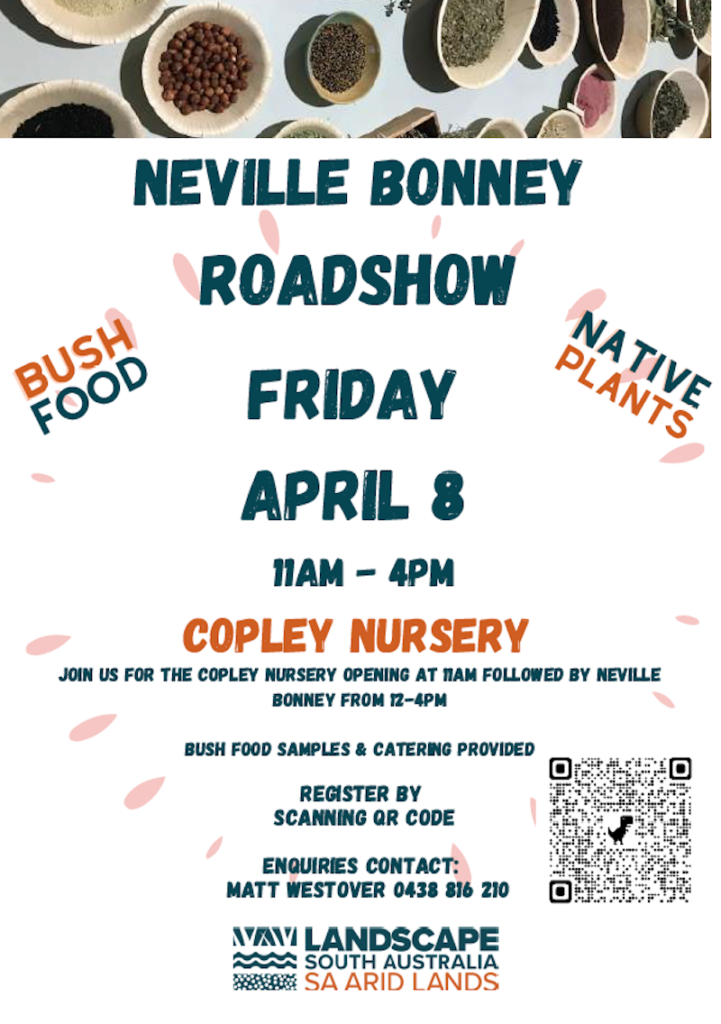
Neville Bonney is an experienced researcher, author and producer of Australian bush foods. His recent road show through the Flinders Ranges was received with great enthusiasm, covering botany and propagation techniques as well as a surprising culinary array. The Leigh Creek Library collection includes Neville’s publications:
Also known as Paddy Melon, Pie Melon and Bitter Melon, Camel Melon (Citrullus amarus) is native to sub Saharan Africa and has been used as a food plant for thousands of years. Introduced to South Australia with camels in the 19th century. In the family of squash, gourds and melons, Camel Melon is not generally considered palatable.

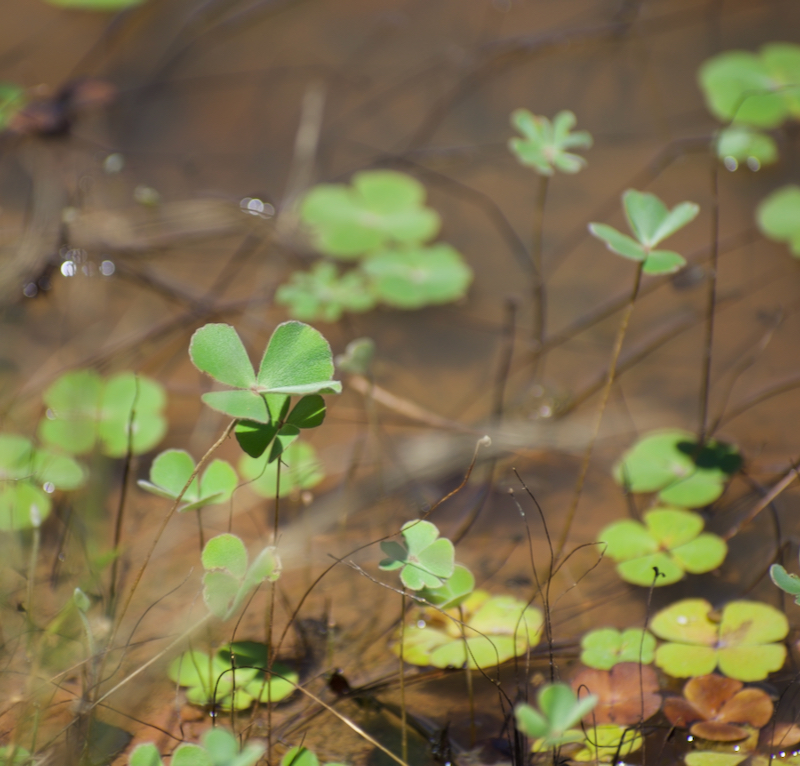
Nardoo, Marsilea drummondii, is a perennial fern with underground stems or rhizomes. It shrivels up during dry periods and withstands wet periods with leaves floating on the surface of the water. Found in floodplains and creekbeds, Nardoo is a known bush tucker. Preparation requires spore cases to be roasted, cases to be removed, with the remaining spores ground into flour.
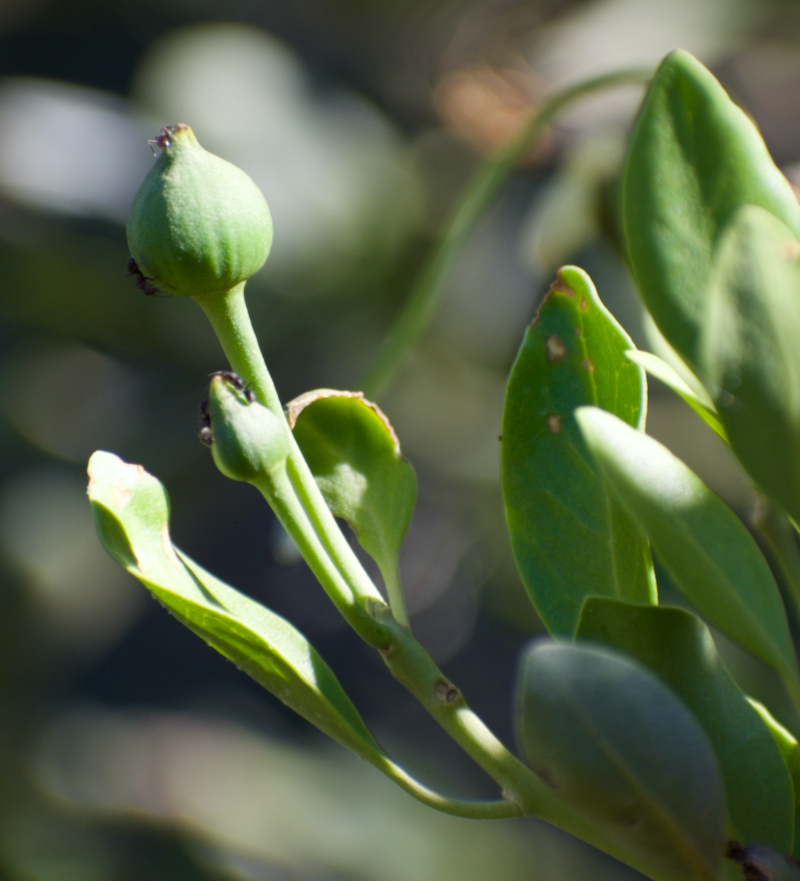
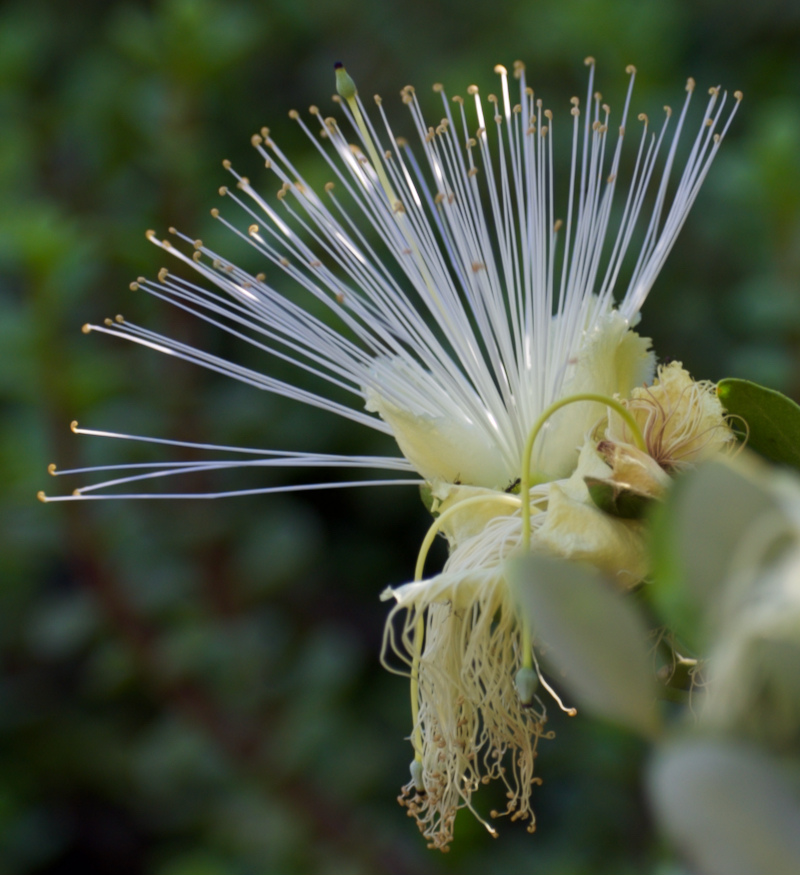
The Iga tree (Capparis Mitchellii) is seen flowering in the northern Flinders Ranges and Gammon Ranges in summer. The Iga a food source for the White Caper Butterfly larvae.
A member of the Capparaceae family, the flowers are among the largest and showiest seen in the area. Budding is profuse and staggered through the flowering season.
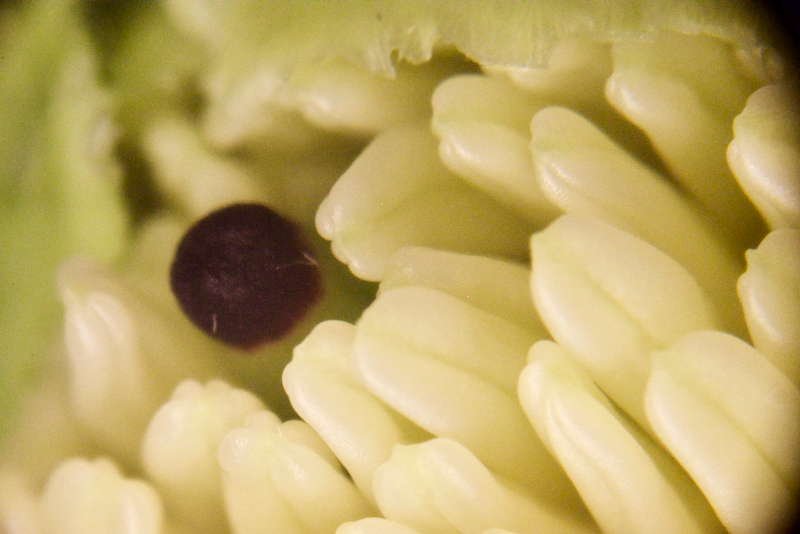
Stamens (male) and stigma (female) developing in the bud (magnification 20x).
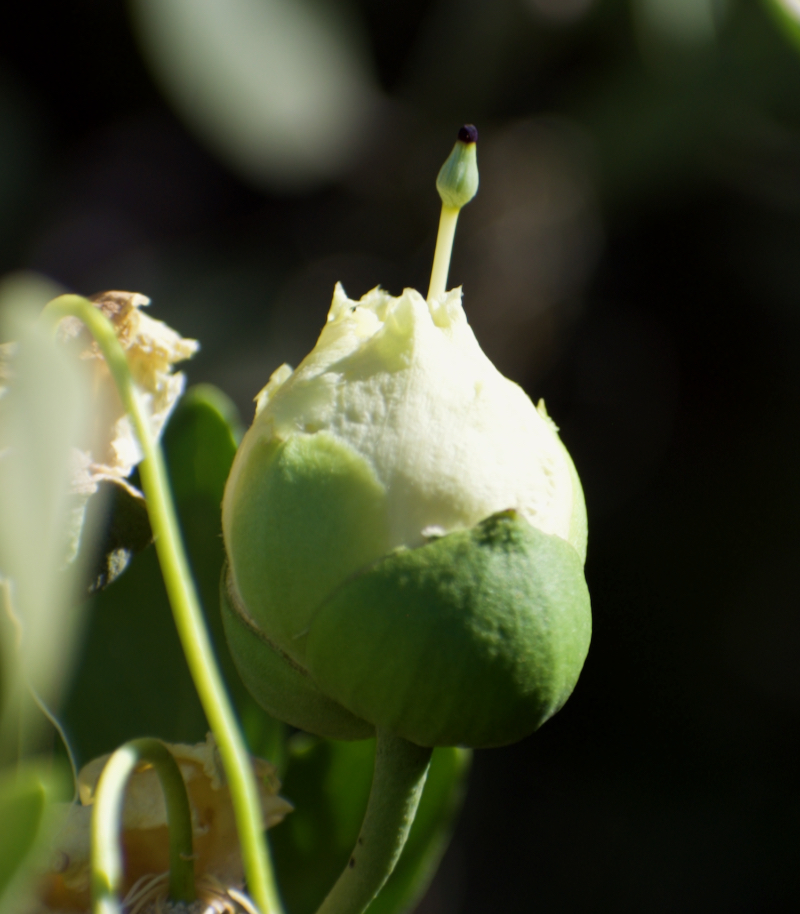
A stigma emerges from an opening bud.
Petals open to a dazzling array of stamens (approximately 50mm long) with the stigma held high, holding their form for sometimes only a single day in the summer heat.
The edible Salty Ice Plant, Mesembryanthemum crystallinum, flowering in Beltana in Spring.
