
The sand dunes and rocky arid lands of the Flinders Ranges are covered with a rare flush of vivid green, with rejuvenation and mass germination of forbs and grasses following widespread flooding at the end of summer.
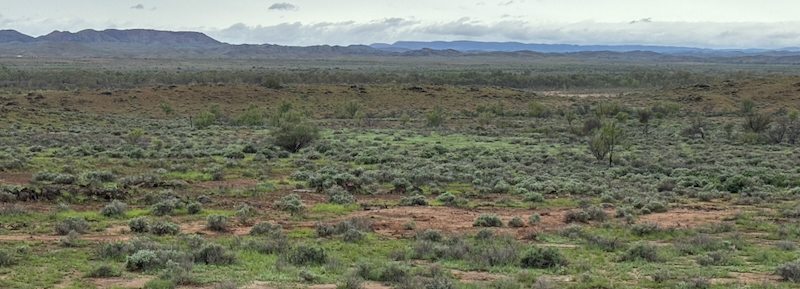
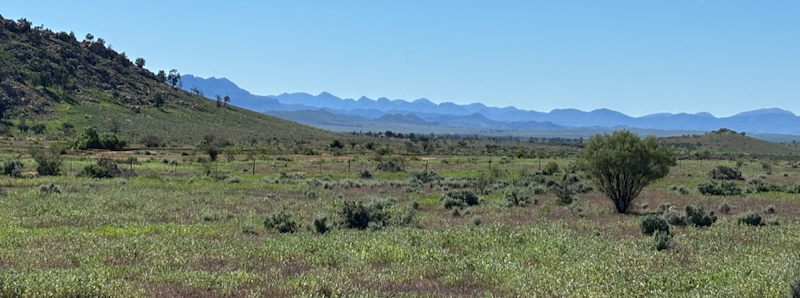
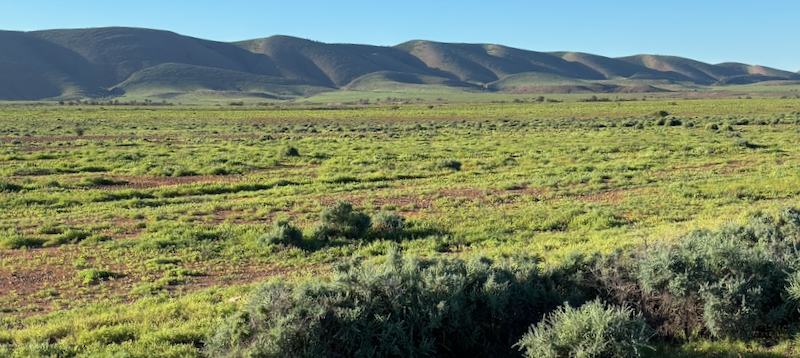
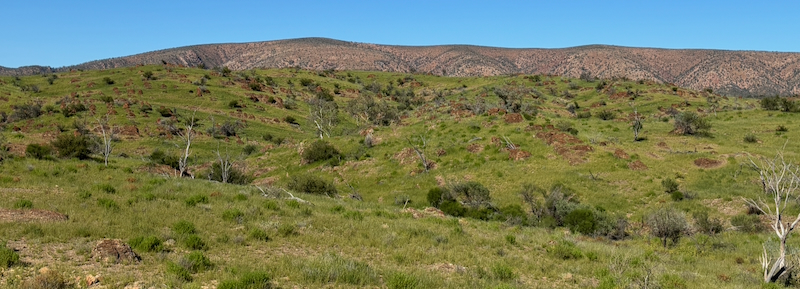

The sand dunes and rocky arid lands of the Flinders Ranges are covered with a rare flush of vivid green, with rejuvenation and mass germination of forbs and grasses following widespread flooding at the end of summer.
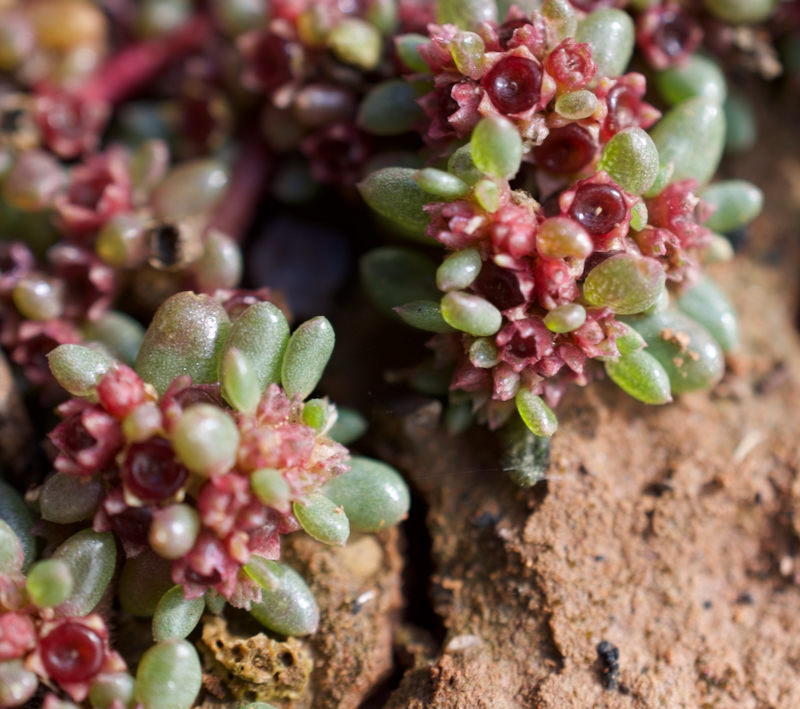
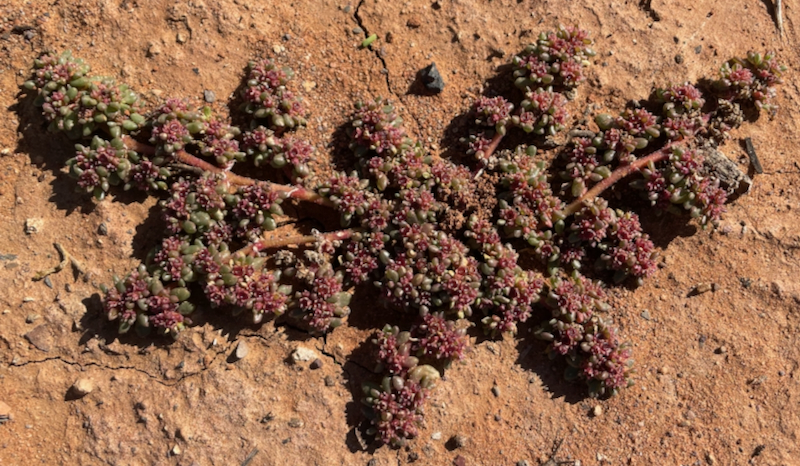
Small succulent, possiblyTrianthema triquetra, Red Spinach, growing at Beltana in the northern Flinders Ranges in winter, following summer and autumn rains.
Themeda triandra, Kangaroo Grass, growing on rocky roadside north of Jamestown. 1.4m tall.


The presence of these erect moss sporophytes indicates that conditions have been moist enough to support water-dependent reproduction. Their capsules contain spores that will be released into the wind to establish the next generation of mosses.


Silverton Daisy (Ixiochlamys cuneifolia) budding and seeding in the central Flinders Ranges in winter.


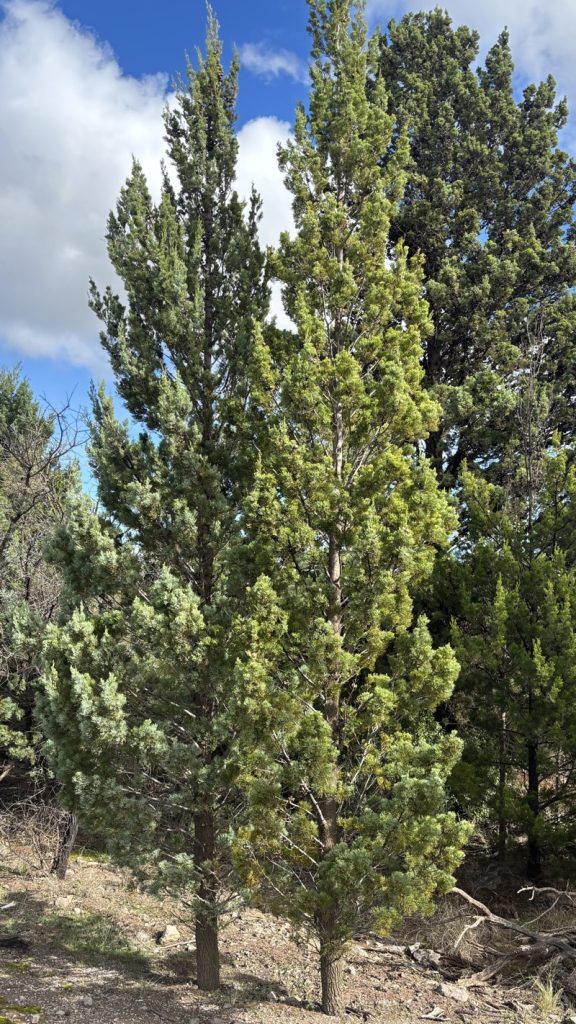
Callitris gracilis, the Native Pine, can be seen throughout the Flinders Ranges in various hues from blue-green to brighter olive-green, often side by side like these two. While age, soil and site conditions play a part, it may also be due to natural genetic variation and differences in the production of waxy coating that gives foliage a blue-green appearance.
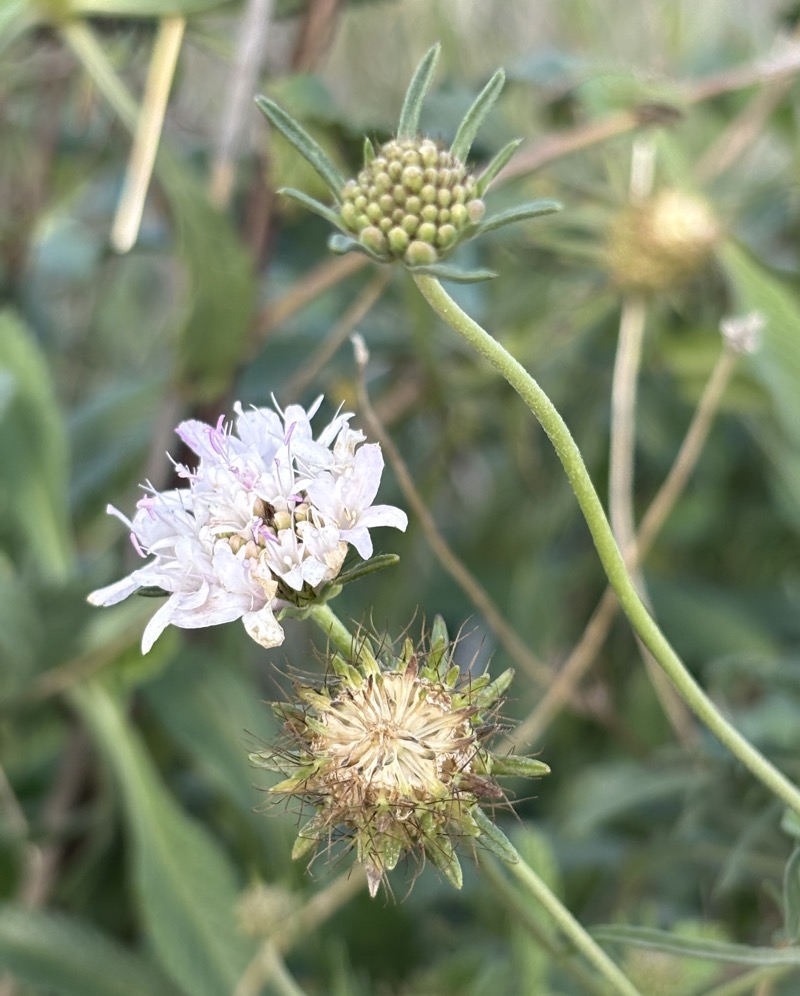
Sweet Scabius, Pincushion (Scabiosa astropurpurea), is native to the Mediterranean, naturalised in SA by the 1850s. It is considered a weed in SA and WA. Flowering and seeding in the Southern Flinders Ranges in winter.
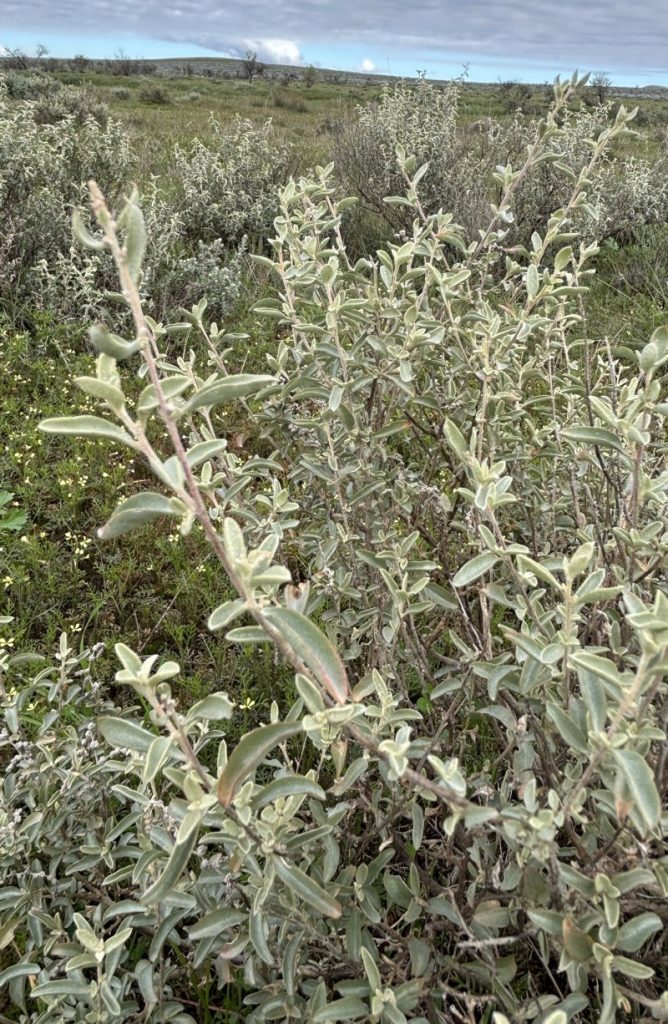
Bitter or Kidney Saltbush, Atriplex stipitata, near Carrieton.

Eremophila longifolia, the Weeping Emubush fruiting in winter.


