
Maireana turbinata, the Top Bluebush fruiting in winter in the Northern Flinders Ranges.

Maireana turbinata, the Top Bluebush fruiting in winter in the Northern Flinders Ranges.
Sclerochlamys brachyptera, the Short-winged Copperburr or Hairy Bassia.

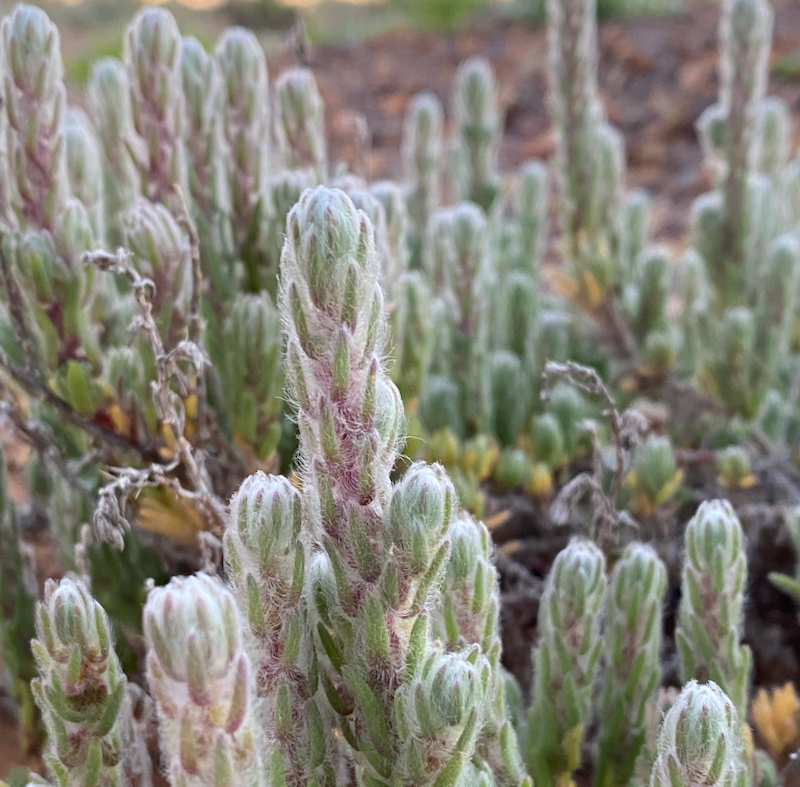
Maireana pyramidata, the Black Bluebush or Sago Bush in winter. Fruits are yellow with a raised pyramid shaped centre, drying to black, giving the plant its scientific and common names. Prevalent in chenopod country throughout the Flinders Ranges, this plant provides habitat for birds such as the Variegated Fairy Wren and reptiles such as the Bearded Dragon.


Sida petrophila, Rock Sida, growing abundantly in Sliding Rock Creek, Warraweena.


Sclerolaena longicuspis, known as the Long-spined Poverty Bush, casting a burgundy blush on the hills near Sliding Rock, Warraweena, in July.


Zygophyllum apiculatum, a Twinleaf commonly known as Gallweed flowering abundantly in Sliding Rock Creek, Warraweena in July.

Eremophila scoparia, the Broombush or Scotia Bush, in flowering at Warraweena in the Northern Flinders Ranges in July.

Goodenia calcarata, the Streaked Goodenia, flowering in dry rocky soil at Arkaroola.

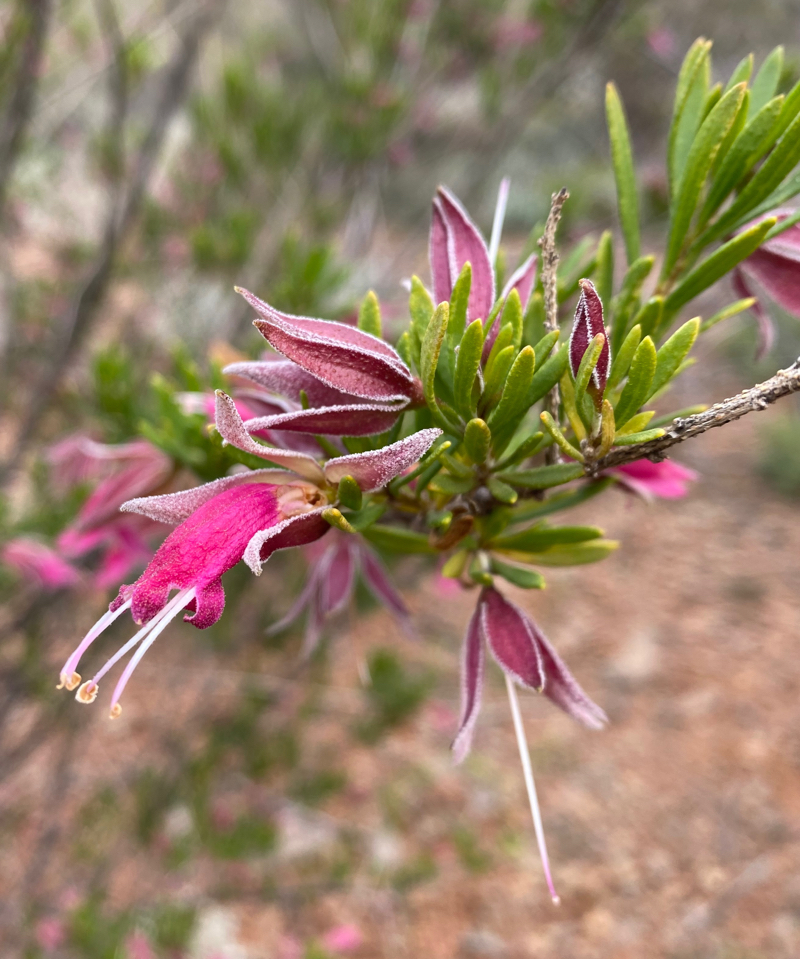
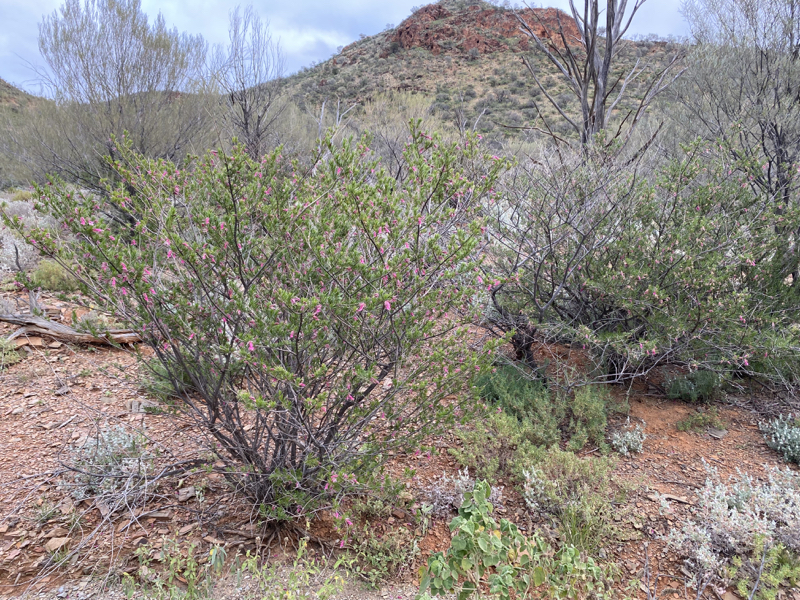
Crimson Emubush (Eremophila latrobei) flowers range from pale red to purple. This deep pink variety is flowering in Welcome Pound at Arkaroola Wilderness Sanctuary during winter. Foliage varies from green to silvery grey.
While weathering and seasonal rains can cause waterholes at to silt up, Paralana Hot Springs continue to flow as a shallow stream. Sourced from within a fault zone, the water is around 60 degrees and emits gases such as radon which is heavier than air and hovers around the creek area on still days. A wonderful array of Cyanobacteria, Proteobacteria and algae thrive in the Paralana Hot Springs.


