
This tenacious Melaleuca glomerata is growing in Nantiberry Springs at Warraweena Conservation Park in the Flinders Ranges.

This tenacious Melaleuca glomerata is growing in Nantiberry Springs at Warraweena Conservation Park in the Flinders Ranges.

Native succulent Sarcostema viminale ssp astrale also known as Caustic Bush, Milk Bush, Caustic Plant, Lye Bush, Snake Plant, Pencil Caustic, Milk Vine, here seen at the Lyndhurst Ochre Pits.
The Flinders Ranges Hakea, Hakea ednieana, in flower at Warraweena.
Melaleuca glomerata, also known as the Inland Tea-tree or Inland Paperbark is a common occurrence in the Flinders Ranges along spring fed creek beds. This plant is a useful indicator of water beneath the surface.


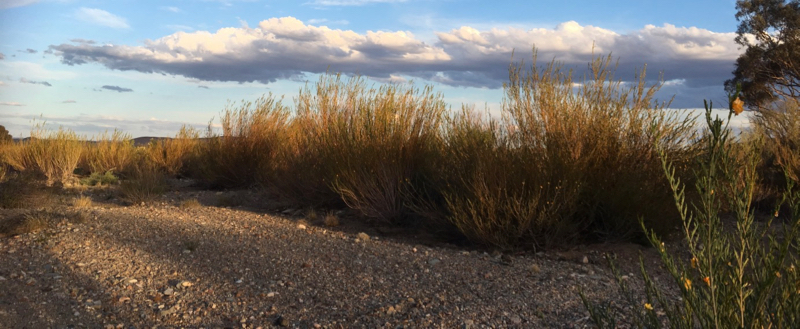
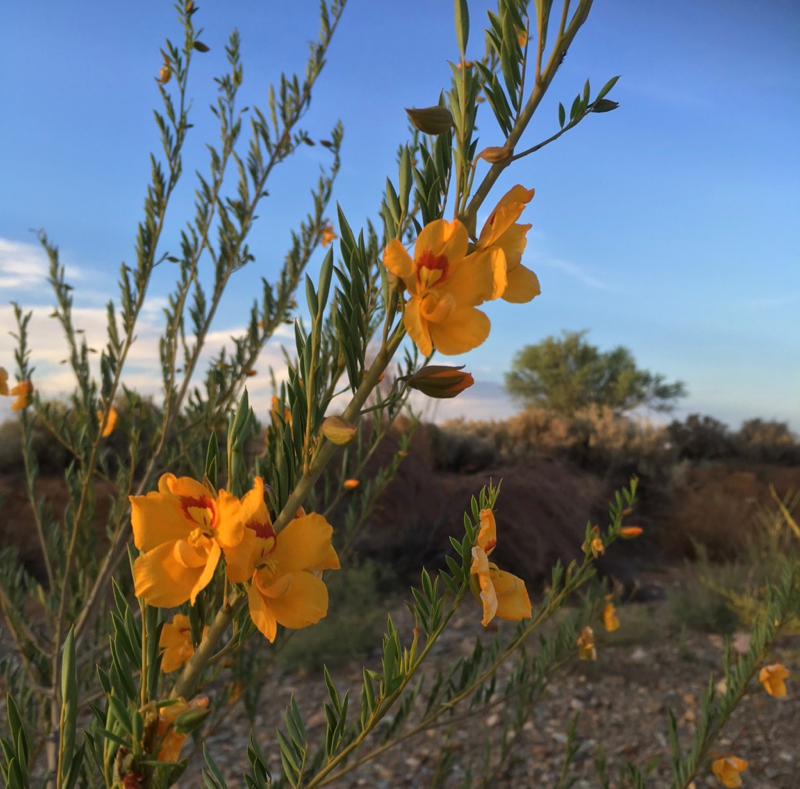
Also known as the Slender Petalostylus, this shrub flowers brightly in spring along watercourses in the Northern Flinders Ranges.
Eremophila scoparia, the Broombush, in Leigh Creek, presenting as multi-stemmed, 1.5m tall. 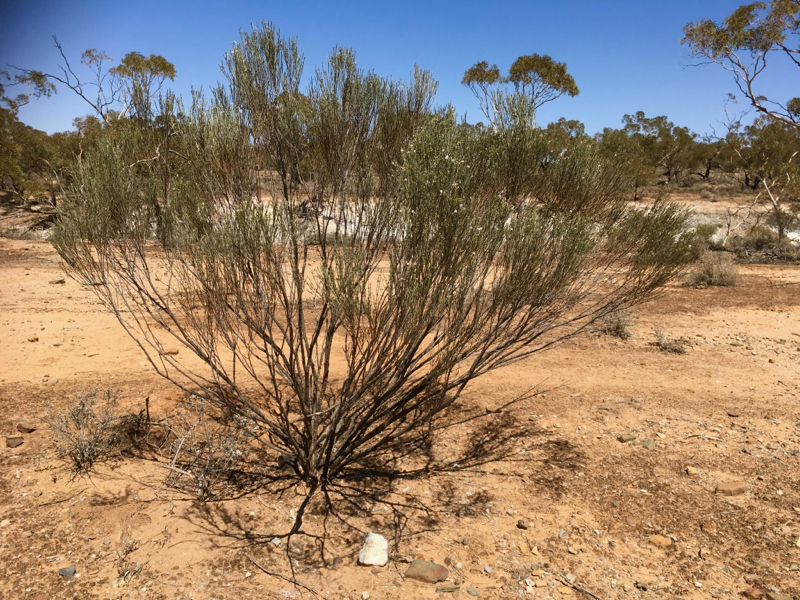

Eremophila scoparia in Aroona Sanctuary, presenting as single stem, over 2m tall.
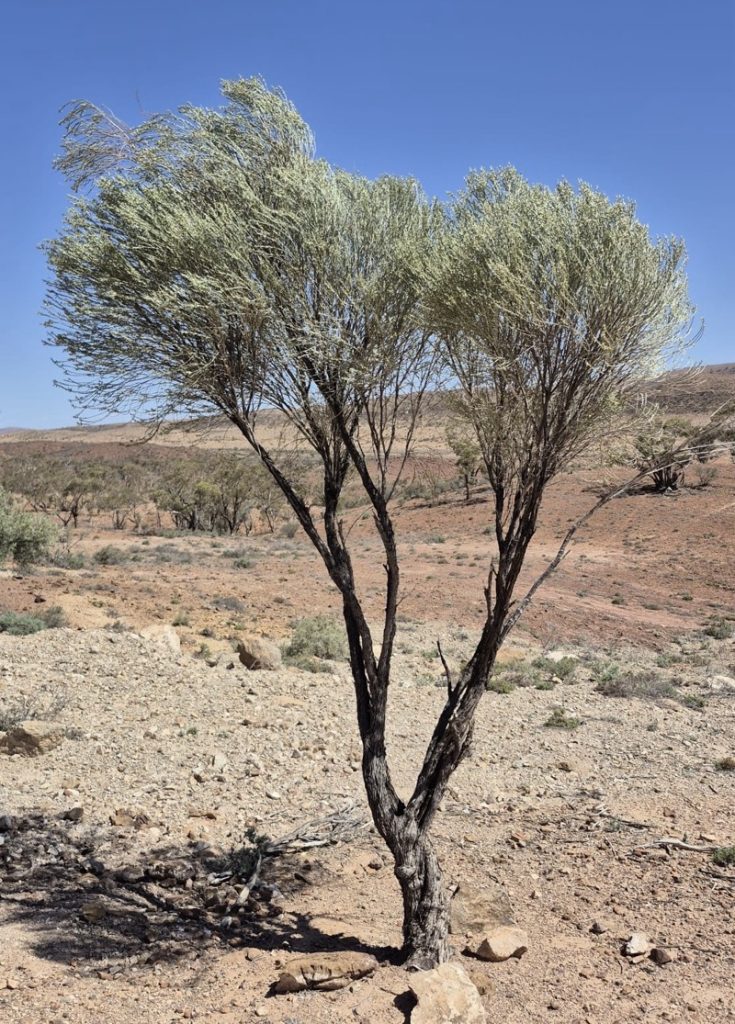
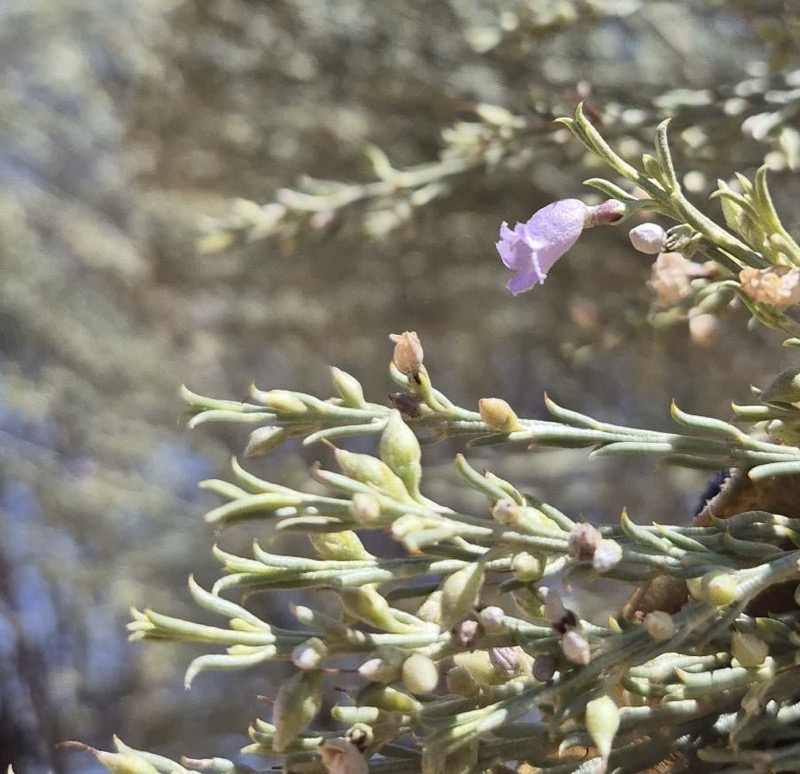
The Rock Fuchsia Bush, Eremophila freelingii, is a common sight on rocky slopes in the Flinders Ranges.
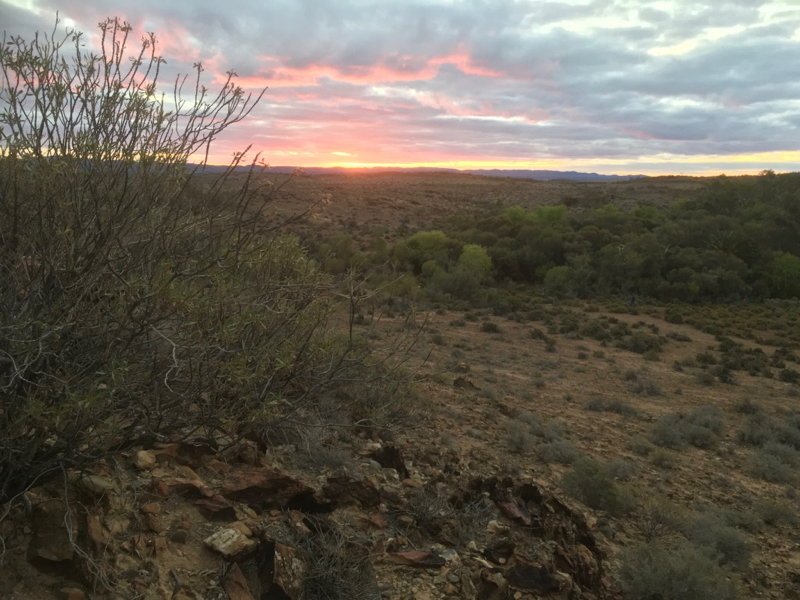

Among the most formidable of the abundant Chenopod family are the Sclerolaenas. This one is known as the Long-spined Poverty Bush.
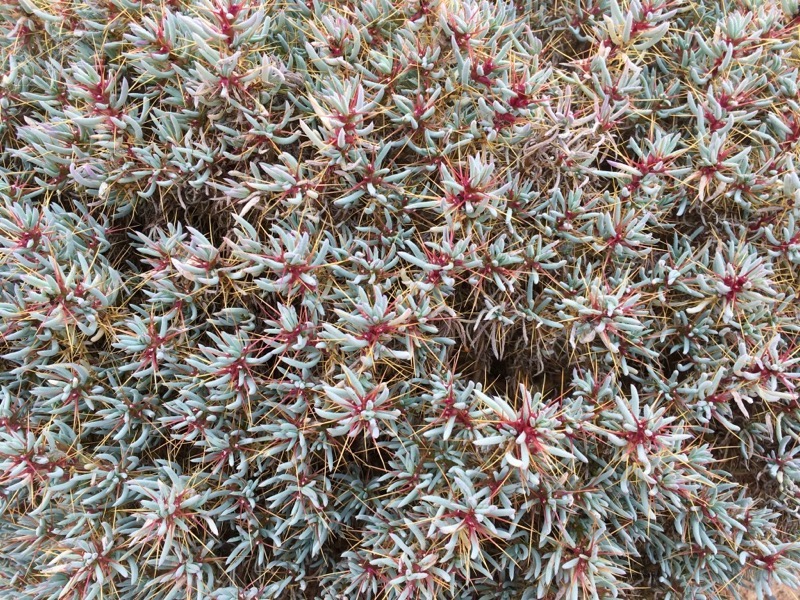
Meuller’s Daisybush, Olearia muelleri, seeding in the Central Flinders Ranges.

The succulent Soapbush, Zygophyllum aurantiacum, also commonly known as Twinleaf, flourishing on shale ridgetops at Warraweena Conservation Park.

 Fleshy four winged fruit.
