
Maireana astrotricha, the Low Bluebush, is a compact pale blue grey bush growing amongst Black Bluebush on the limey clay plains of Copley. Coppery pink to red coloured fruit has a single slit.
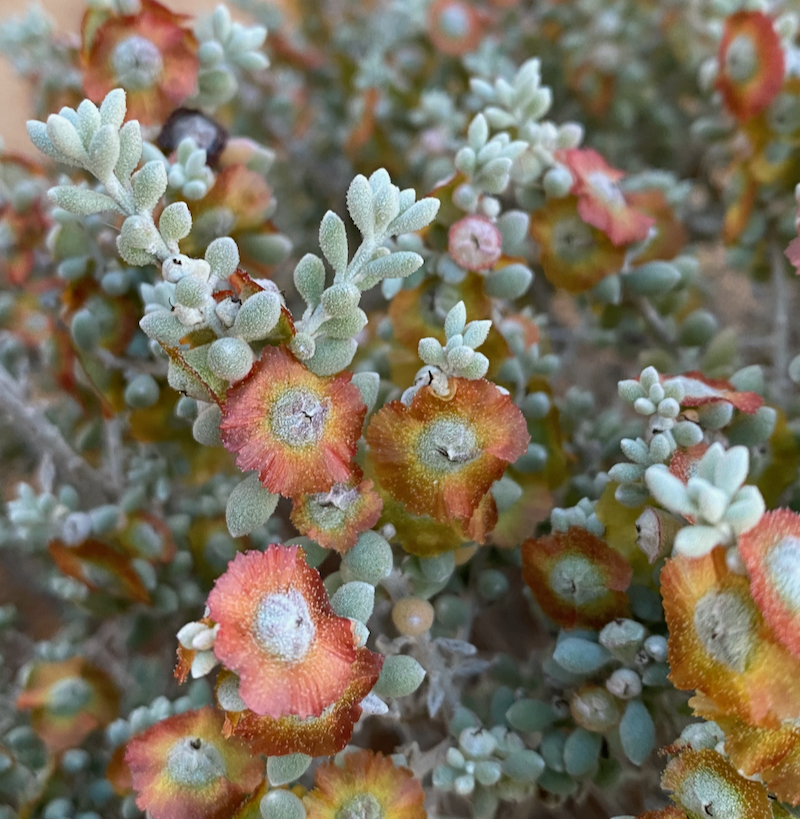
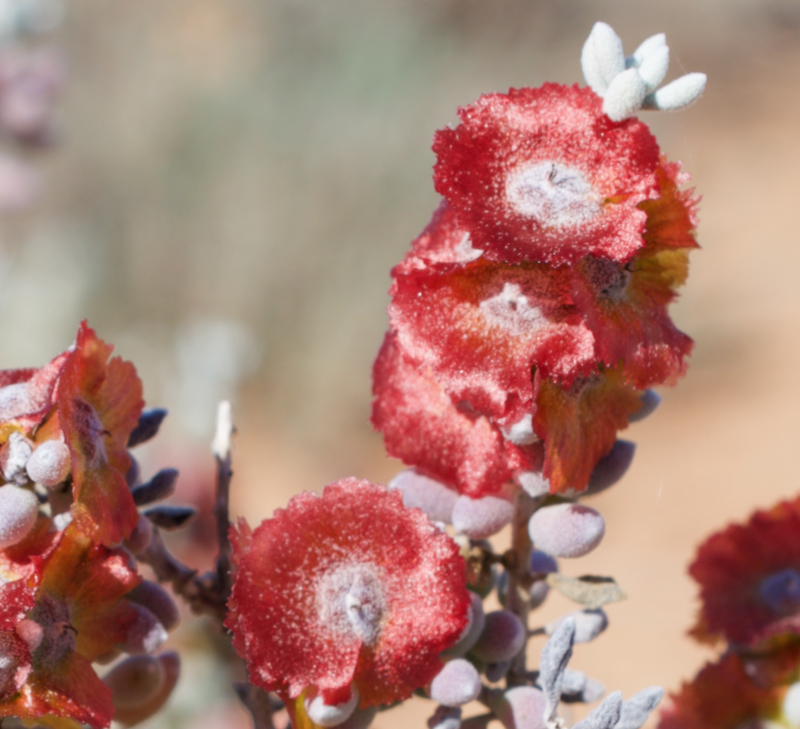
Maireana astrotricha, the Low Bluebush, is a compact pale blue grey bush growing amongst Black Bluebush on the limey clay plains of Copley. Coppery pink to red coloured fruit has a single slit.
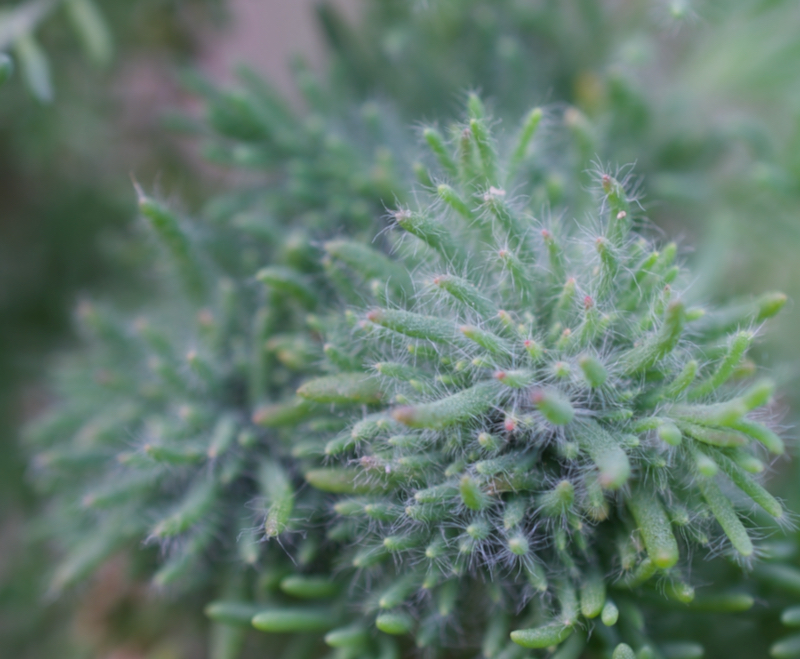
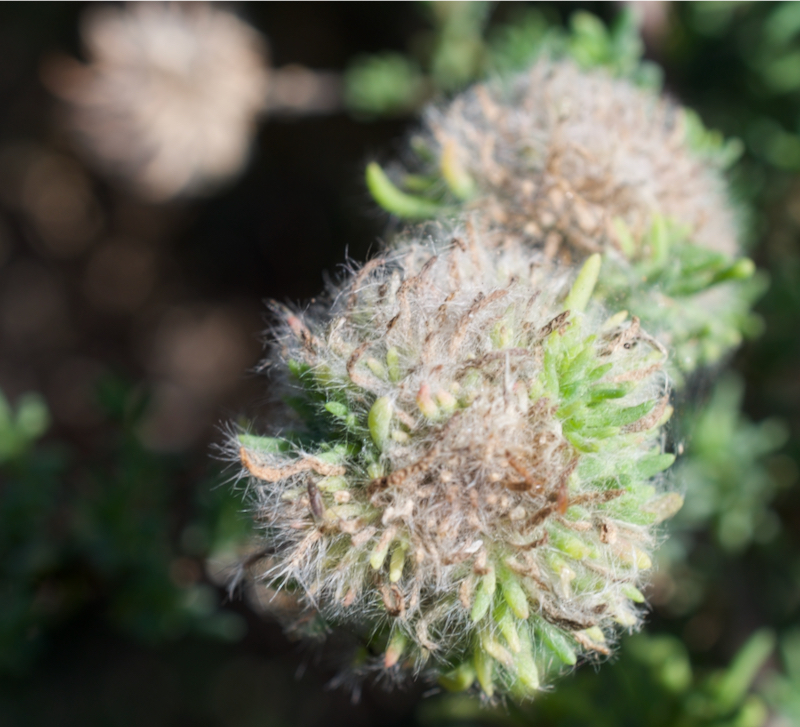
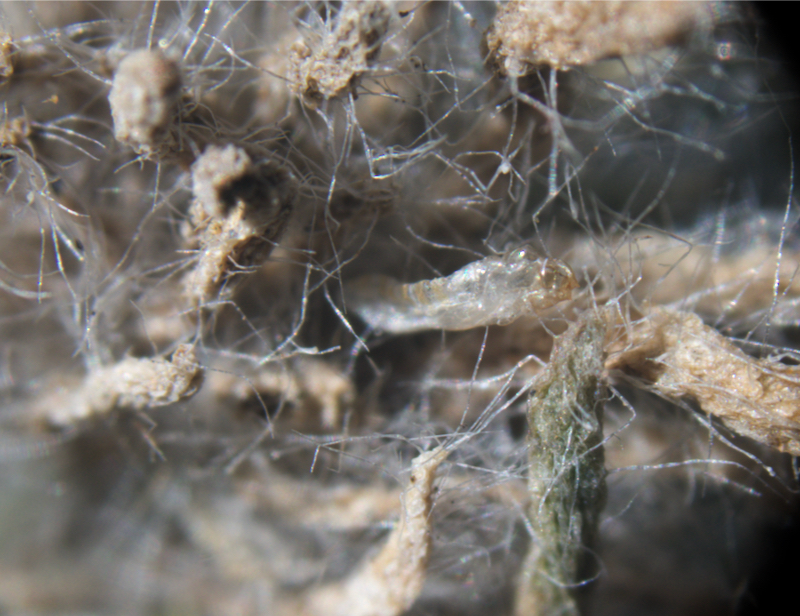
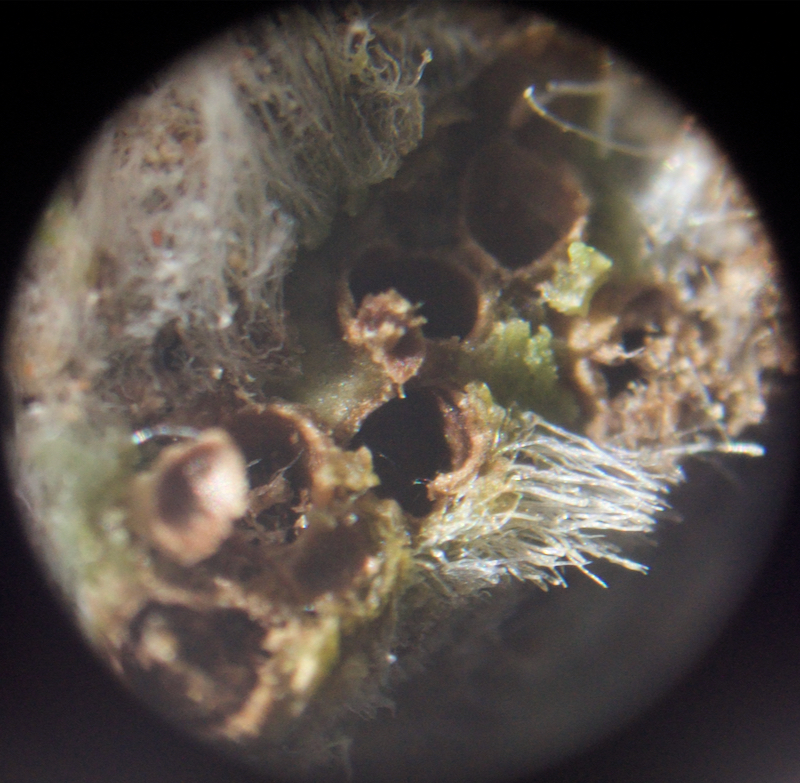
These pom-pom-like formations (1-2cm across) on Ruby Saltbush (Enchylaena tomentosa) are galls created by a type of Diptera Midge infestation which is one of several species hosted by specific chenopods. These galls impede flowering and fruiting of the plant, instead hosting the Gall Midge which lays eggs into the new flower bud. Larvae then feed within the gall, the remains of which can be seen below.
Maireana turbinata, the Top Bluebush fruiting in winter in the Northern Flinders Ranges.

Maireana pyramidata, the Black Bluebush or Sago Bush in winter. Fruits are yellow with a raised pyramid shaped centre, drying to black, giving the plant its scientific and common names. Prevalent in chenopod country throughout the Flinders Ranges, this plant provides habitat for birds such as the Variegated Fairy Wren and reptiles such as the Bearded Dragon.


Eremophila scoparia, the Broombush or Scotia Bush, in flowering at Warraweena in the Northern Flinders Ranges in July.

Crimson Emubush (Eremophila latrobei) flowers range from pale red to purple. This deep pink variety is flowering in Welcome Pound at Arkaroola Wilderness Sanctuary during winter. Foliage varies from green to silvery grey.


Templetonia retusa, commonly known as Cockie’s Tongue or Cockie’s beak, is a small upright shrub with large, striking red pea blooms. Seen here flowering on a rocky ridge at Arkaroola in winter.


Olearia decurrens, the Clammy Daisybush, flowering in the rocky slopes of Welcome Pound at Arkaroola in winter.

Known as the Leafless or Jointed Cherry, Exocarpos aphyllus grows in sand and rocky slopes such as Acacia Ridge at Arkaroola. Small berries are edible.

Shrubby Rice-flower (Pimelea microcephala) flowering at Arkaroola in the Gammon Ranges in winter.
