

Narrow-leaf Hop-bush
The desert river systems of the Channel Country are filling Lake Eyre from the north. As floodwaters flow toward the inland Great Artesian Basin, the arid land is transforming into an unusually green vista that can be viewed from the air. Flights over Lake Eyre and the Channel Country are available from William Creek.


Castor oil plant (Ricinus communis) is an introduced species historically cultivated for its oil which is used in food, medicine, industry and, some would argue, as a way of torturing children. Escaping from gardens, it can be seen in some waterways in the Flinders Ranges. Following floods, this stand south of Parachilna is growing up to 4 metres tall.
While flowers lack petals, female flowers have showy red stigmas and male flowers have numerous creamy yellow stamens. Flowering here in March.


Pimelea petrophila, the Rock Riceflower flowering in Wilpena Pound in December.

Flowering Eremophila scoparia, or Broombush, near Italawi Gap in the Gammon Ranges in November.


Melaleuca glomerata is known as White Tea-tree, Inland Tea-tree, Inland Paperbark or Desert Paperbark. It is typically seen throughout the Flinders Ranges in watercourses and is a good indicator of soaks and springs. Flowering profusely at Stubbs Waterhole, Arkaroola after early summer rain.


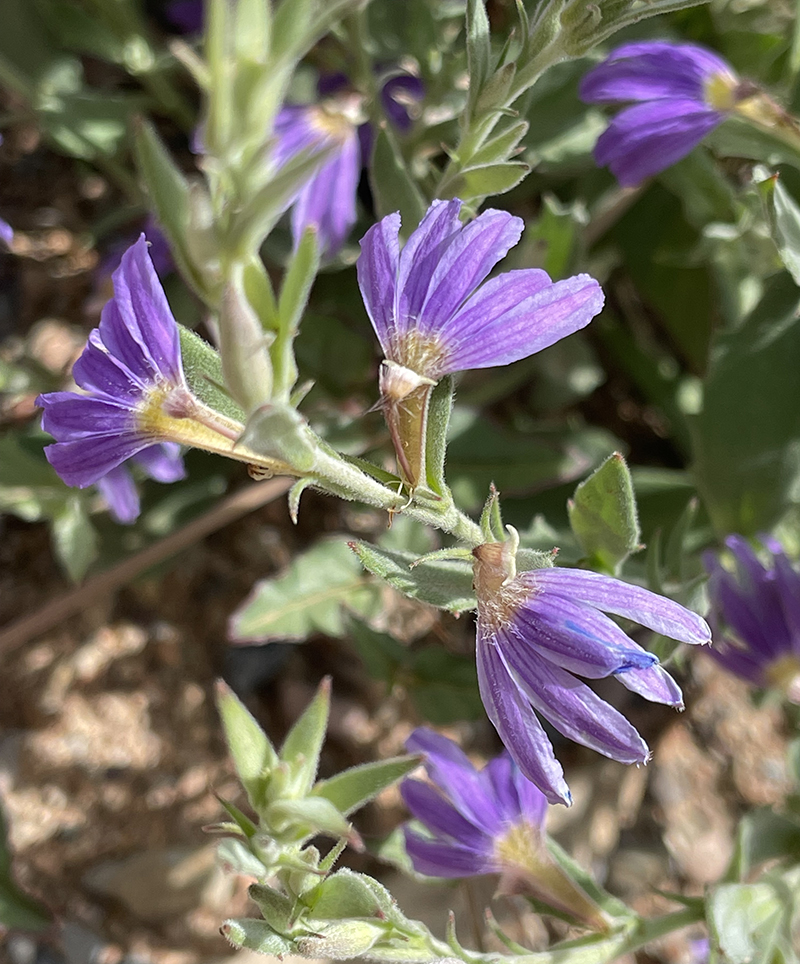
Inland Fanflower (Scaevola humilis) seen flowering in November in the Gammon Ranges, it grows up to 50cm in sandy soils and gypsum soils.

Eremophila Freelingii, flowering in November near Trebilcock Creek, Northern Flinders Ranges.
Continue reading “Eremophila Freelingii”Wild Tobacco flowering on the banks of Copley Retention Dam, May.

The Senna family, known commonly as Cassias, typically begin to flower in late winter, setting off the spring flowering in the Flinders Ranges. This year Limestone Cassias (Senna artemisioides subsp. oligophylla) at Aroona Dam Sanctuary are flowering in mid-February.
