


This Australian Ringneck (Barnardius zonarius) seen in the Flinders Ranges is a hybrid of the Port Lincoln Parrot and Mallee Ringneck. It has the yellow belly and dark head feathers of the Port Lincoln Parrot, and the rich blue-turquoise back and broad red frontal band of the Mallee Ringneck.


Stimson’s Python (Antaresia stimsoni) is a non-venomous constrictor, sometimes called the Inland Children’s Python. It lives in rocky gorges, hillsides and creeks throughout the Flinders Ranges, and also populates the deserts to the north. It eats small mammals and reptiles, and typically grows up to 1.2 metres long.


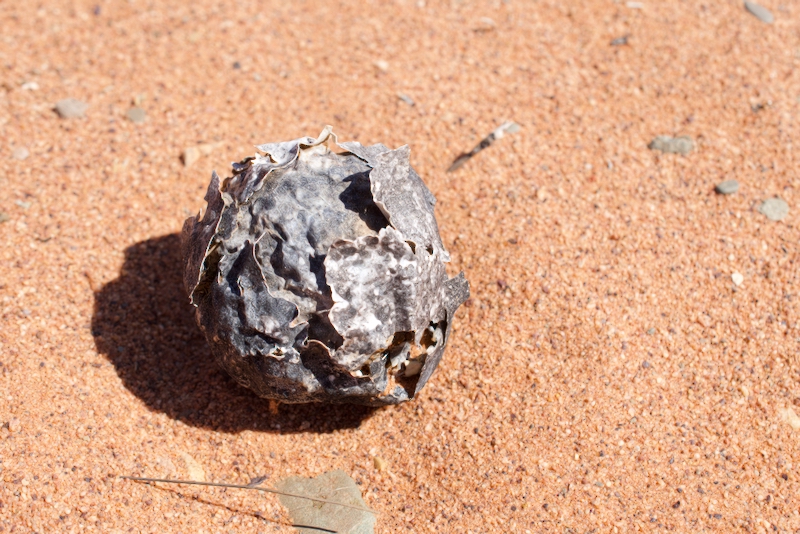
Also commonly known as Paddy Melon, Camel Melon (Citrullus amarus) was introduced to South Australia with camels in the 19th century. Though related to squash, gourds and melons, Camel Melon is not generally eaten. The fruit (approximately 8cm wide), dries into a resilient seed casing, leading to a proliferation of this plant in various harsh outback conditions, including sand dunes.
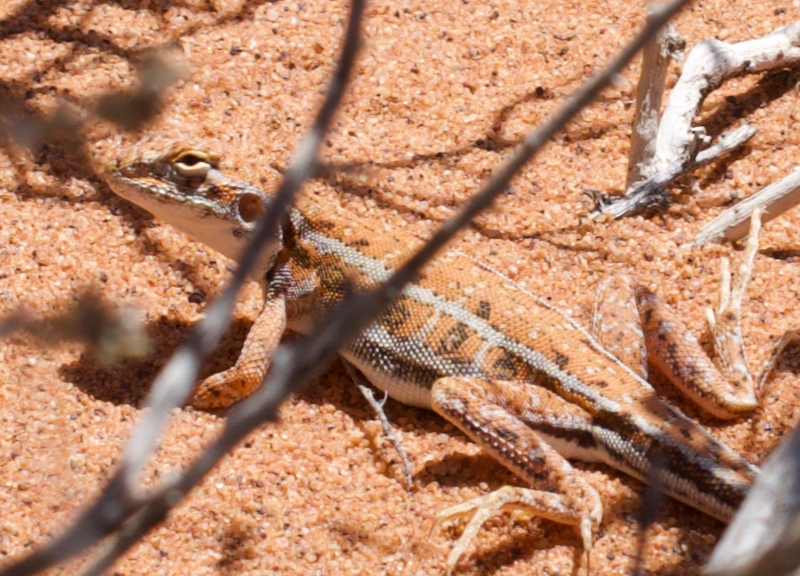
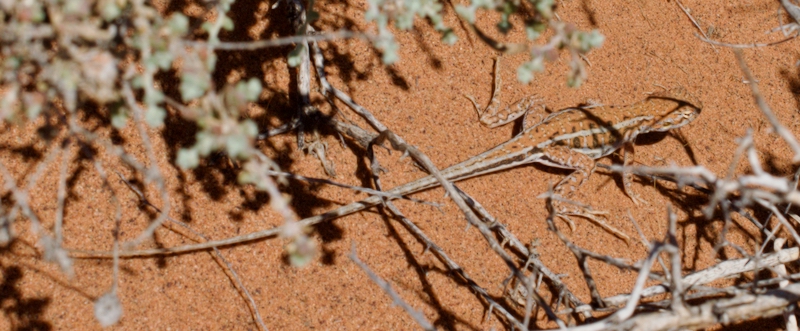
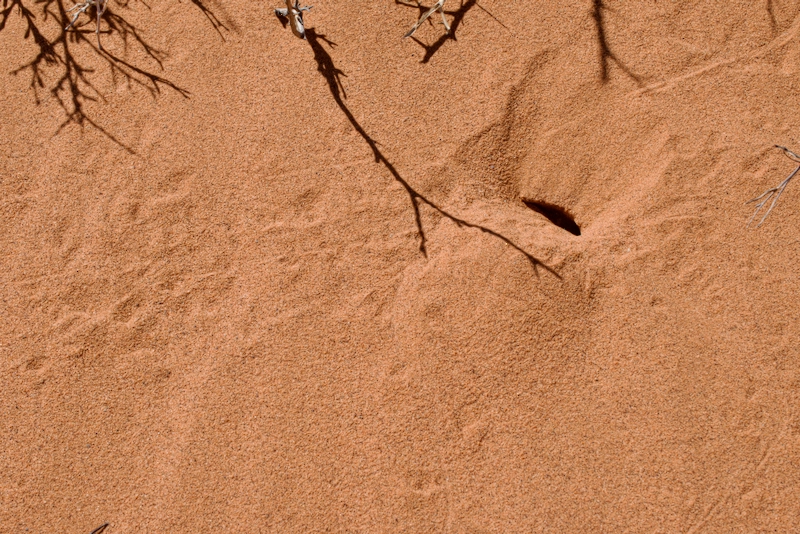
The superbly camouflaged Mallee Military Dragon (Ctenophorus fordi) in the Lyndhurst sand dunes.
Dodonaea viscosa, the Sticky Hop-bush, has winged fruits which are covered with a protective sticky resin. Sap sucking aphids feeding on these fruits are farmed by ants for their ‘honeydew’ secretions.

Chequered Swallowtail butterfly, Papilio demolius, sighted in ephemeral floodplains near Farina in the Far North Flinders Ranges.

Toward the end of the 2-4 week lifespan as an adult butterfly, fading of the wings can happen due to wear and tear, and UV bleaching, as seen in this Chequered Swallowtail feeding on an Eremophila flower in Copley.

Further information about Chequered Swallowtails can be found on the website managed by Butterfly Conservation SA.
