
Small White Butterfly (Pieris rapae) also known Cabbage White Butterfly, feeding in August.

Small White Butterfly (Pieris rapae) also known Cabbage White Butterfly, feeding in August.
Inland Painted Grasshoppers, also known as Blistered Pyrgomorphs or Blistered Grasshoppers (Monistria pustulifera) seen near Copley in August.

The Ajax Limestone in the Northern Flinders Ranges includes a significant array of Lower Cambrian Archaeocyath fossils, replaced by quartz, exposed in ground-level limestones.
This fossil site on a low gibber-covered rise to the north of Beltana represents the most species-diverse archaeocyath locality worldwide, with a count of 82 species. One of seven sites in the Flinders Ranges currently under consideration for UNESCO World Heritage status, it provides a significant record of an extinct group of marine sponges (Phylum Porifera) that lived around 525 million years ago and played a dominant role in constructing the first reefs on Earth.


Flower variation of Eremophila alternifolia, commonly known as Scented Emu Bush or Narrow-leaved Fuchsia-bush.

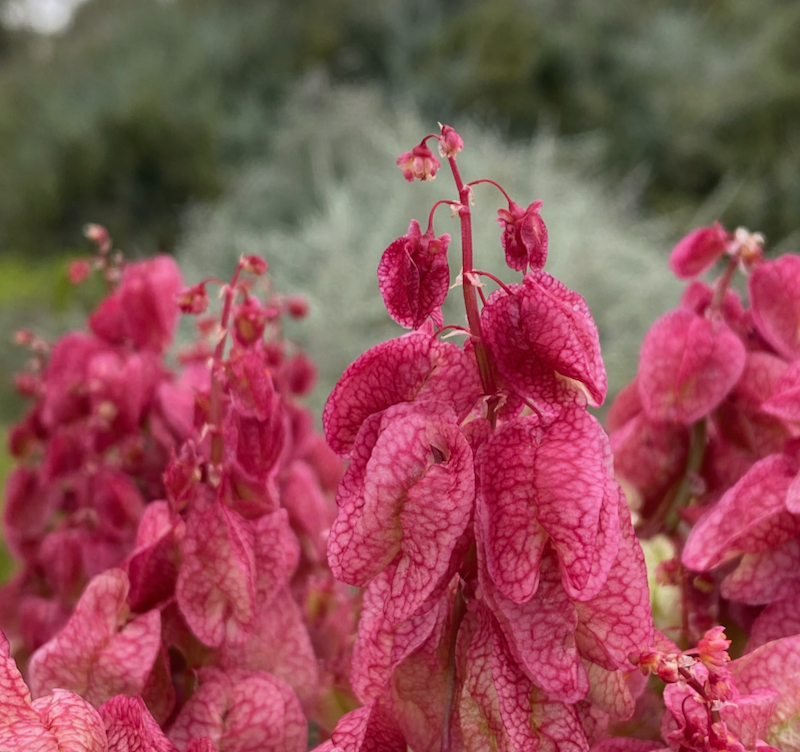
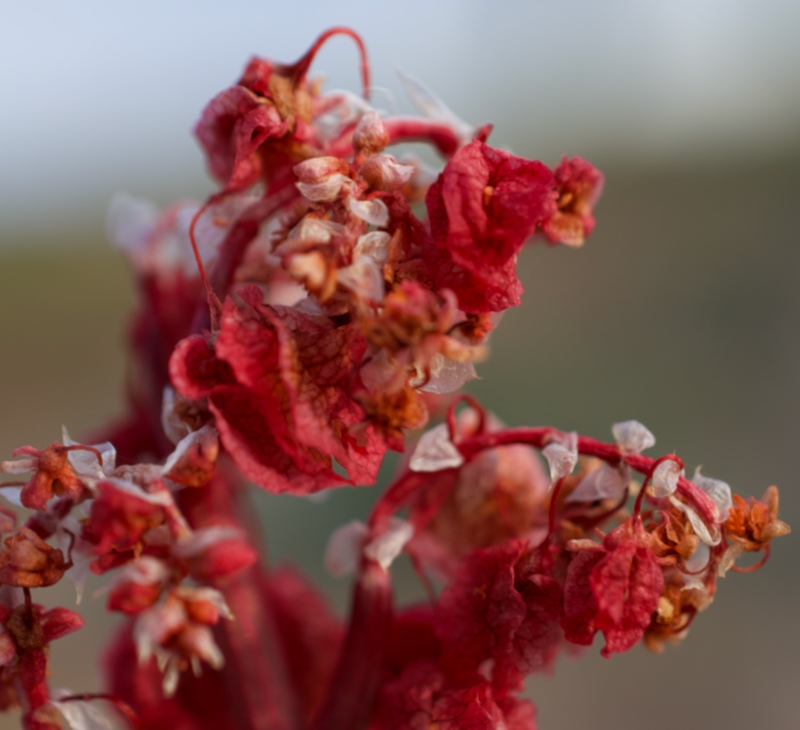
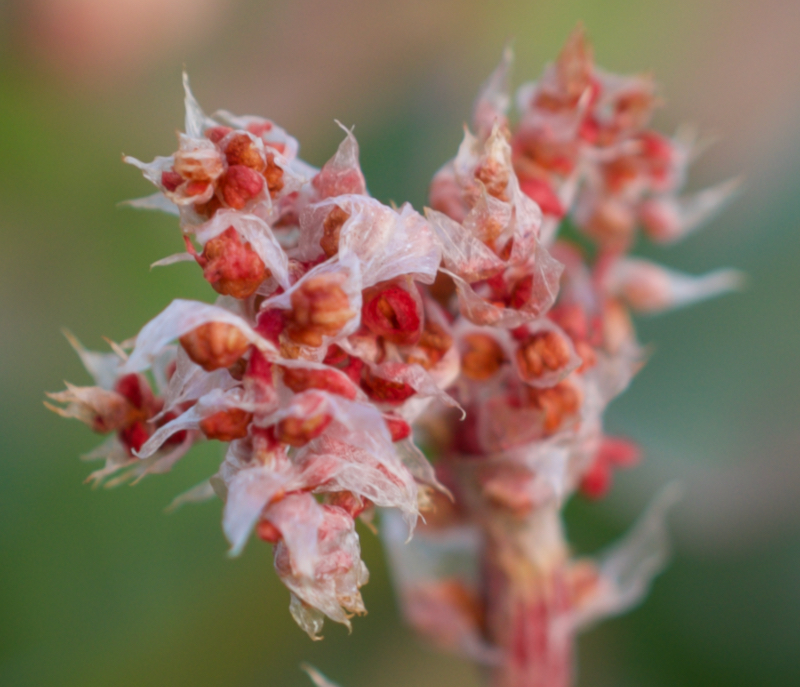
Acetosa vesicaria, known as Red Dock or Wild Hops, is thought to be introduced in the saddles of early Afghan cameleers. Responding quickly to rainfall, Wild Hops can create a stunning flush of colour through the Flinders Ranges.
The Skillogalee Dolomite is a 750 million-year-old formation that is host to stromatolite fossils – the only evidence of complex living organisms at that time. Stromatolites are fossilised biochemical accretionary structures created by Cyanobacteria (‘blue-green algae’) colonies which form microbial mats and laminated mounds in shallow saline waters. Living stromatolites are found at the tip of the Yorke Peninsula (SA) and Shark Bay in (WA).

Skillogalee Dolomite includes blue-grey dolomites, magnesites, bands of black cherts and stromatolites. Magnesites (magnesium carbonate) of this formation were formed in marginal lagoons of the Adelaide Geosyncline around 750 million years ago and occur as beds, commonly conglomerate in texture, as pictured below.


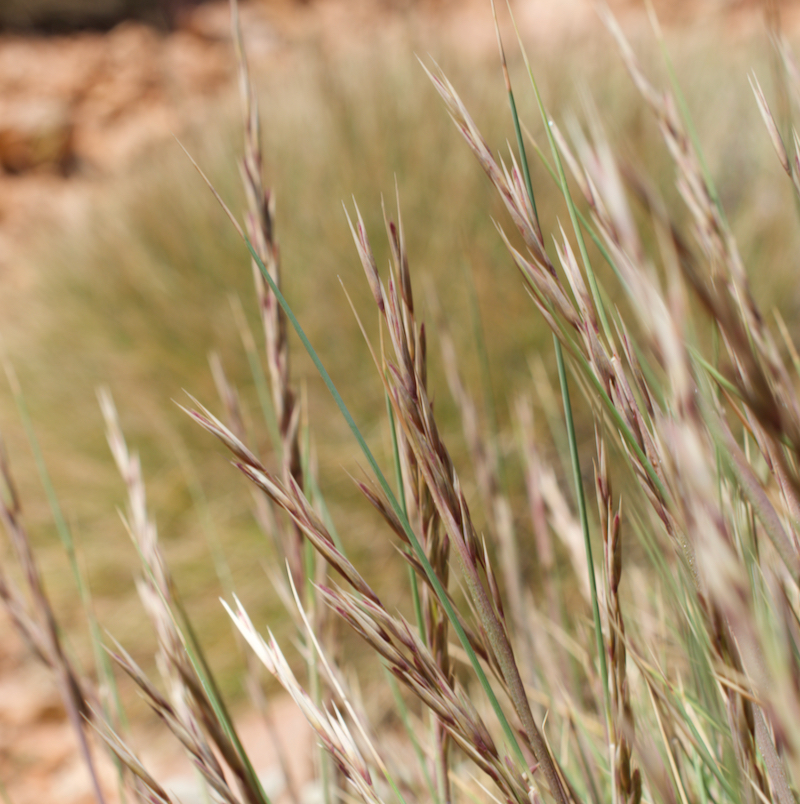
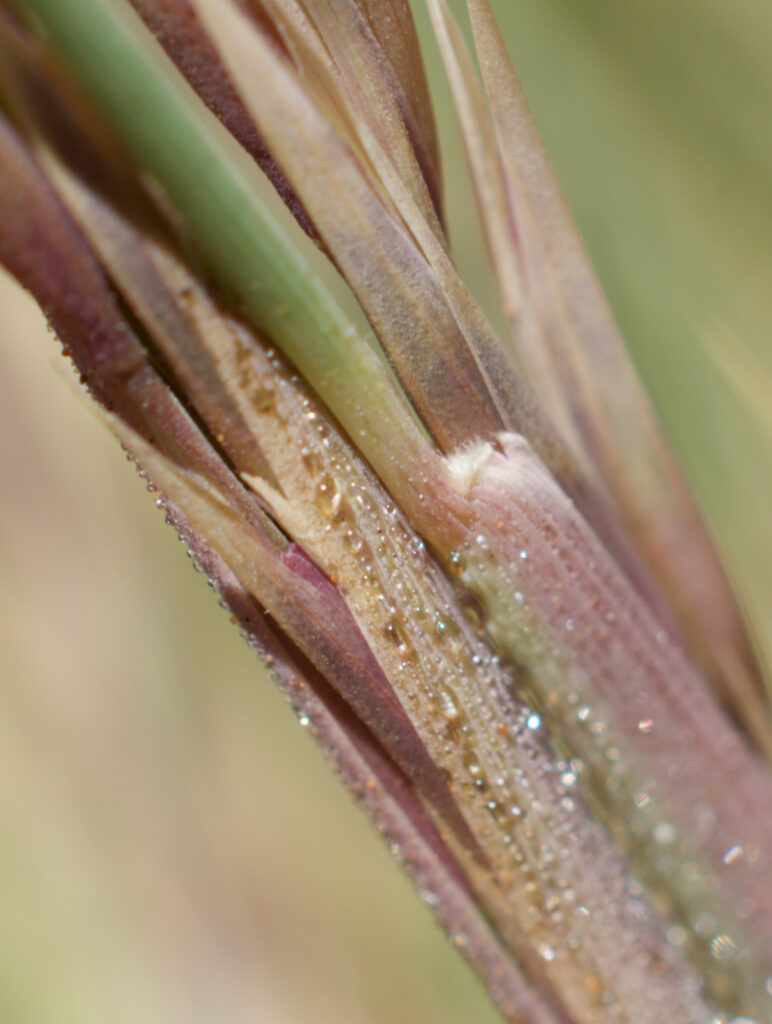
Triodia, commonly known as Spinifex, observed seeding in winter and producing sticky resin used in traditional artifact making in Australia.
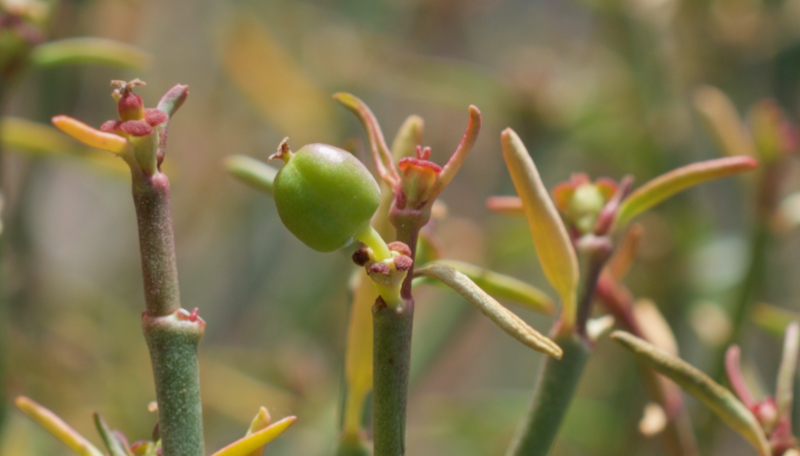
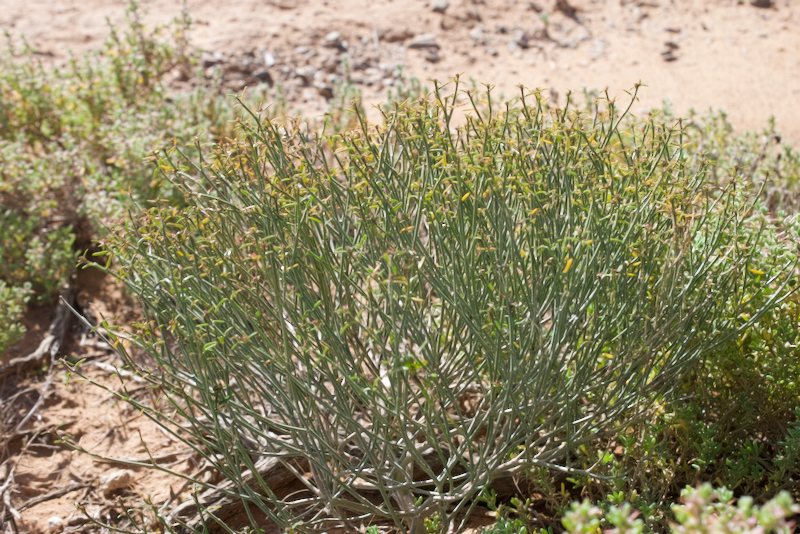
The Desert Spurge (Euphorbia tannensis ssp. eremophila) also know as Caustic Bush, Bottletree Caustic or Spurgewort is a small, short lived forb fruiting in the Northern Flinders Ranges in winter.
A geological unconformity is an unconformable contact between two different lithologies. In the case of this formation in Jubilee Creek in the Northern Flinders Ranges, stromatolitic limestone of the Balcanoona Formation overlays laminated mudstone of the Tapley Hill Formation.
These two formations followed the melting of an ice age dating 700 million years ago. “Black silt, rich in fine organic material derived from algae and bacteria, was deposited as laminations (each less that 0.5mm thick) in the calm shelf sea. The total thickness of this silt blanket (known as the Tapley Hill Formation) increased from a few tens of metres in the west to about 3km in the ranges east of Hawker. Here depth of water and rate of subsidence of the basin floor were greatest. As silt built up, the water around the margins of the basin became shallow enough for stromatolites and oolite banks to form; these are exposed near Port Augusta and Balcanoona [Balcanoona Formation].” – Excerpt from The Legacy of Time: The Story of the Flinders Ranges by the Royal Geographical Society of South Australia.
