
Sclerochlamys brachyptera, the Short-winged Copperburr or Hairy Bassia.

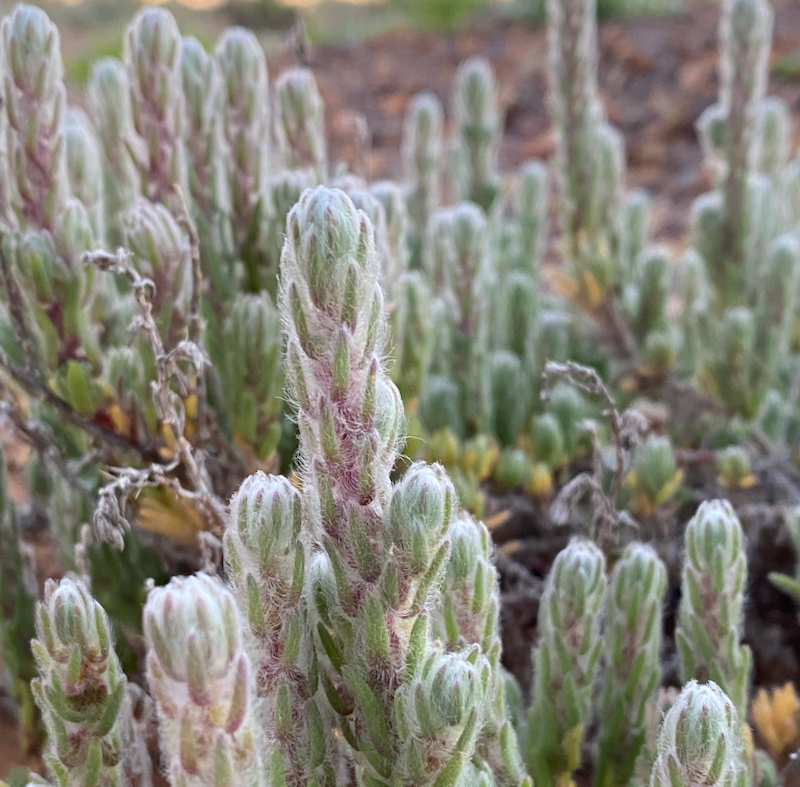
Sclerochlamys brachyptera, the Short-winged Copperburr or Hairy Bassia.
Maireana pyramidata, the Black Bluebush or Sago Bush in winter. Fruits are yellow with a raised pyramid shaped centre, drying to black, giving the plant its scientific and common names. Prevalent in chenopod country throughout the Flinders Ranges, this plant provides habitat for birds such as the Variegated Fairy Wren and reptiles such as the Bearded Dragon.


Sida petrophila, Rock Sida, growing abundantly in Sliding Rock Creek, Warraweena.


Sclerolaena longicuspis, known as the Long-spined Poverty Bush, casting a burgundy blush on the hills near Sliding Rock, Warraweena, in July.


Zygophyllum apiculatum, a Twinleaf commonly known as Gallweed flowering abundantly in Sliding Rock Creek, Warraweena in July.

Eremophila scoparia, the Broombush or Scotia Bush, in flowering at Warraweena in the Northern Flinders Ranges in July.


Goodenia calcarata, the Streaked Goodenia, flowering in dry rocky soil at Arkaroola.

When not enjoying geology and astronomy tours at Arkaroola, one of the many ways to take in the spectacular mountain views is the Acacia Ridge WallkingTrail. It’s a 5.6km moderate walk across a mountain ridge, ending at the Arkaroola Village. The views of the ranges in all directions are breathtaking and there are many flowering plants inhabiting the rocky slopes that are uncommon in other parts of the Flinders Ranges.


Mt Neill Granite is exposed in a rocky creek near Paralana Hot Springs. The red feldspars of this 1580 million year old formation present in a variety of forms.


