
Silverton Daisy (Ixiochlamys cuneifolia) budding and seeding in the central Flinders Ranges in winter.


Silverton Daisy (Ixiochlamys cuneifolia) budding and seeding in the central Flinders Ranges in winter.
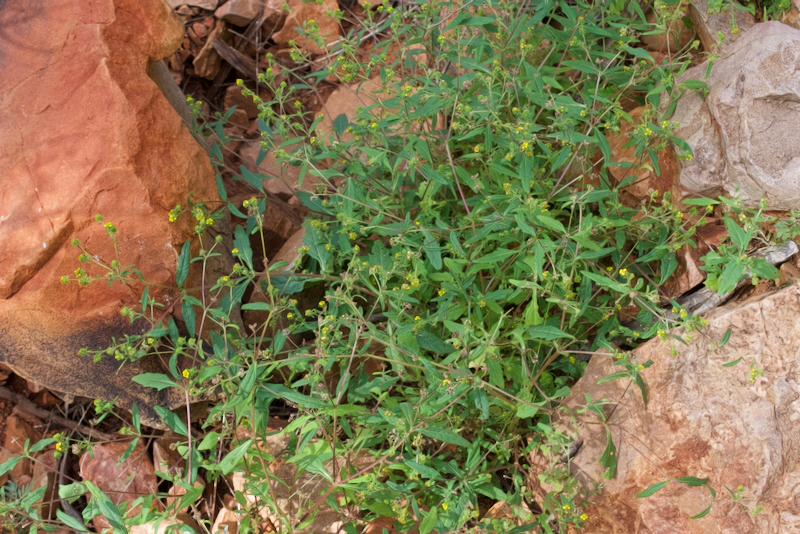
Australian St Paul’s Wort, Sigesbeckia australiensis, growing in damp crevices of Italawi Gap after rains.

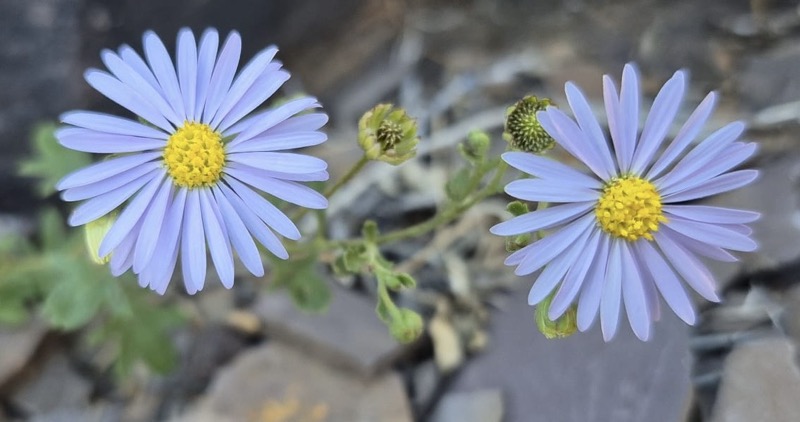
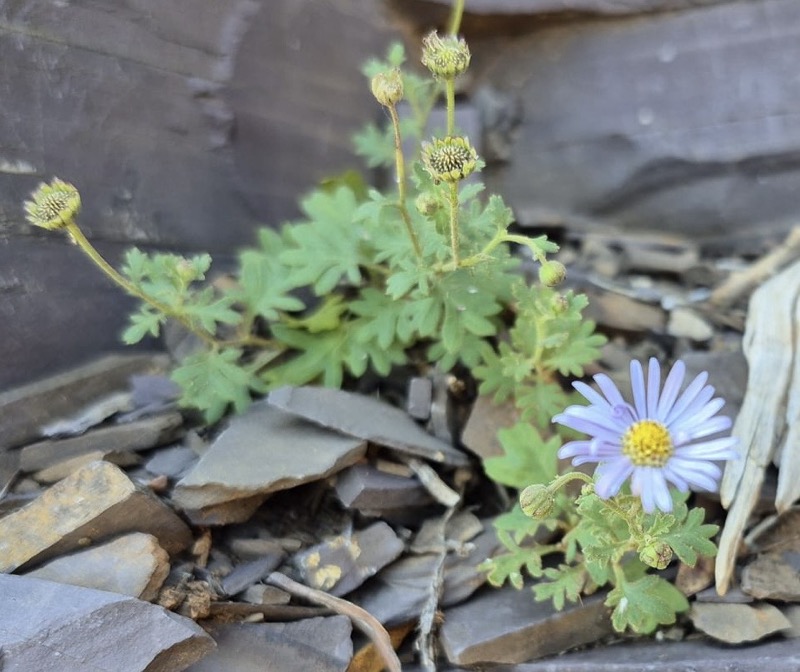
The Purple Burr-daisy (Calotis cuneifolia) is uncommon in South Australia, local to the flood plains of the Murray River flood plains. It was seen flowering among the shales of Chambers Gorge in the North Flinders Ranges, South Australia, in November.
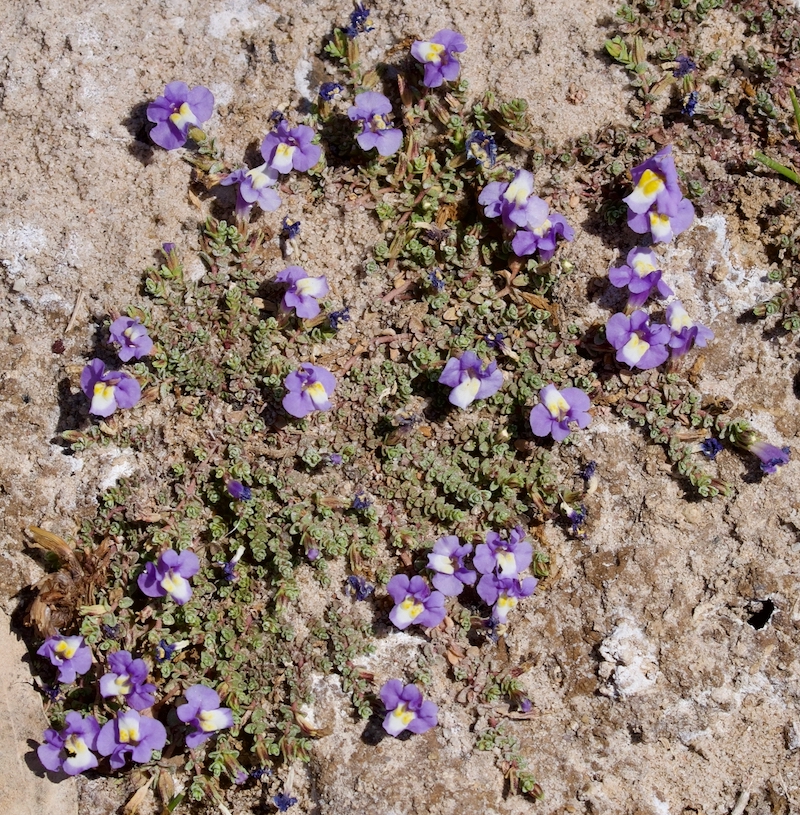
Thyridia repens, the Creeping Monkey-flower, is a prostrate marginal water plant native to Australia and New Zealand. A prolific groundcover on the banks of Retention Dam, Copley.
The Stemless Thistle (Onopordum acaulon) is a weed native to the Mediterranean. Seen flowering along the edges of a creekbed in the northern Flinders Ranges in October.

Pterocaulon sphacelatum, commonly known as Applebush or Fruit-salad Plant is an aromatic perennial found in the Flinders Ranges.

Hill Button-bush (Leiocarpa semicalva ssp. semicalva) flowering at Arkaroola in winter.


Dittrichia graveolens, known as stinkwort or stinking fleabane, is native to southern Europe, North Africa, and western Asia, now naturalized in Australia. It is considered and noxious weed and invasive species in some places. It can damage the digestive tracts of grazing animals and contact can cause severe dermatitis in humans. Seen flowering in gullies and creeks in the north Flinders Ranges during autumn.


The spiny daisy (acanthocladium dockeri) was first discovered by Dr Hermann Beckler (of the Burke /Wills expedition) in 1861 near Menindee (Pamamaroo), NSW. The specimen was sent back to the Royal Society and described and named by Dr Ferdinand Mueller. A further specimen was unable to be located until a discovery in 1910 at Overland Corner (near Kingston-on-Murray). Many years later, the species was pronounced extinct – until, in 1999, a local farmer discovered an outcrop near his farm, not far from Laura. The species is being translocated by environmentalists seeking to recover the plant from its present situation, critically endangered.

Senecio magnificus flowering in spring, in Parachilna Gorge, pollinated by bee and Australian Lesser Wanderer butterly.

