

Australian Emu
Senecio magnificus flowering in spring, in Parachilna Gorge, pollinated by bee and Australian Lesser Wanderer butterly.


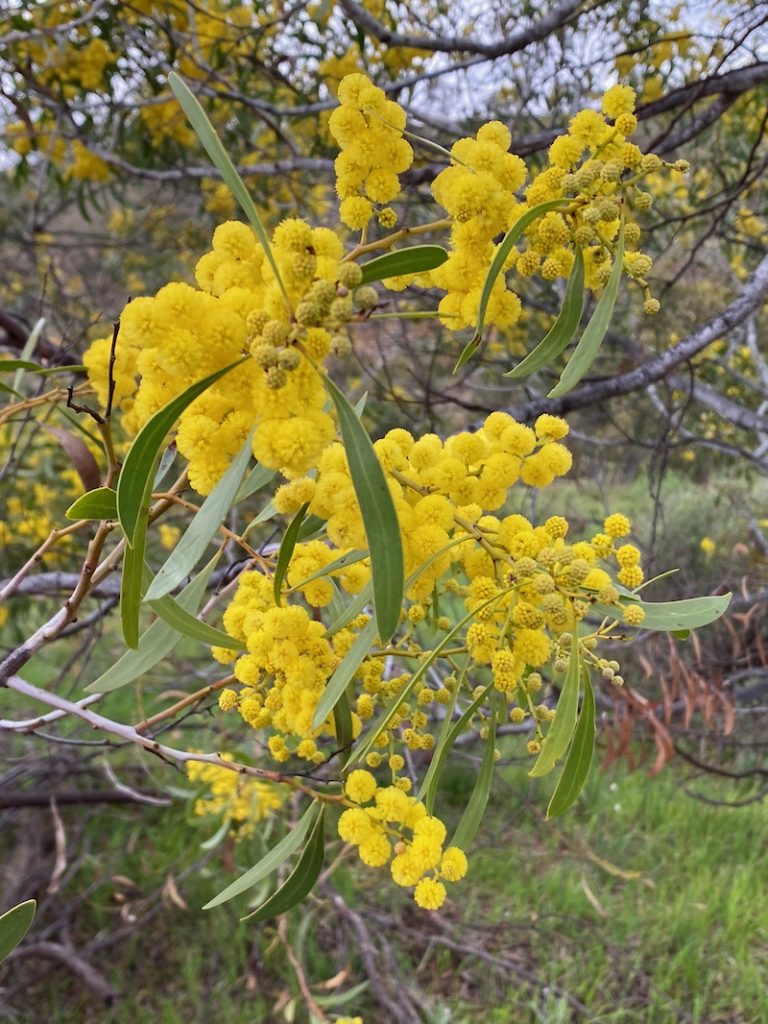
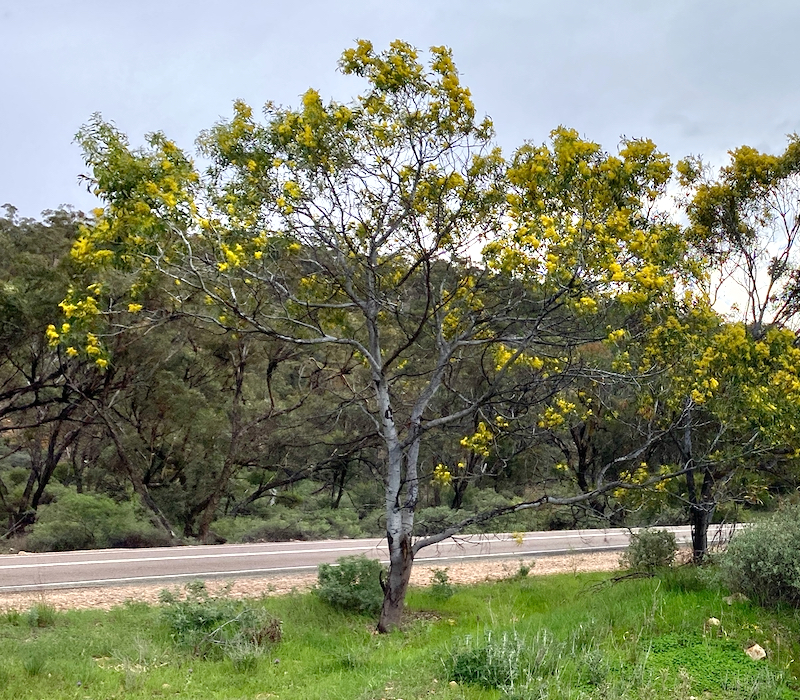
Acacia pycnantha, the Golden Wattle, flowering in the Pichi Richi Pass south of Quorn in early Spring.
These flute casts are part of the limey mud deposits of the Wonoka Formation. Flowing water in the marine trough (the Adelaide Geosyncline approximately 580 mya) hollowed grooves (flutes) into deep sea floor sediments. These flutes fulled with slurries of mud which are preserved as flute casts seen in Bunyeroo Creek in the Ikara- Flinders Ranges National Park.


Example of barite sand nodules in a Rawnsley Quartzite boulder formed in shallow water below the surface of the sand, with quartz grains cemented by barium sulphate later replaced by fine grained quartz to form lumps.


The Bonney Sandstone Formation is the result of deposition of iron-stained sand, silt and mica, eroded from older igneous rocks to the west and transported by rivers into a large delta. This formation has a distinctive reddish colour, and is often seen alongside the harder weathering prominent peaks of Rawnsley Quartzite which was formed from white sands, 600 million years ago. See the essay Legacy of Time by The Royal Geographical Society of South Australia for the riveting story of the formation of the Flinders Ranges.


