
Crimson Emubush (Eremophila latrobei) flowers range from pale red to purple. This deep pink variety is flowering in Welcome Pound at Arkaroola Wilderness Sanctuary during winter. Foliage varies from green to silvery grey.
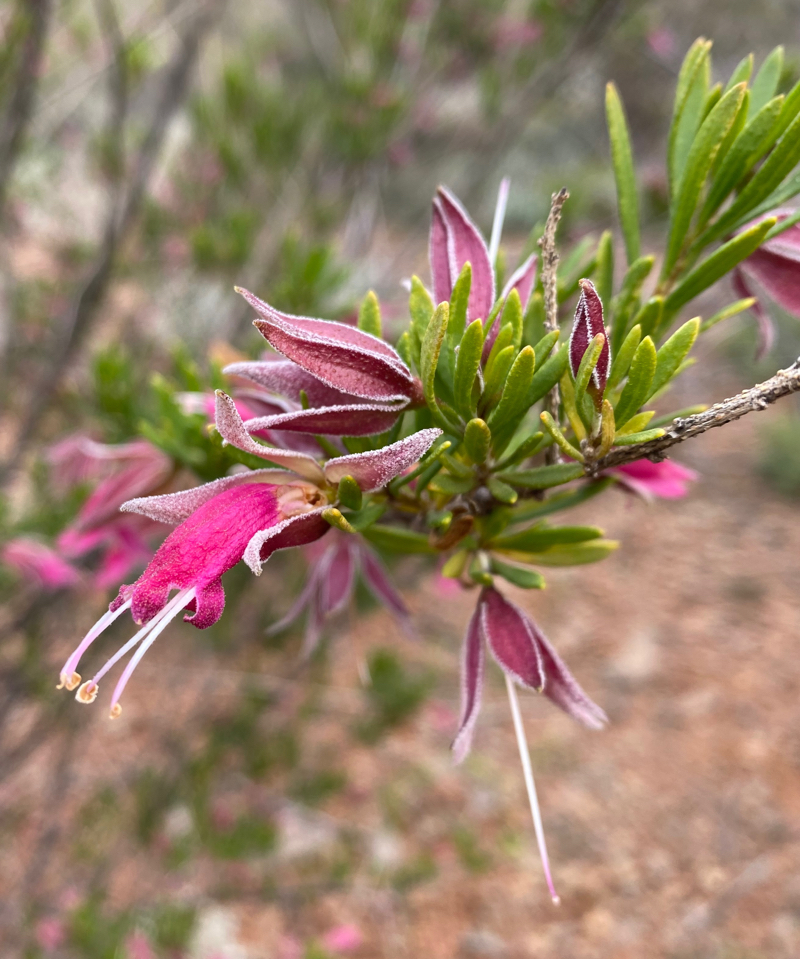
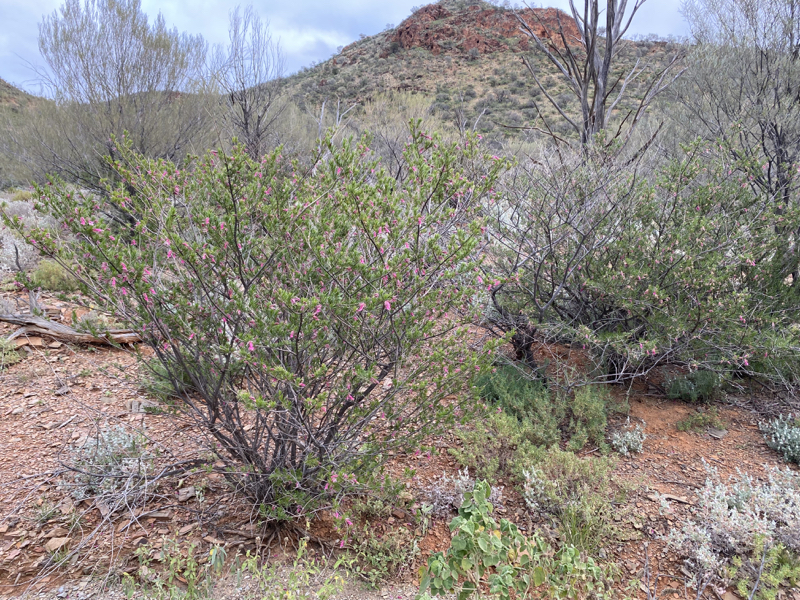
Crimson Emubush (Eremophila latrobei) flowers range from pale red to purple. This deep pink variety is flowering in Welcome Pound at Arkaroola Wilderness Sanctuary during winter. Foliage varies from green to silvery grey.
While weathering and seasonal rains can cause waterholes at to silt up, Paralana Hot Springs continue to flow as a shallow stream. Sourced from within a fault zone, the water is around 60 degrees and emits gases such as radon which is heavier than air and hovers around the creek area on still days. A wonderful array of Cyanobacteria, Proteobacteria and algae thrive in the Paralana Hot Springs.


Templetonia retusa, commonly known as Cockie’s Tongue or Cockie’s beak, is a small upright shrub with large, striking red pea blooms. Seen here flowering on a rocky ridge at Arkaroola in winter.


This white/purple Glycine clandestina is a climber in the pea family, growing on the rocky Acacia Ridge at Arkaroola.


Trachymene, Wild Parsnip, flowering in creek beds at Arkaroola in winter. Note: some species are poisonous despite the name.

Olearia decurrens, the Clammy Daisybush, flowering in the rocky slopes of Welcome Pound at Arkaroola in winter.

Known as the Leafless or Jointed Cherry, Exocarpos aphyllus grows in sand and rocky slopes such as Acacia Ridge at Arkaroola. Small berries are edible.

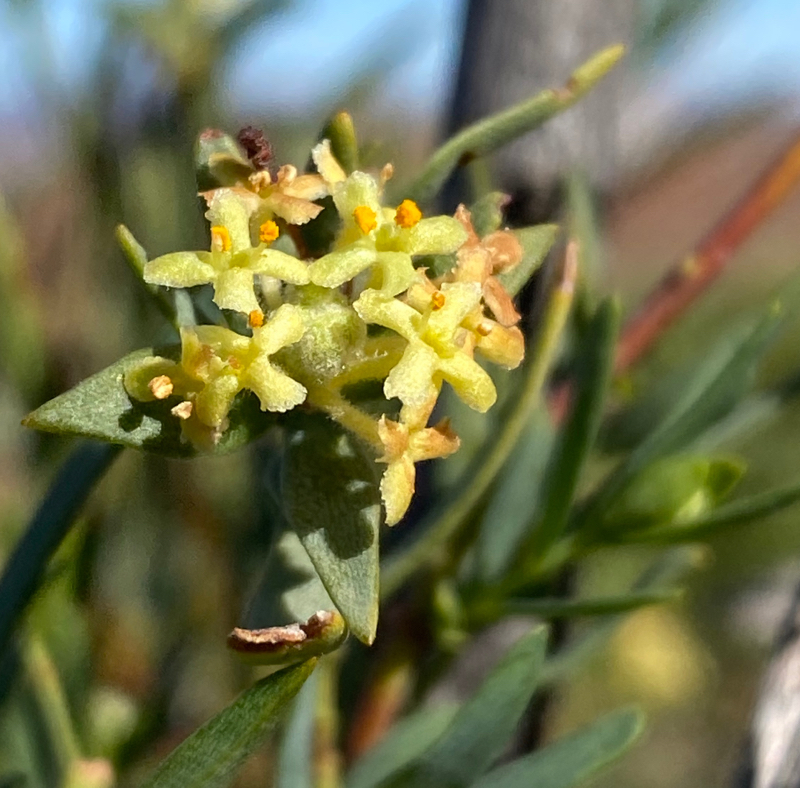
Shrubby Rice-flower (Pimelea microcephala) flowering at Arkaroola in the Gammon Ranges in winter.
Small fern (Cheilanthes sieberi ssp.sieberi), 20cm, growing out of jasper boulders at Arkaroola Wilderness Sanctuary.

Dead Finish (Acacia tetragonophylla) flowering widely throughout Arkaroola in winter.
