
Pupae, or chrysalises, of the Wood White Butterfly (Delias Aganippe) in the Northern Flinders Ranges in late June. The larvae were observed in May. Butterflies emerged in early August.

Pupae, or chrysalises, of the Wood White Butterfly (Delias Aganippe) in the Northern Flinders Ranges in late June. The larvae were observed in May. Butterflies emerged in early August.
Share information about your fossil and artefact findings through the anonymous survey on the Macquarie University Found A Fossil site.
Sally Hurst, creator of the Found A Fossil research project writes, “In Australia, the laws protecting Aboriginal and Torres Strait Islander cultural artefacts and sites, and fossils, varies between states and can be incredibly difficult to find, read, and understand. The laws are confusing, and often it is unclear what actions you are supposed to take if you do ever find something. Your responses and this data may be part of a movement to better improve understanding and accessibility of heritage laws, and increase our understanding of the best ways to communicate with different audiences. Ultimately, we hope that this research may help to better protect Australia’s incredible heritage material into the future.”
> Browse more posts on Flinders Ranges fossils.
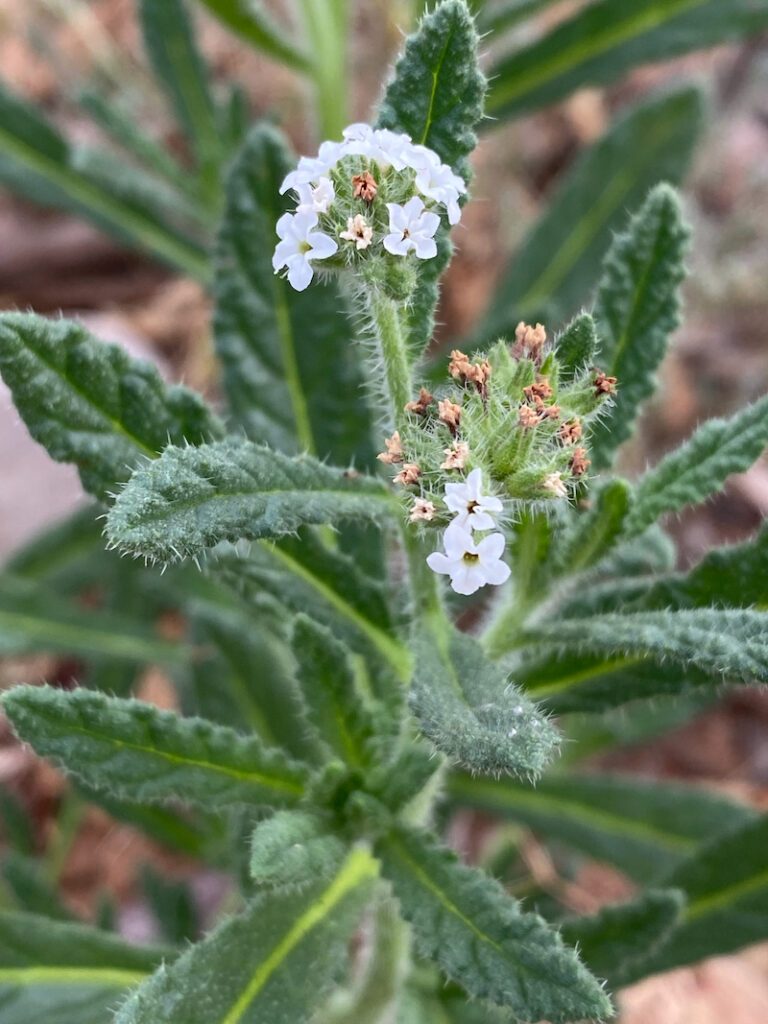
Rough Heliotrope (Heliotropium asperrimum) flowering in the rocky waterway of Italawi Gap in the Gammon Ranges.
Native succulent Sarcostema viminale ssp astrale also known as Caustic Bush, Milk Bush, Caustic Plant, Lye Bush, Snake Plant, Pencil Caustic, Milk Vine, flowering in Copley in June.


Arabidella trisecta, or Shrubby Cress, flowering in Glass Gorge, Northern Flinders Ranges in June.


Zygophyllum stapfii, a Twinleaf succulent variety sometimes known as Dollar Bush, growing on the edge of Spencer Gulf inlet, Port Augusta.


Carpobrotus, or Pigface, growing in coastal clay near Port Augusta.

Flat Cockroach, also called the Trilobite roach, found in leaf litter in the Northern Flinders Ranges (2cm).
