Wonoka Formation Stromatolites

Stromatolites are fossilised biochemical accretionary structures created by Cyanobacteria (‘blue-green algae’) colonies which form microbial mats and laminated mounds in shallow saline waters.  These specimens of early life were trapped and preserved in the limey mud of the Wonoka Formation laid down in the marine trough of the Adelaide Geosyncline 570-580 million years ago.
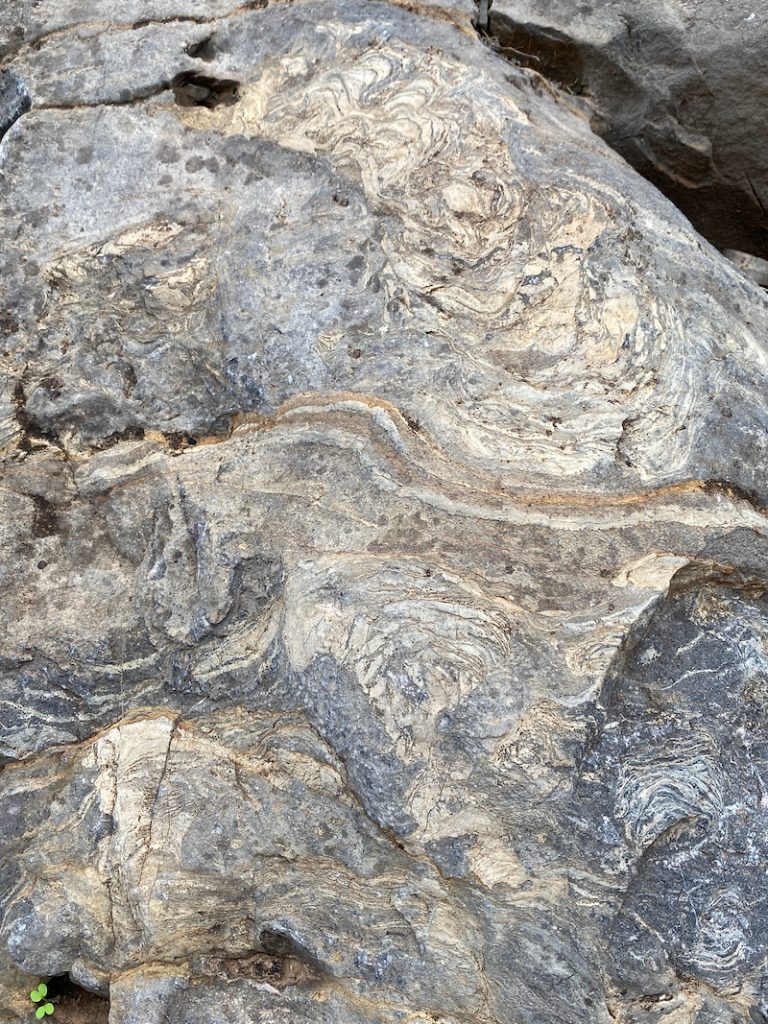
Stromatolites in Bunyeroo Creek, Ikara-Flinders Ranges National Park
Continue reading “Wonoka Formation Stromatolites”

Ajax Limestone Archaeocyath fossils

The Ajax Limestone in the Northern Flinders Ranges includes a significant array of Lower Cambrian Archaeocyath fossils, replaced by quartz, exposed in ground-level limestones.

This fossil site on a low gibber-covered rise to the north of Beltana represents the most species-diverse archaeocyath locality worldwide, with a count of 82 species. One of seven sites in the Flinders Ranges currently under consideration for UNESCO World Heritage status, it provides a significant record of an extinct group of marine sponges (Phylum Porifera) that lived around 525 million years ago and played a dominant role in constructing the first reefs on Earth.

Continue reading “Ajax Limestone Archaeocyath fossils”

Skillogalee Dolomite Stromatolites

The Skillogalee Dolomite is a 750 million-year-old formation that is host to stromatolite fossils – the only evidence of complex living organisms at that time. Stromatolites are fossilised biochemical accretionary structures created by Cyanobacteria (‘blue-green algae’) colonies which form microbial mats and laminated mounds in shallow saline waters. Living stromatolites are found at the tip of the Yorke Peninsula (SA) and Shark Bay in (WA).

Width approx. 340mm
Continue reading “Skillogalee Dolomite Stromatolites”

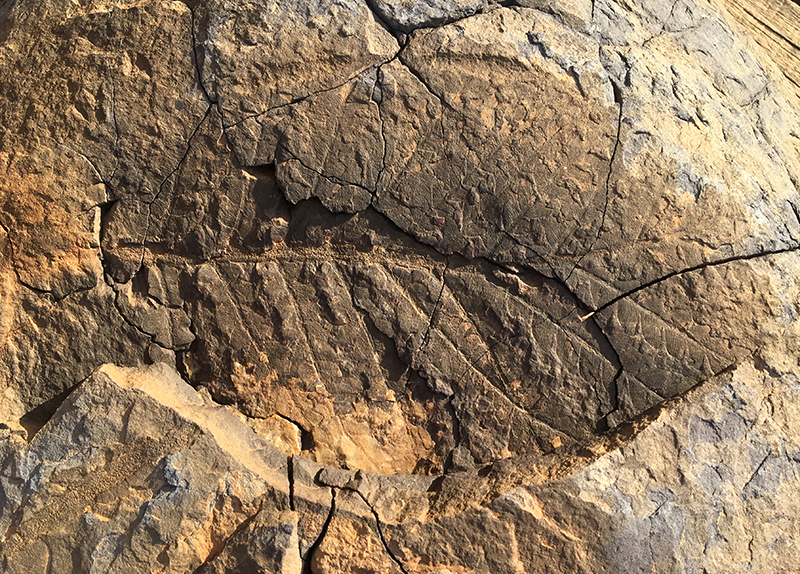
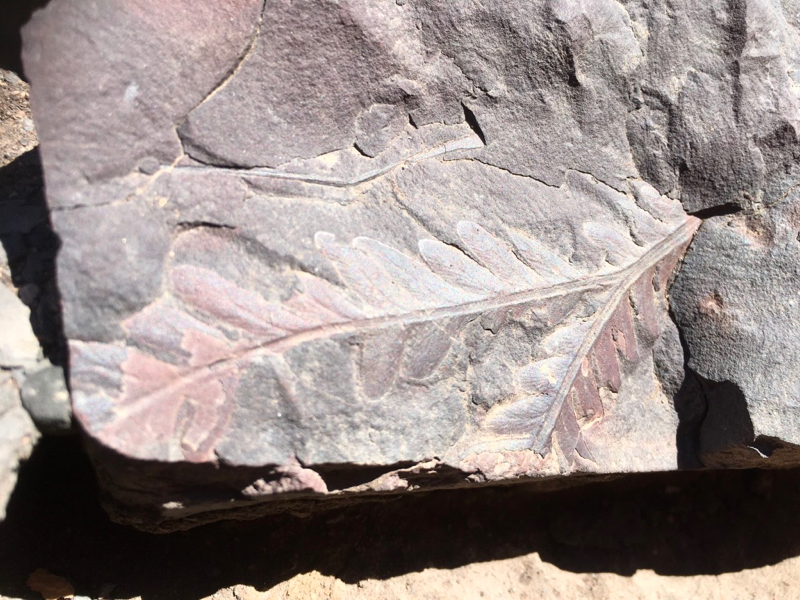
Triassic plant fossils in concretions

Triassic plant fossils within concretions formed in the sedimentary layers of the Leigh Creek coal formation. The concretions appear to have been formed in concentric layers within the sediment, and within these are enclosed Triassic plant fossils, approximately 230 million years old.