Sclerolaena tatei fruiting in sand near Lyndhurst in early spring.
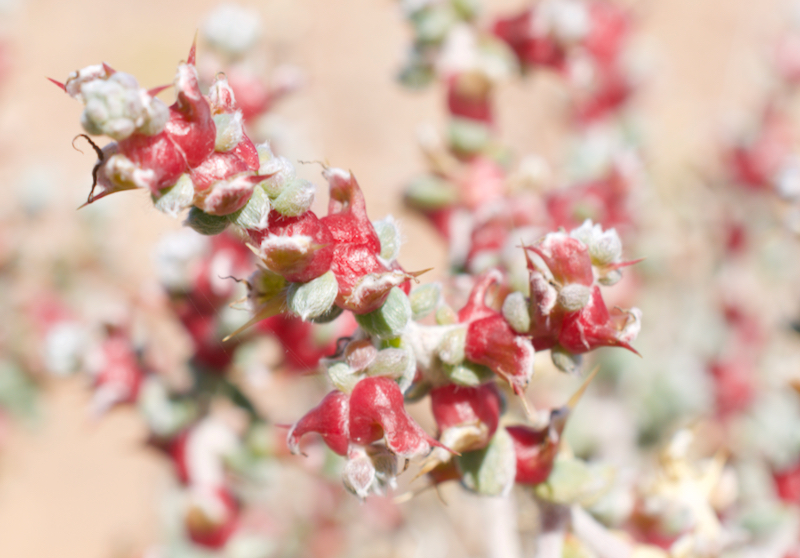
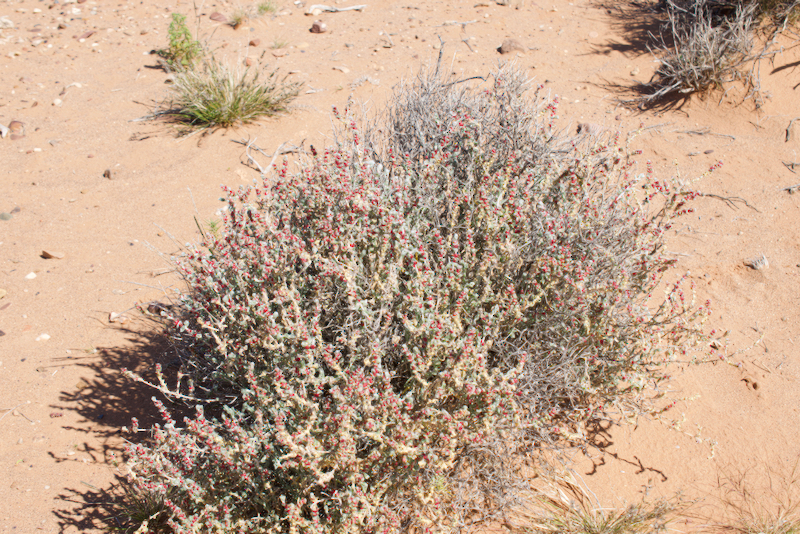
Sclerolaena tatei fruiting in sand near Lyndhurst in early spring.
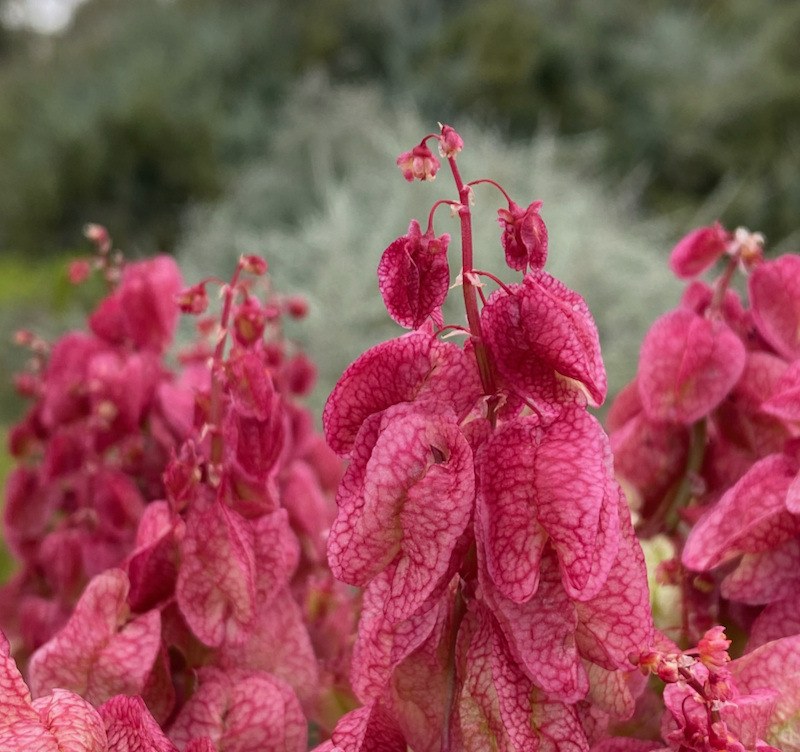
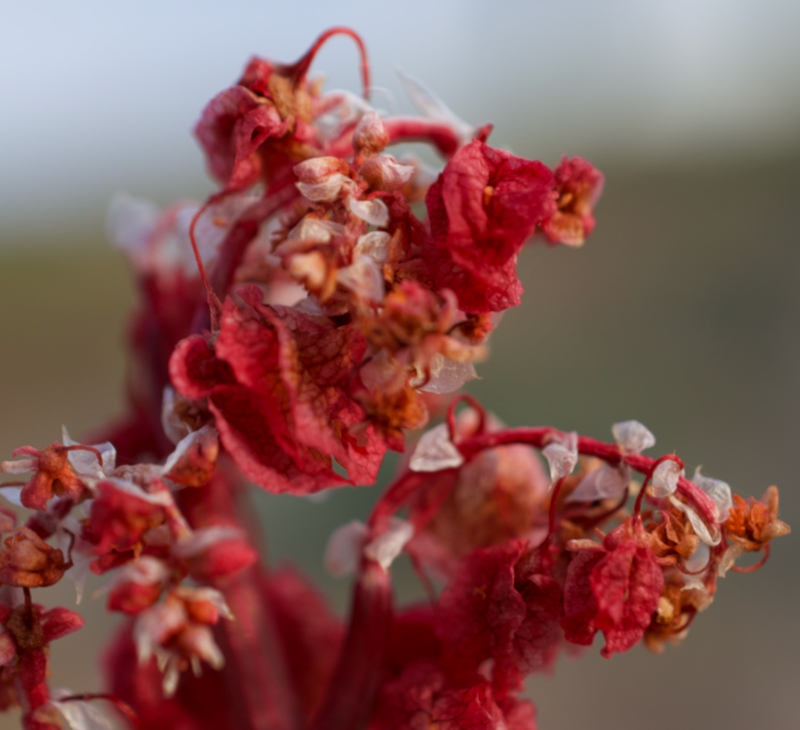
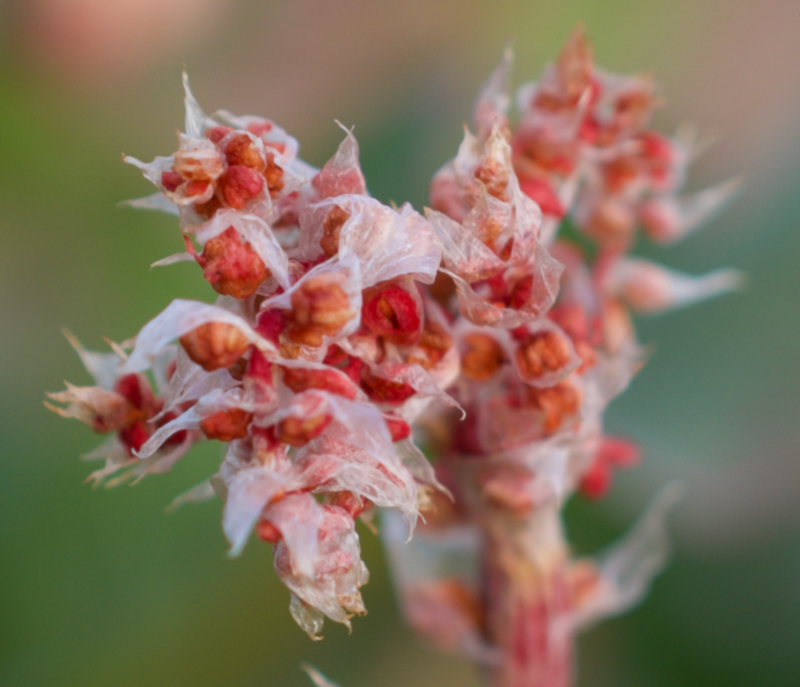
Acetosa vesicaria, known as Red Dock or Wild Hops, is thought to be introduced in the saddles of early Afghan cameleers. Responding quickly to rainfall, Wild Hops can create a stunning flush of colour through the Flinders Ranges.
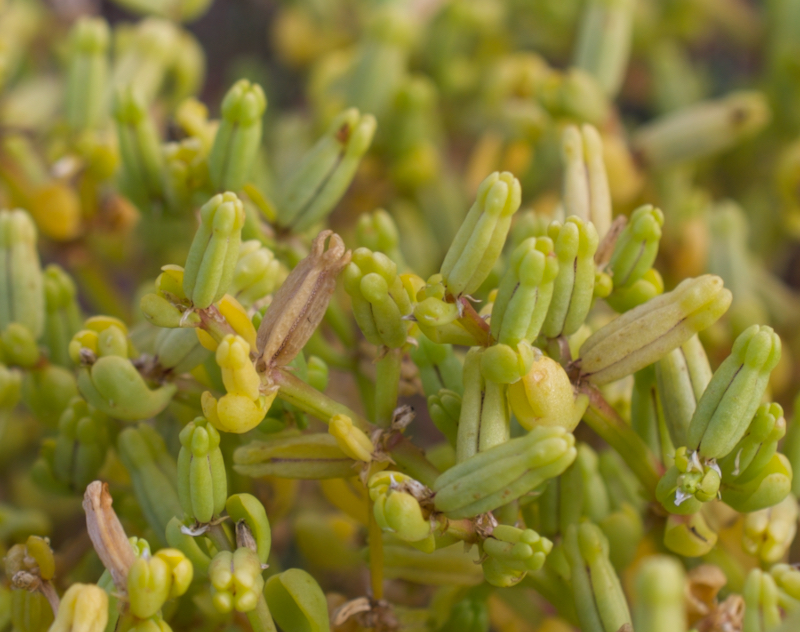
The Square-fruit Twinleaf (Zygophyllum prismatothecum) is the predominant Twinleaf appearing after rains on the limey clay plains in the Copley area, distinguishable by its oblong narrow capsule fruit form.
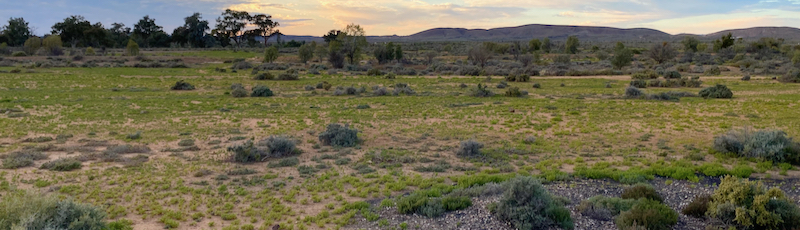

Horned Bindyi, Sclerolaena diacantha, is a small hairy silvery grey perennial growing in clay. Seen fruiting in Copley in winter.
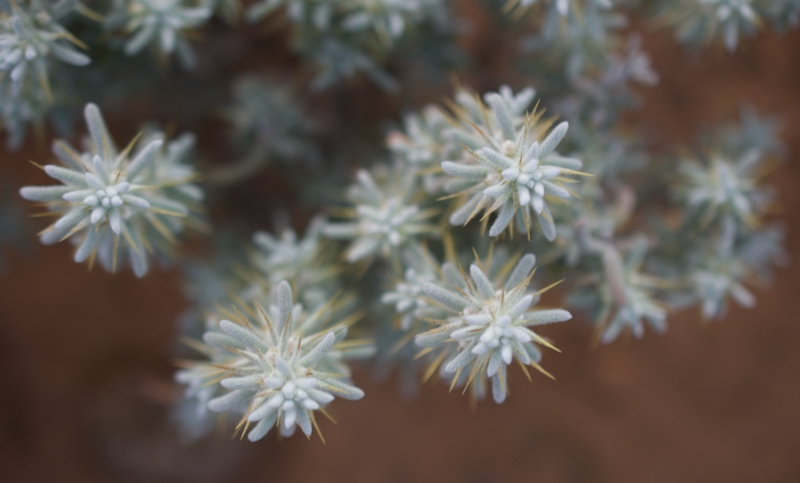
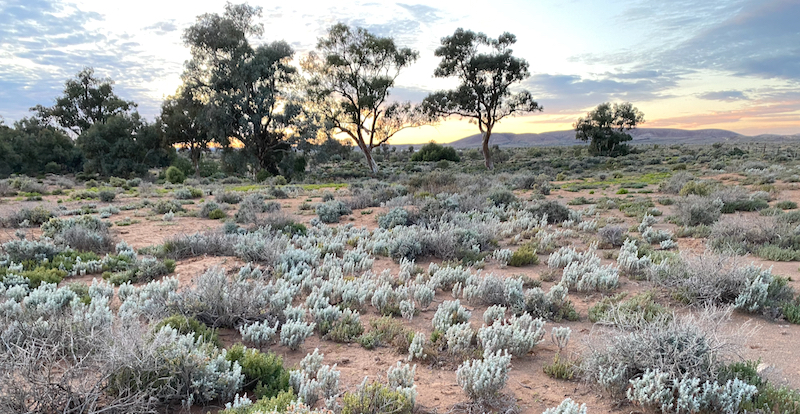
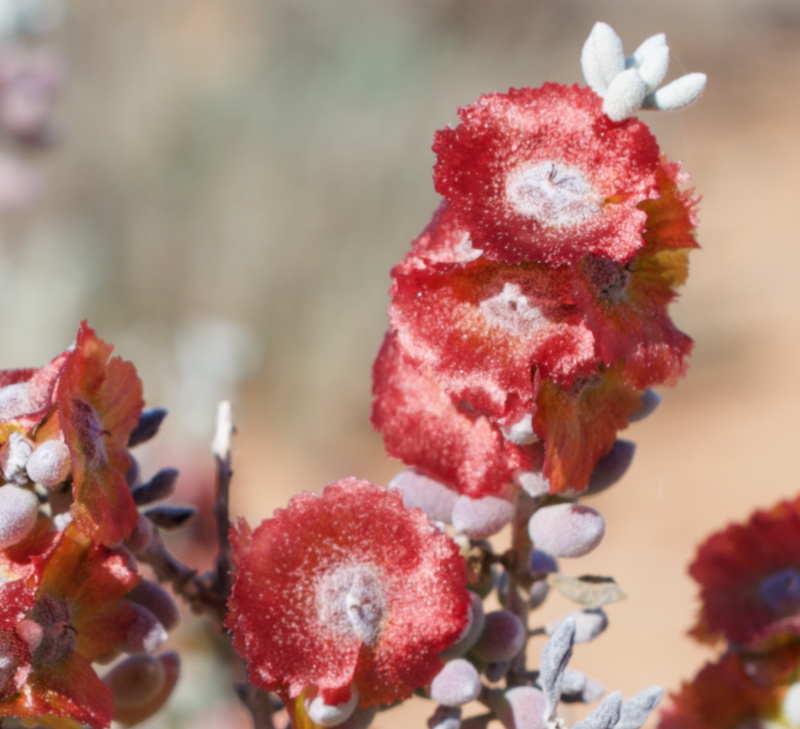
Limestone Copperburr (Sclerolaena obliquicuspis) in fruiting in two colour variations side by side in Copley in winter. A small sprawling shrub, 20cm high, with white hairs on leaves, stems and the base half of fruit spines.
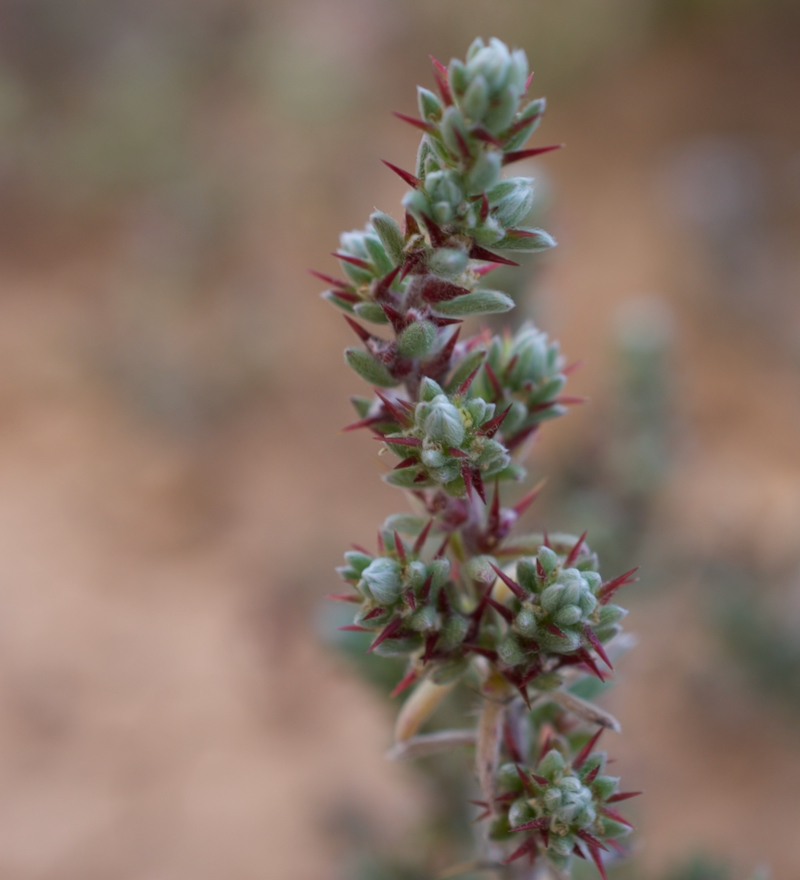
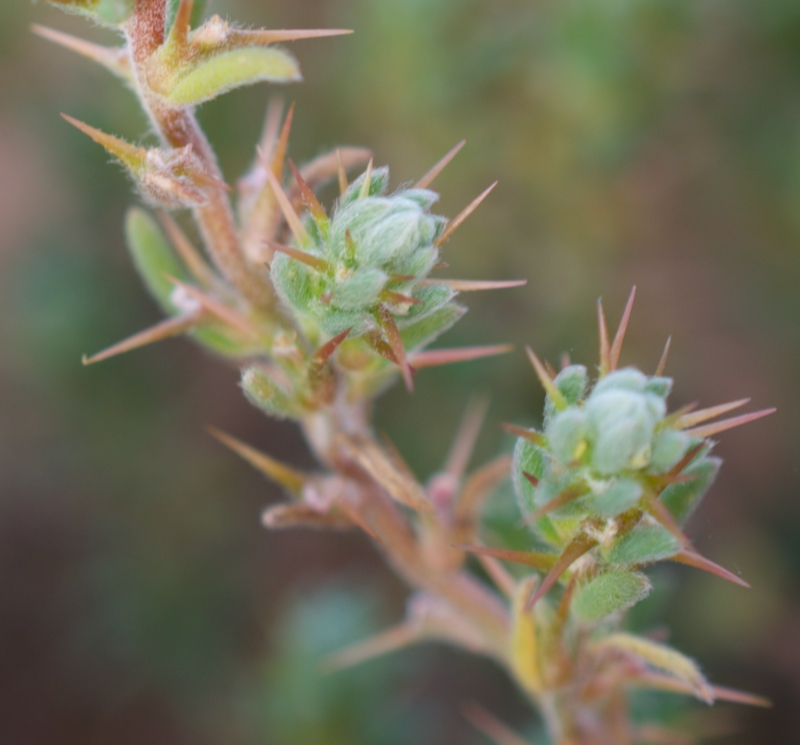
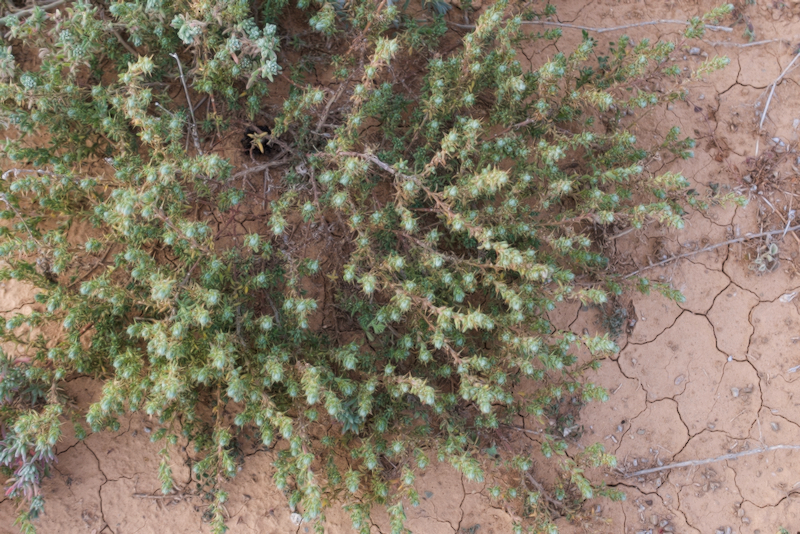
Woolly Copperburr (Sclerolaena lanicuspis) is a small hairy perennial shrub growing in clay soils. Spiny red fruits are covered in long white hairs.
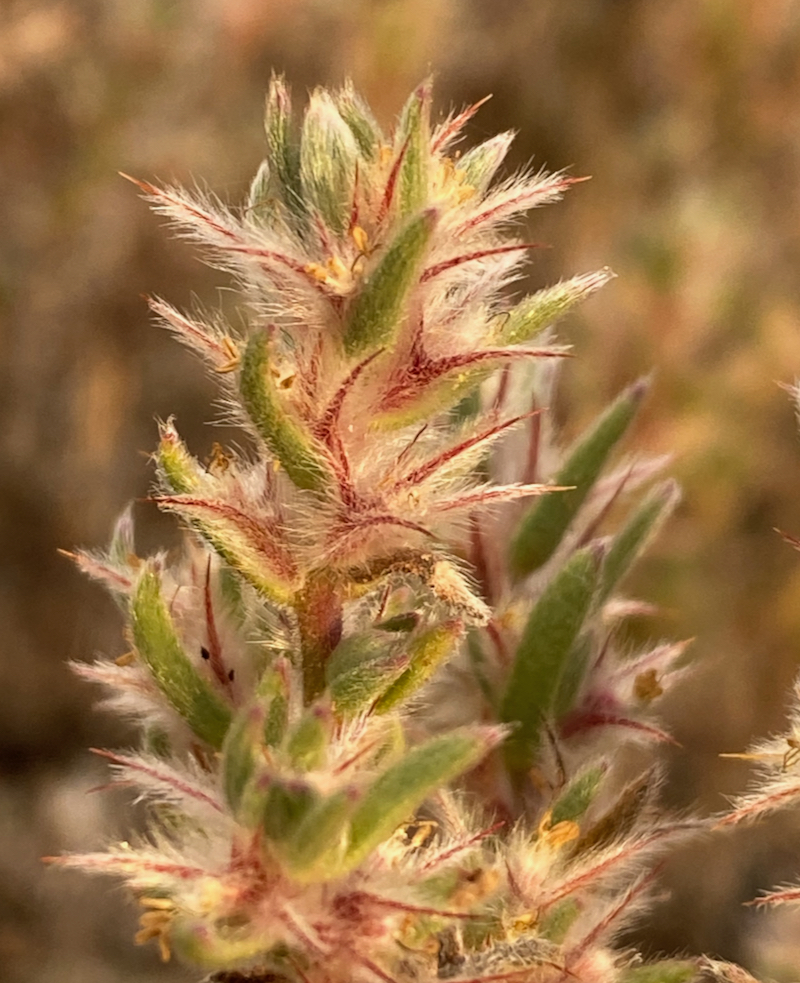
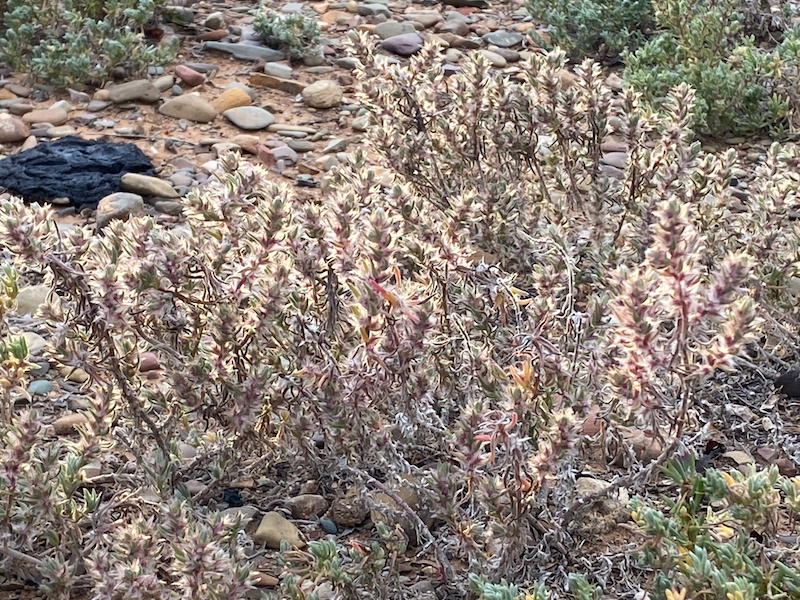
Known as Tumbleweed, Roly-poly or Buckbush, Salsola kali fruiting before drying up and and dislodging seeds as it tumbles in the wind.
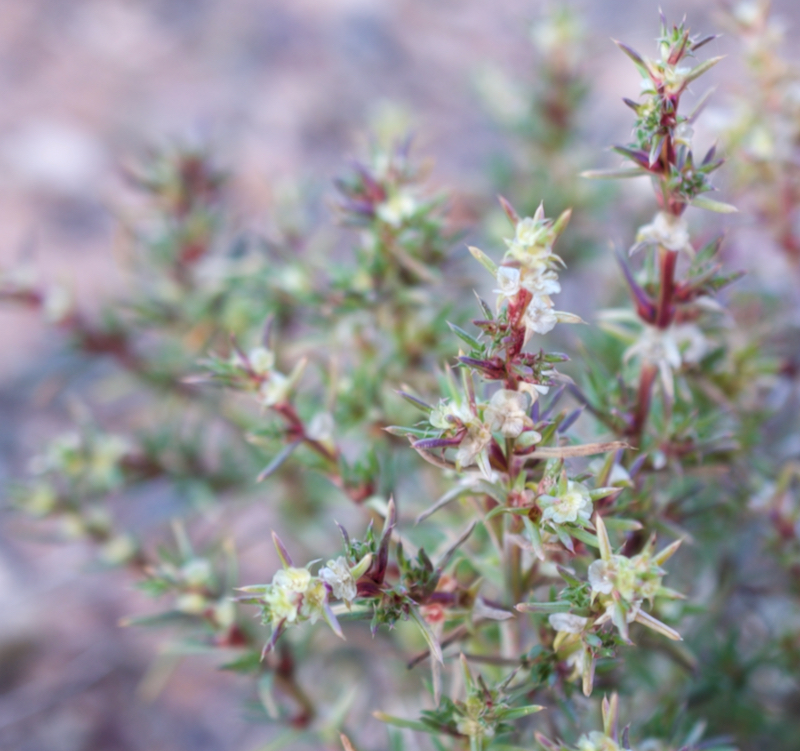
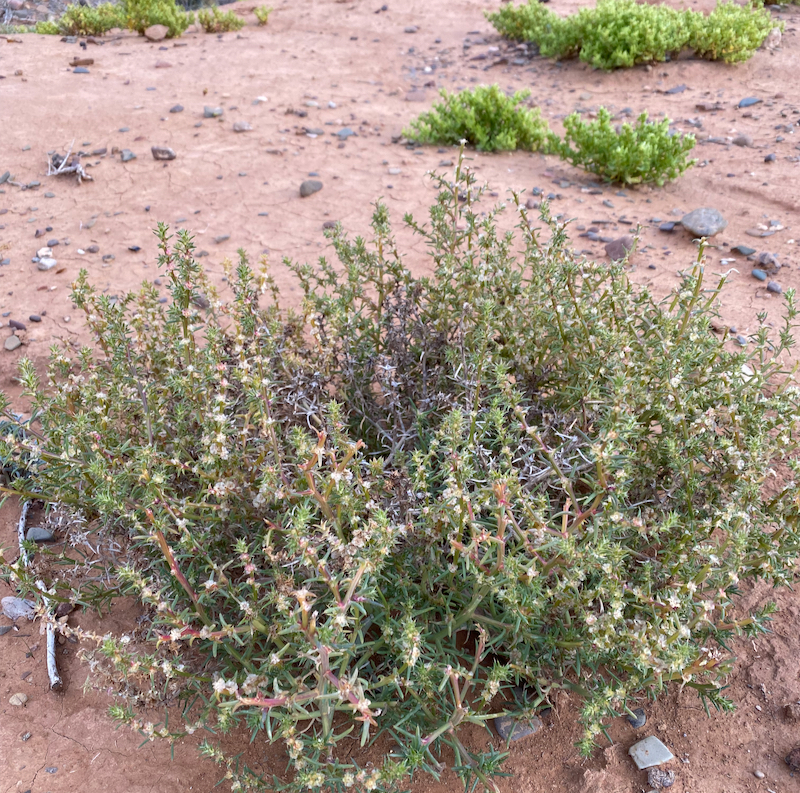
Maireana astrotricha, the Low Bluebush, is a compact pale blue grey bush growing amongst Black Bluebush on the limey clay plains of Copley. Coppery pink to red coloured fruit has a single slit.
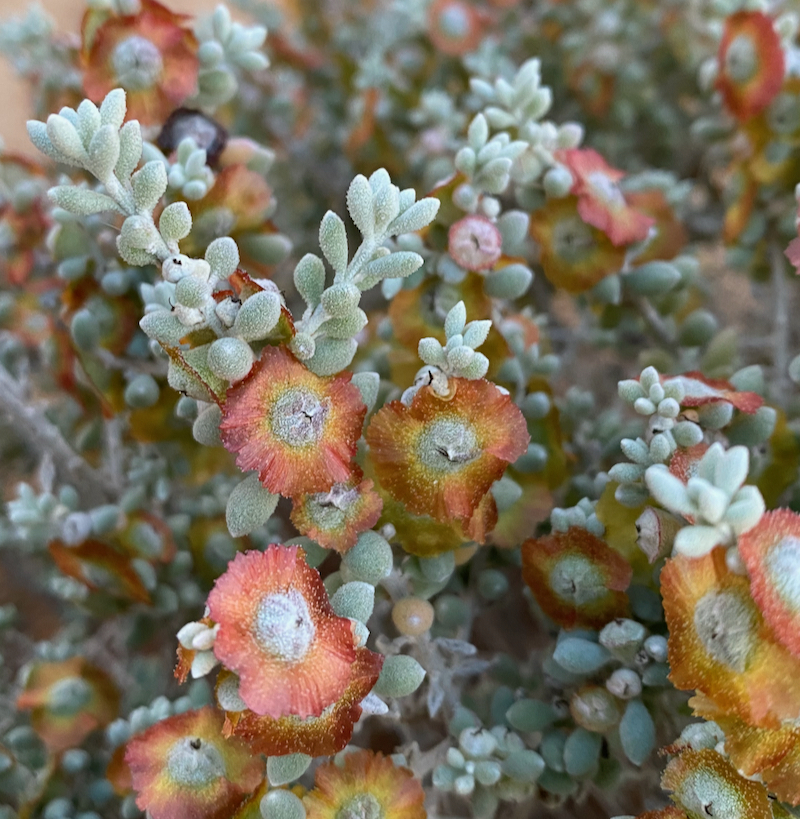
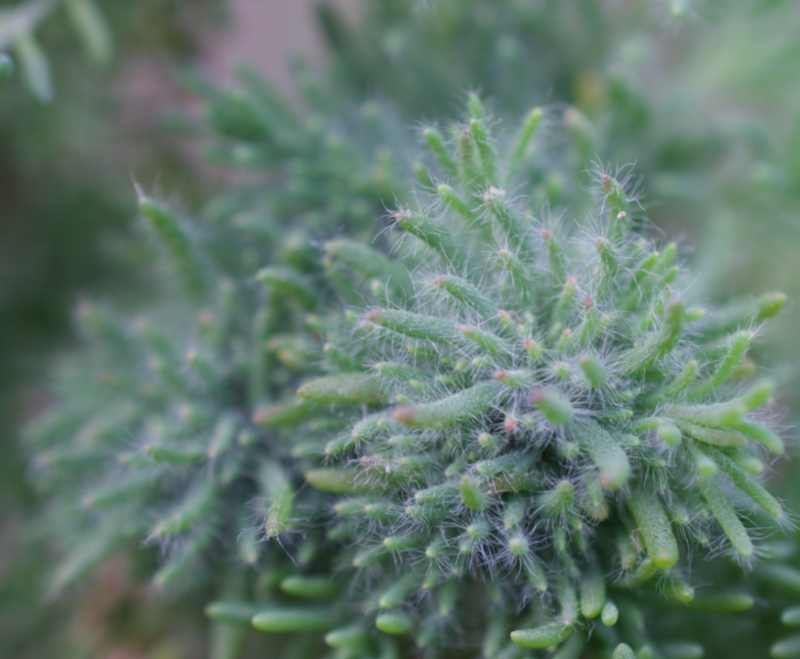
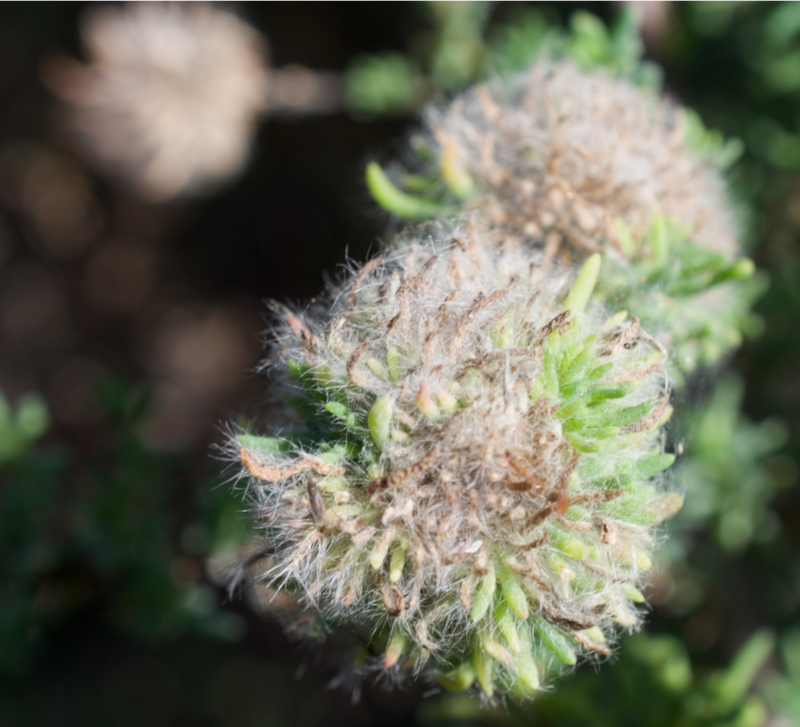
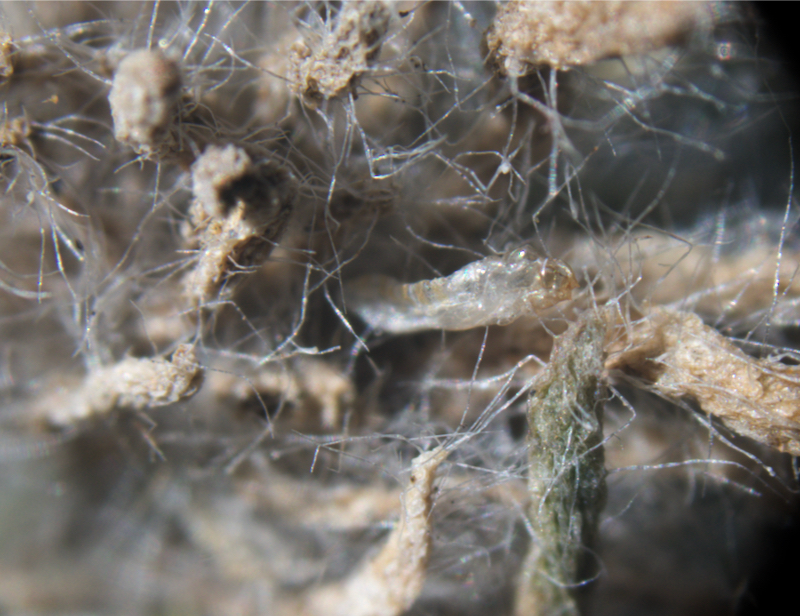
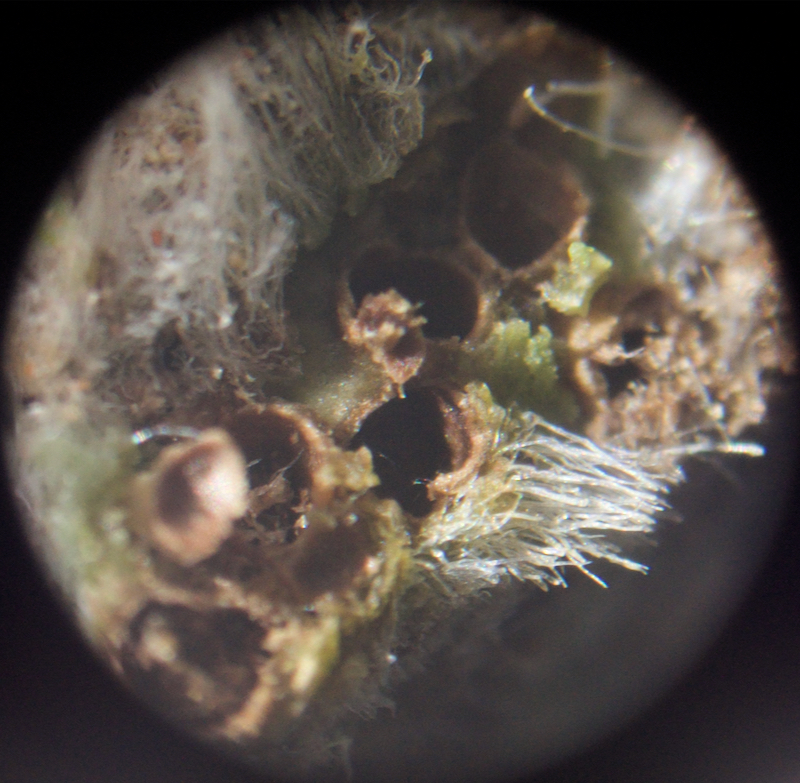
These pom-pom-like formations (1-2cm across) on Ruby Saltbush are galls created by a type of Diptera Midge infestation which is one of several species hosted by specific chenopods. These galls impede flowering and fruiting of the plant, instead hosting the Gall Midge which lays eggs into the new flower bud. Larvae then feed within the gall, the remains of which can be seen below.
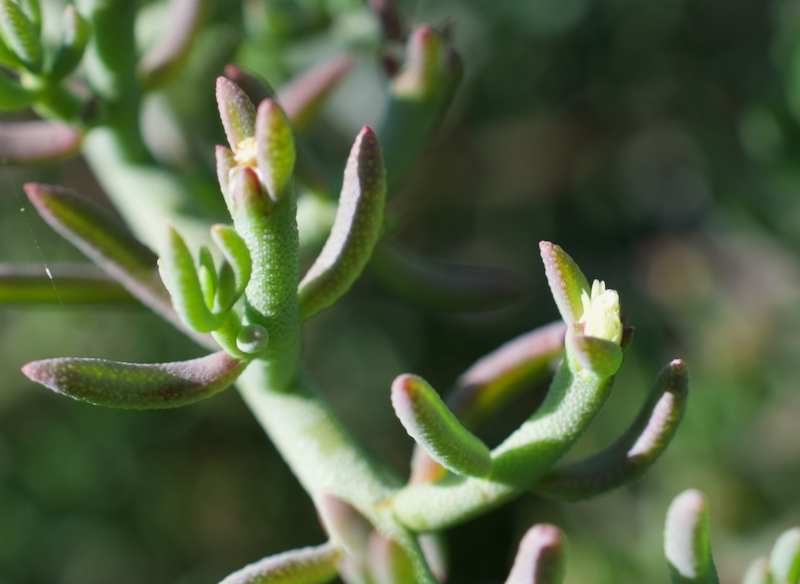
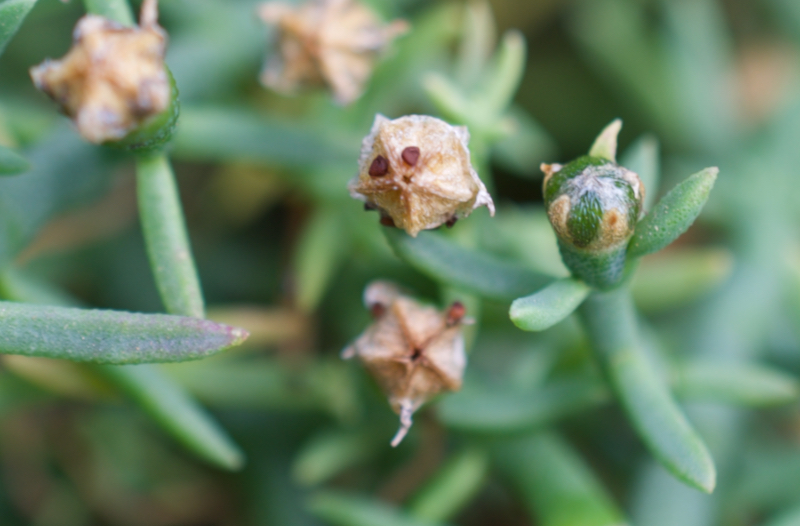
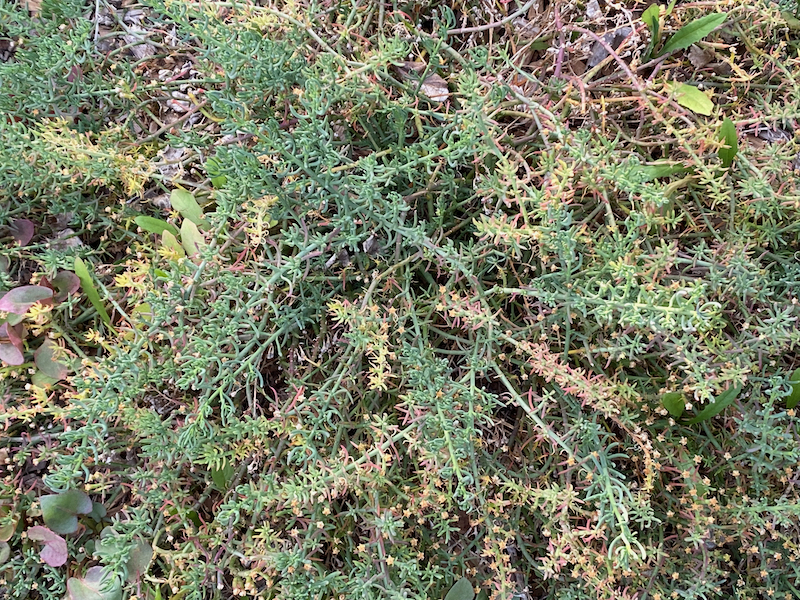
Introduced species Psilocaulon granulicaule, the succulent Wiry Noon-flower, flowering, fruiting and seeding in Copley in winter.