
Osteocarpum acropterum, known as Bonefruit or Waterweed, typically producing yellow-red fruit but are seen in Copley fruiting in vivid pinks in July.

Osteocarpum acropterum, known as Bonefruit or Waterweed, typically producing yellow-red fruit but are seen in Copley fruiting in vivid pinks in July.
Maireana trichoptera, the Mallee Bluebush, is a small hairy perennial with stunning green or white fruits edged with burgundy and pink. Seen fruiting in limey rocky soils at Warraweena in the Northern Flinders Ranges in July.


Maireana turbinata, the Top Bluebush fruiting in winter in the Northern Flinders Ranges.

Maireana pyramidata, the Black Bluebush or Sago Bush in winter. Fruits are yellow with a raised pyramid shaped centre, drying to black, giving the plant its scientific and common names. Prevalent in chenopod country throughout the Flinders Ranges, this plant provides habitat for birds such as the Variegated Fairy Wren and reptiles such as the Bearded Dragon.


Three-winged Bluebush (Maireana triptera) with red-orange fruit drying to black seed in Arkaroola, in July.

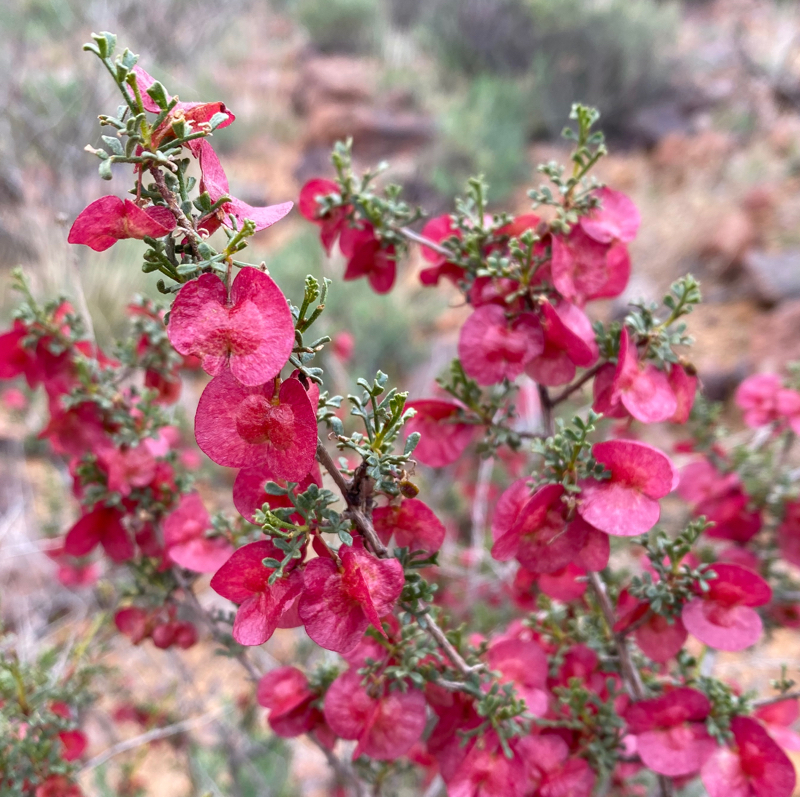
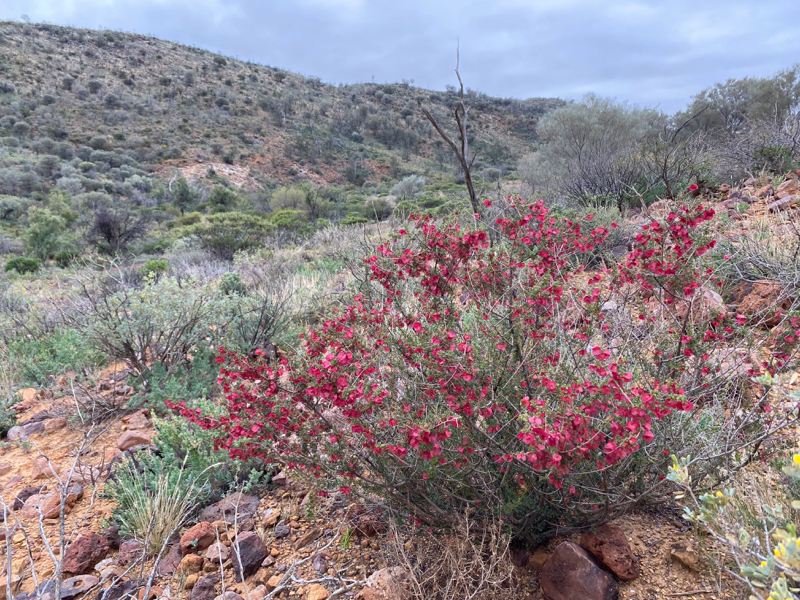
Brilliant Hopbush (Dodonaea microzyga) fruiting in stony ground at Arkaroola, July.
Also known as Paddy Melon, Pie Melon and Bitter Melon, Camel Melon (Citrullus amarus) is native to sub Saharan Africa and has been used as a food plant for thousands of years. Introduced to South Australia with camels in the 19th century. In the family of squash, gourds and melons, Camel Melon is not generally considered palatable.

Canonball (Dissocarpus paradoxa) fruit grows in wooly white balls and dries into a formidable spined burr, 10mm in diameter. Also known as Ball Bindyi.

Fruiting Three-spined Poverty Bush, Scleroleana tricupis, thriving in the salty damp banks of Copley Retention Dam.

