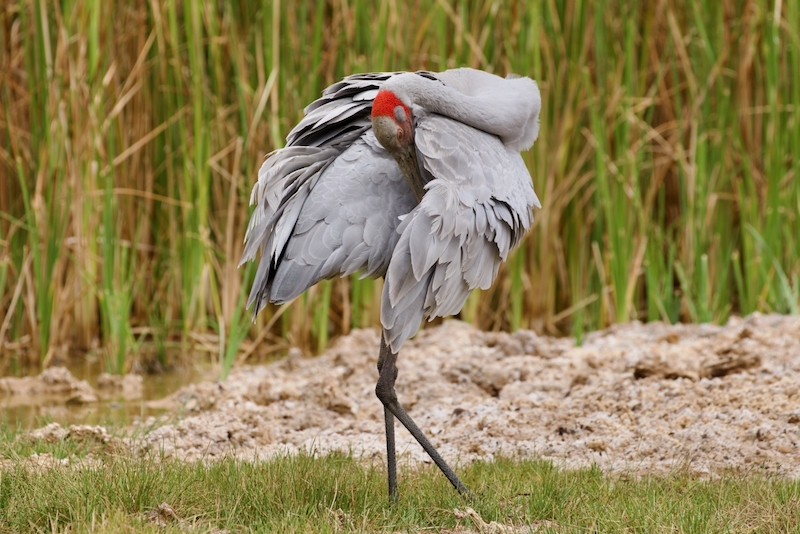
Brolgas: Muloorina Station

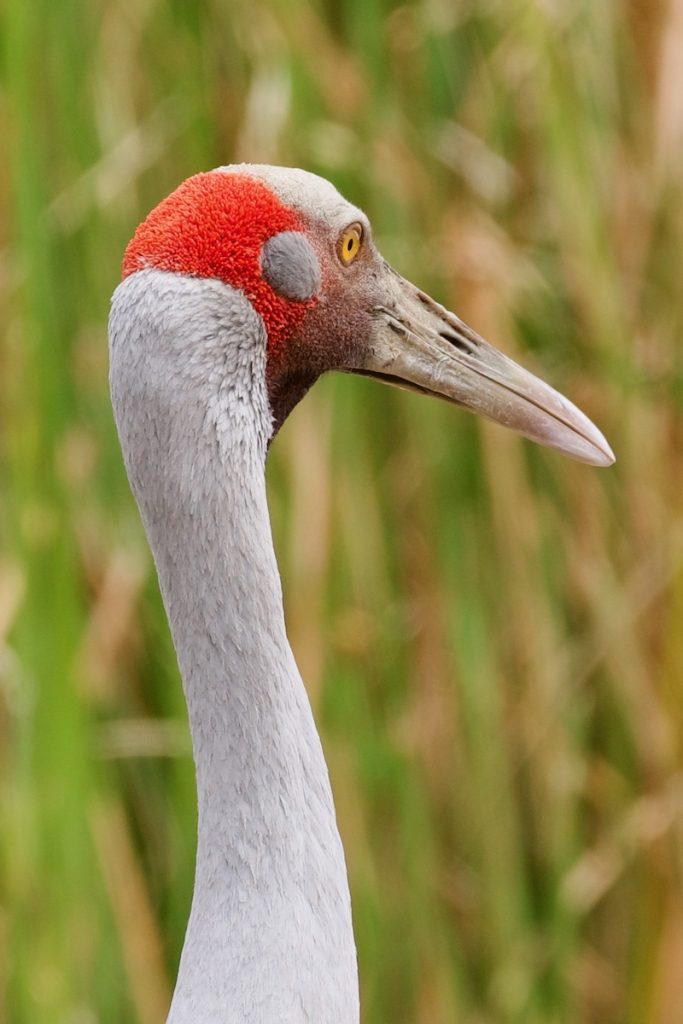
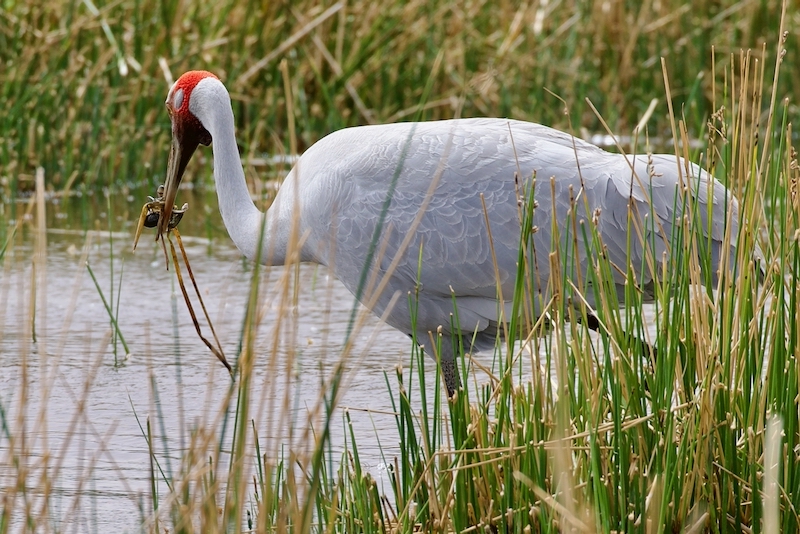
Australia’s largest water bird, Antigone rubicunda, the Brolga, inhabits the tropical regions of northern Australia, the inland wetlands of the Great Artesian Basin and the Murray Darling Basin. It feeds on plant matter, invertebrates and small vertibrates in freshwater and saltwater environments. Seen at the hydrothermal wetlands on Mulooorina Station east of Marree, in November.
Continue reading “Brolgas: Muloorina Station”

Goethite boulders

This group of goethite–quartz boulders may have formed from a hydrothermal seam or vent, where silica and sulfur-rich fluids precipitated quartz and pyrite.  As pyrite oxidizes, it typically forms sulfuric acid, which accelerates iron oxidation, in this case forming goethite. As the surrounding blocky shale erodes, the more resistant goethite-quartz boulders remain – a common sight in the Flinders Ranges.

Continue reading “Goethite boulders”