Raspy Cricket: Hadrogryllacris magnifica

Australia hosts a great diversity of Raspy Crickets. When threatened, they make a raspy, squeaky sound, and winged adults are known to open their wings and raise their front legs in a defensive posture. Raspy crickets can produce silk, similar to that of the silkworm, used to stitch leaves into a shelter, or line burrows made in sand or soil. Foraging at night, they feed on plants and animals. Raspy Crickets belong to the Family Gryllacrididae.

This male black, striped Hadrogryllacris magnifica Raspy Cricket was spotted at night in the Copley area in October. 55mm long.

Continue reading “Raspy Cricket: Hadrogryllacris magnifica”

Dragonflies and Damselflies

Both Dragonflies and Damselflies are superb hunting carnivores. A common sight around dams and springs throughout the Flinders Ranges, nymph (juvenile) casings are located at the lower parts of trees and shrubs, or rocks, near the water’s edge. The transition between nymph and adult occurs during the night, with the new adult emerging with a soft, pale exoskeleton which hardens and brightens into the full complement of striking colours by sunrise.

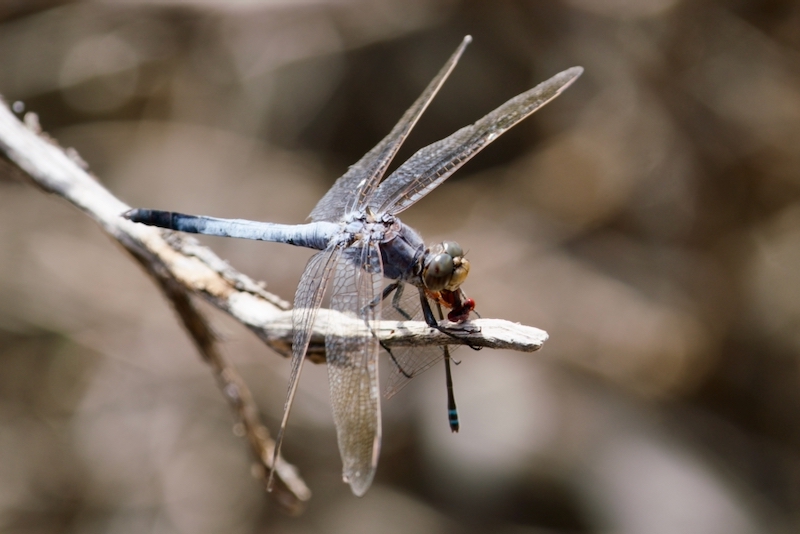
Blue Skimmer Dragonfly (Orthetrum caledonicum) eating a Damselfy
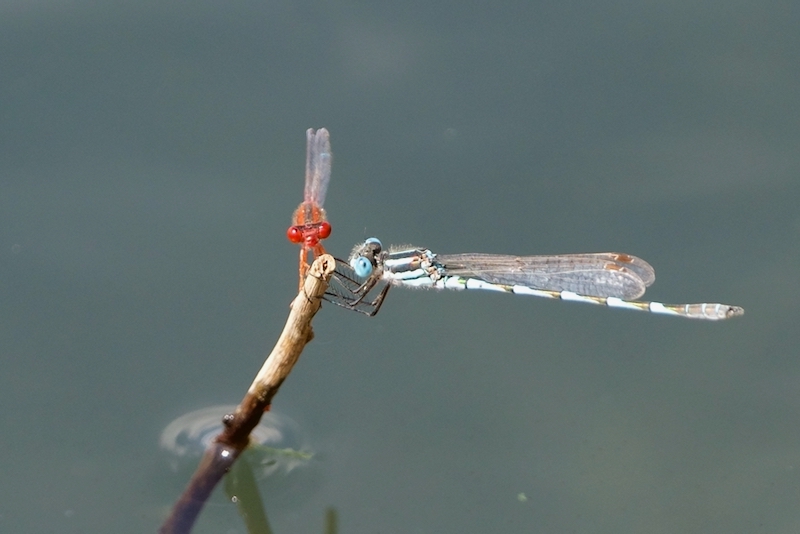
Red-blue Damselfly (Xanthagrion erythroneurum) and Wandering Ringtail Damselfly (Austrolestes leda)
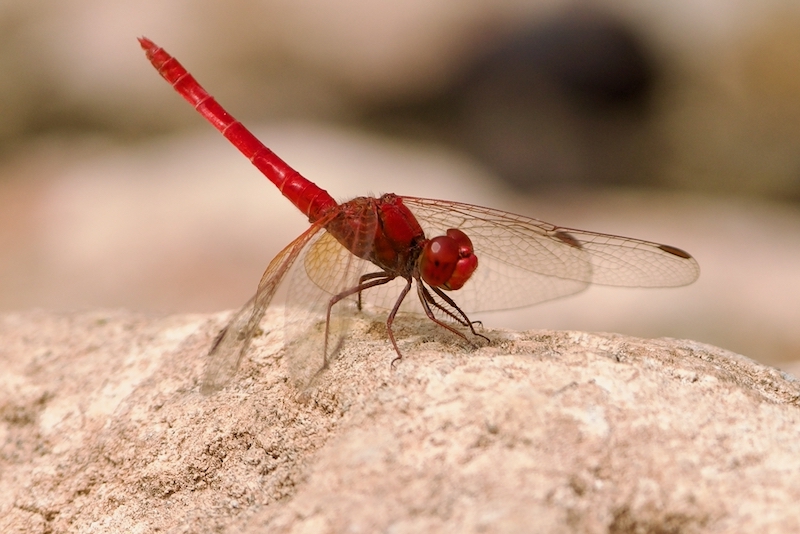
Scarlet Percher Dragonfly (Diplacodes heamatodes)
Continue reading “Dragonflies and Damselflies”

Gall Midge on Ruby Saltbush

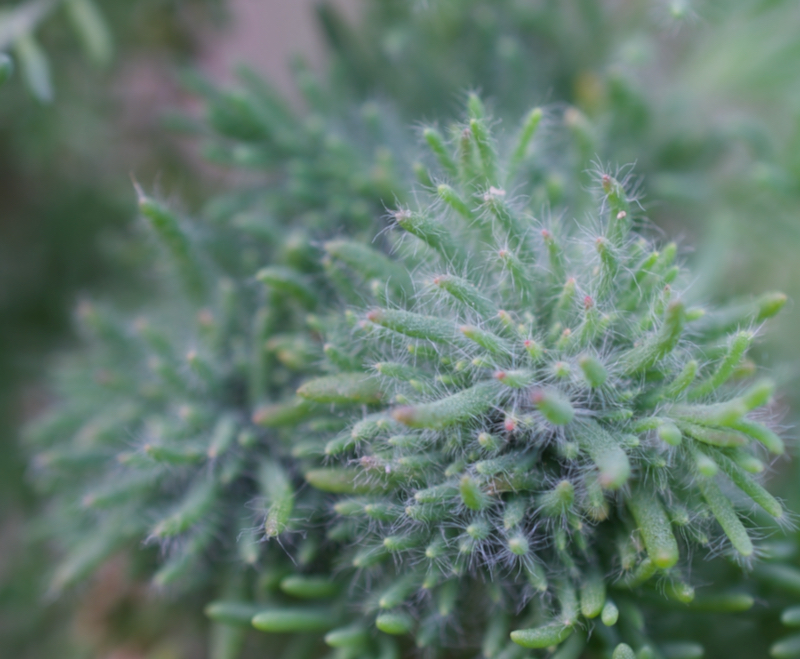
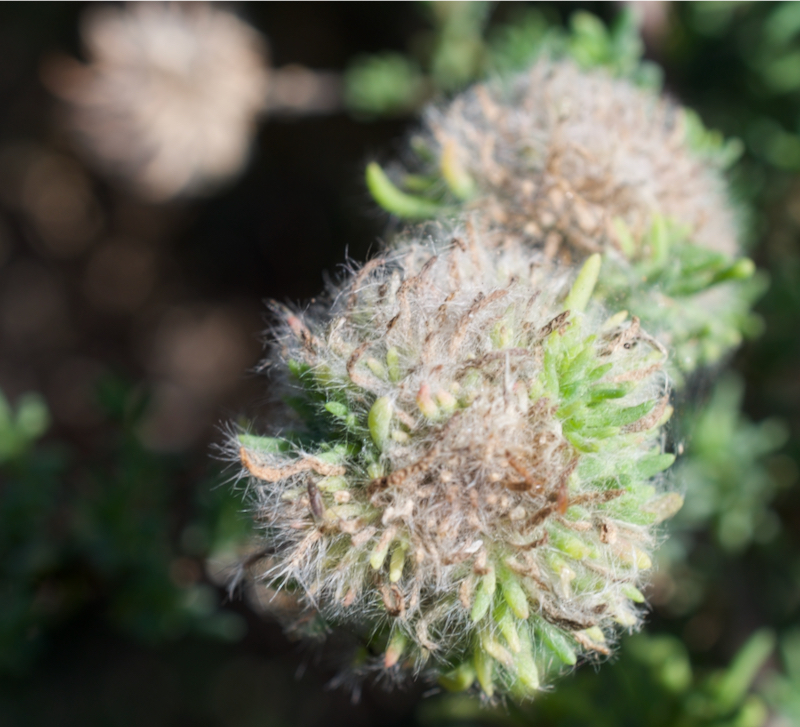
These pom-pom-like formations (1-2cm across) on Ruby Saltbush (Enchylaena tomentosa) are galls created by a type of Diptera Midge infestation which is one of several species hosted by specific chenopods. These galls impede flowering and fruiting of the plant, instead hosting the Gall Midge which lays eggs into the new flower bud. Larvae then feed within the gall, the remains of which can be seen below.

Gall containing live larvae
Gall almost expended
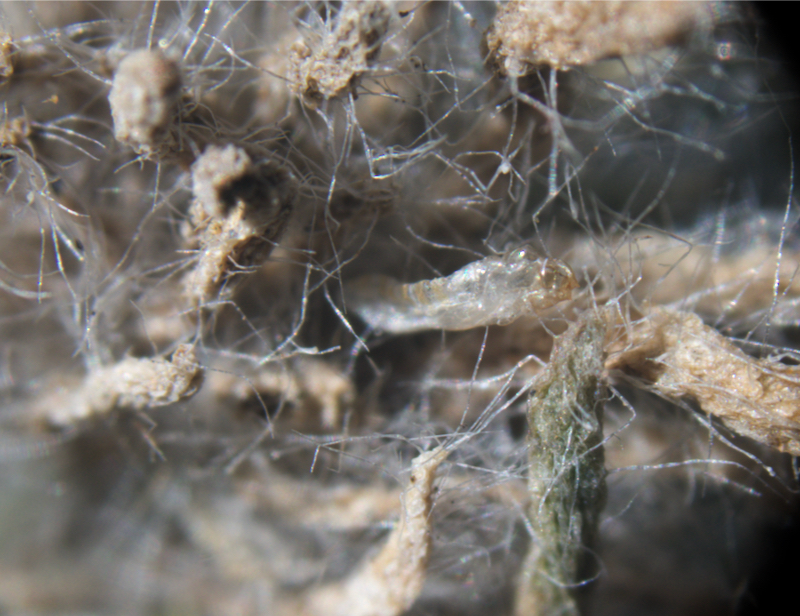
Gall Midge larval casing
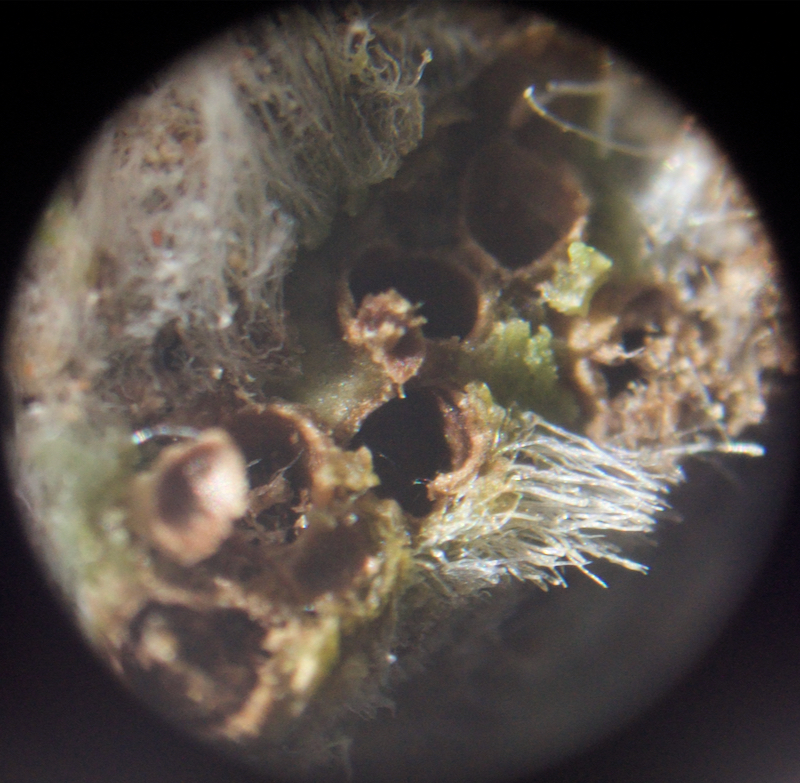
Gall Midge larval cavities
Continue reading “Gall Midge on Ruby Saltbush”