Male Flower Wasp feeding on Grevillea nectar near Lyndhurst in November. Body length approximately 25mm.

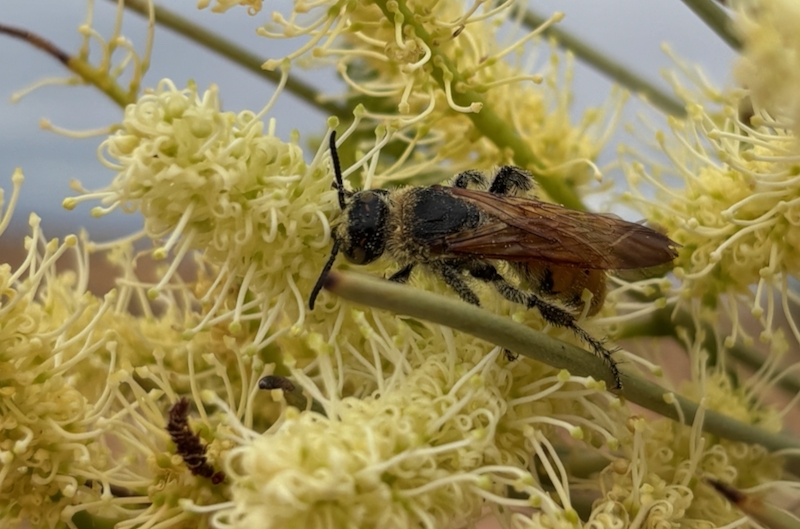
Male Flower Wasp feeding on Grevillea nectar near Lyndhurst in November. Body length approximately 25mm.
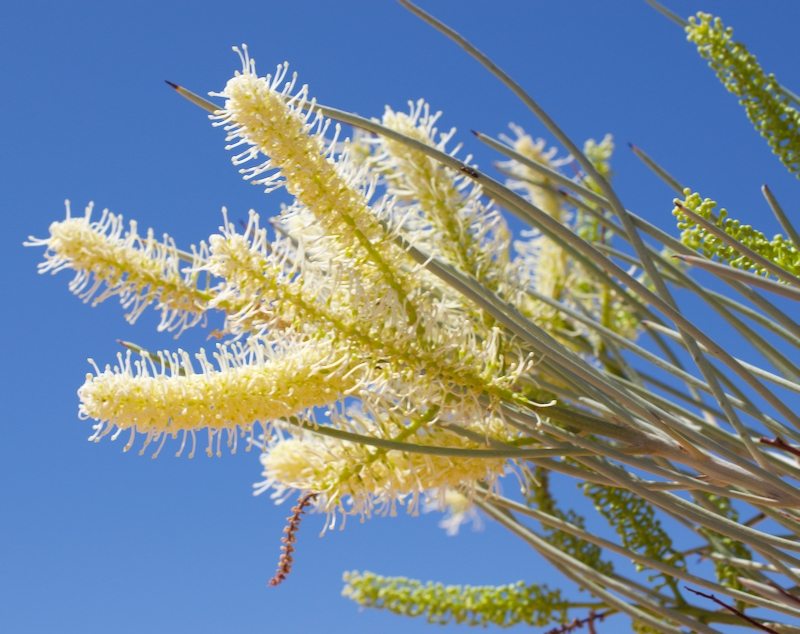
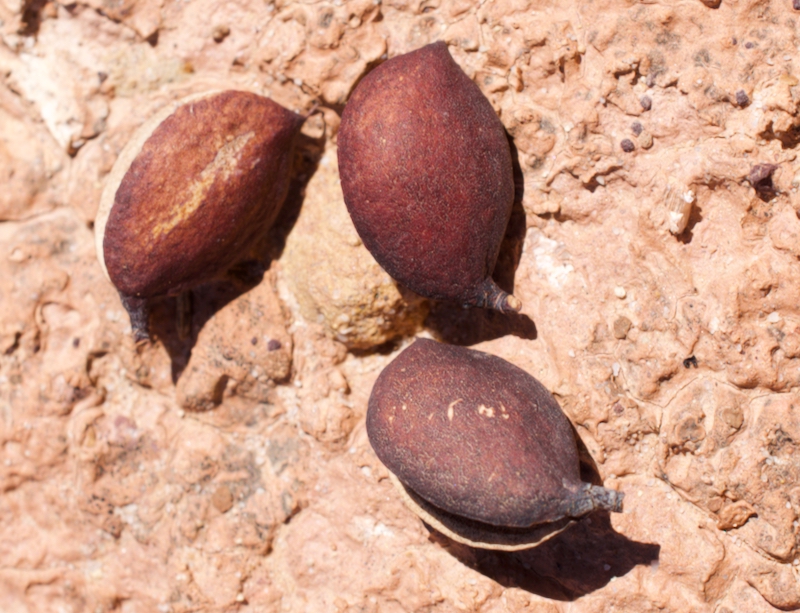
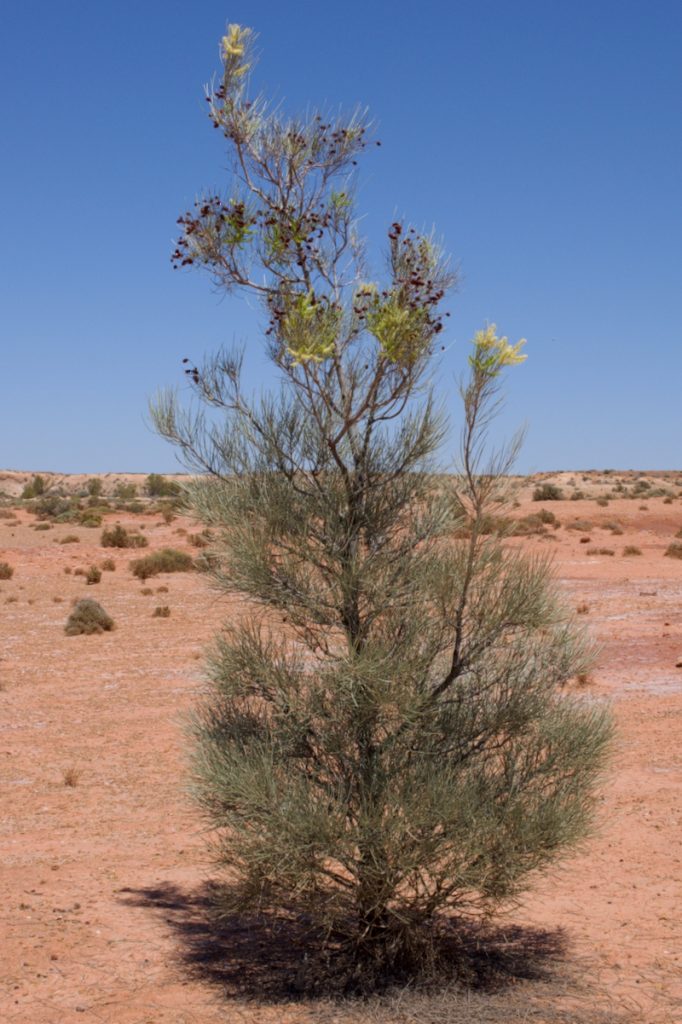
Grevillea nematophylla ssp. nematophylla, known as Water Bush, is a rare sight in the Flinders Ranges. This solitary tree between Copley and Lyndhurst was flowering in November.
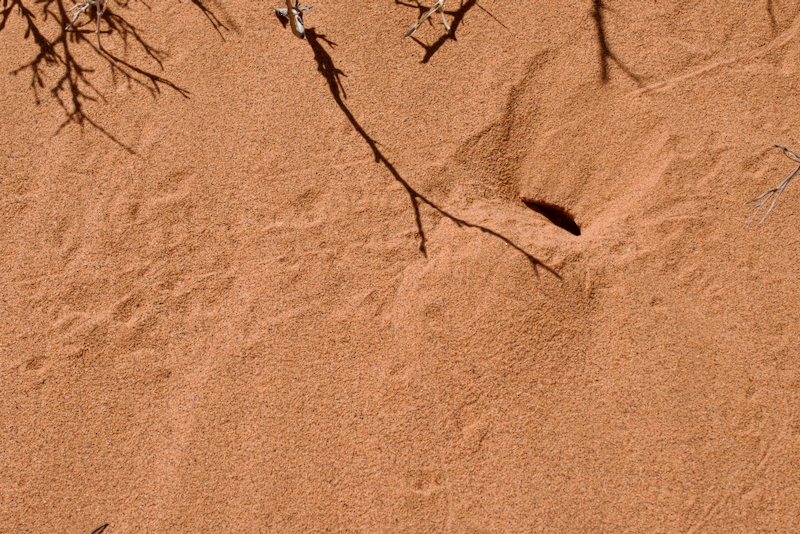
These piles of so-called ‘sand turds’ in the Lyndhurst sand dunes are probably caused by an earth-borer beetle in the scarab family (Bolboceratinae). The beetles push sand up and out of the burrow, forming sand columns which topple and form piles of pellets around 15cms wide.


Pimelea elongata, or Rice Flower, growing in a sandy gully at Lyndhurst in October.


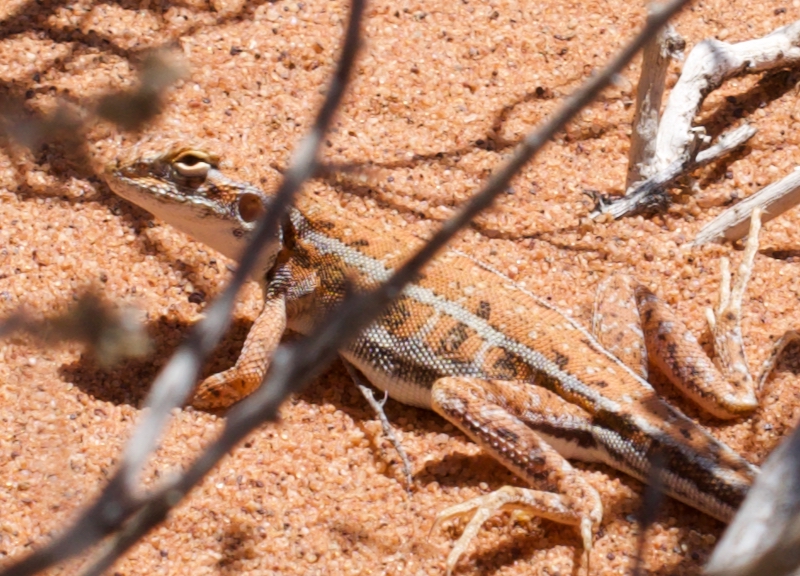
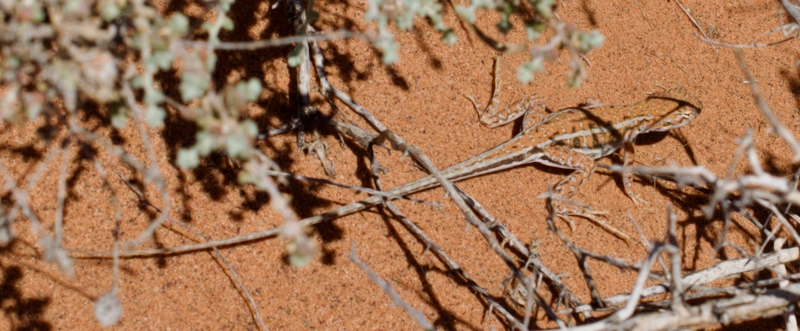
The superbly camouflaged Mallee Military Dragon (Ctenophorus fordi) in the Lyndhurst sand dunes.
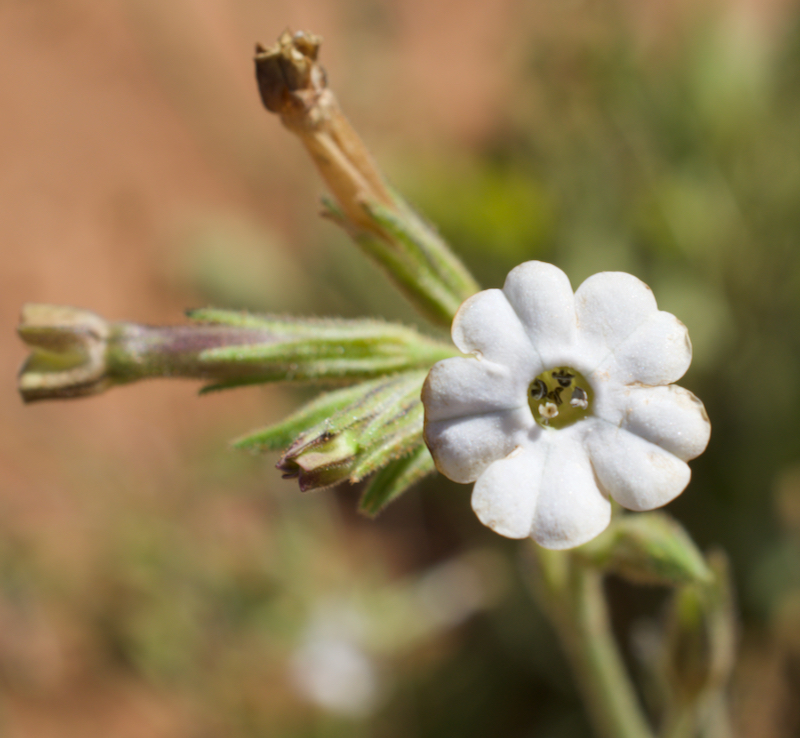
Velvet Tobacco (Nicotiana velutina) flowering near Lyndhurst in spring.
Koch’s Pigface (Gunniopsis kochii) is a compact succulent, indigenous to SA but near threatened in the Flinders Ranges. Flowering in early spring in sand near Lyndhurst.


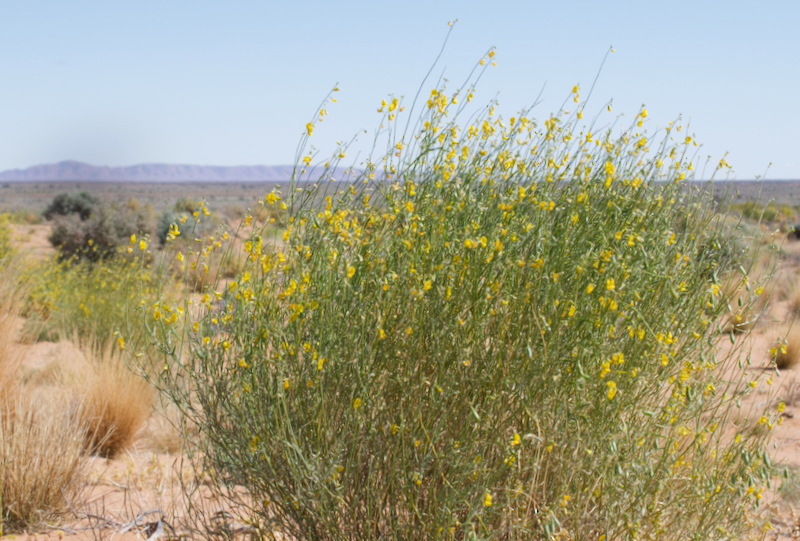
Loose-flowered Rattlepod (Crotalaria eremaea) growing to about 1m in the sand dunes of Lyndhurst and flowering in the early spring.

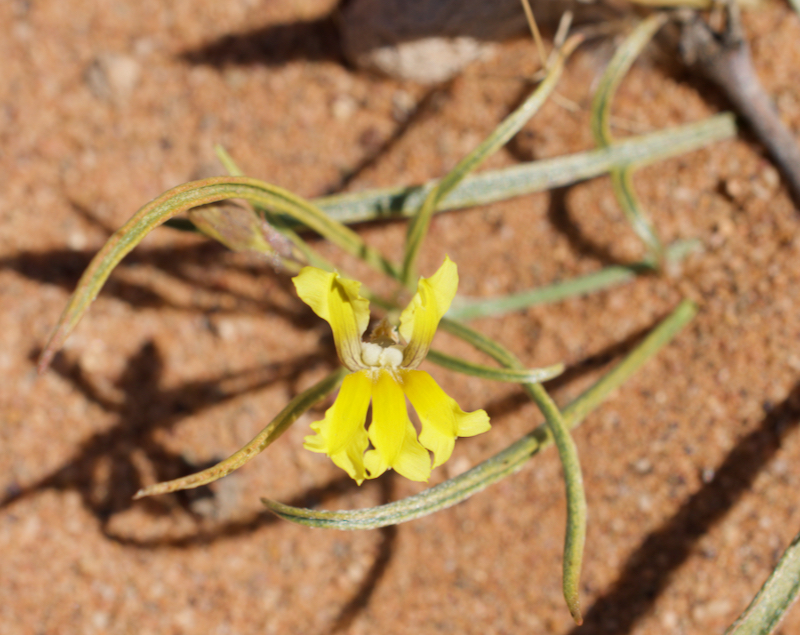
Mallee Goodenia (Goodenia fascicularis) flowering in the sand dunes at Lyndhurst, early spring.
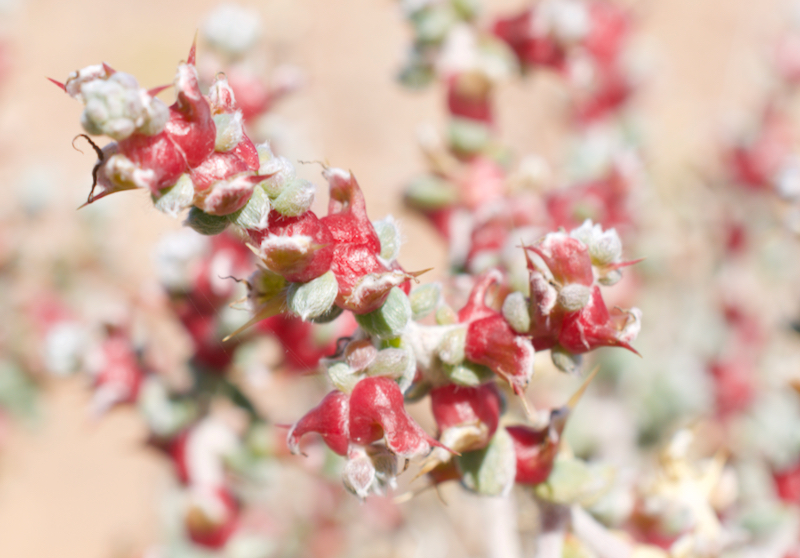
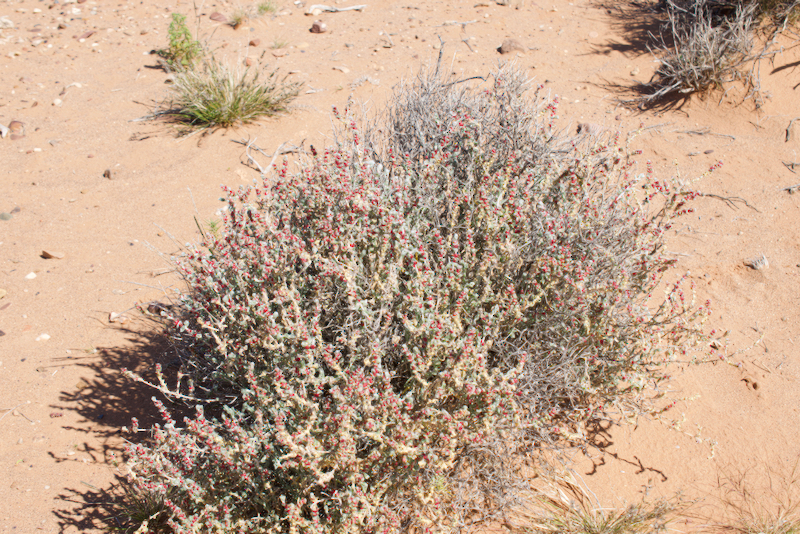
Sclerolaena tatei fruiting in sand near Lyndhurst in early spring.