Example of barite sand nodules in a Rawnsley Quartzite boulder formed in shallow water below the surface of the sand, with quartz grains cemented by barium sulphate later replaced by fine grained quartz to form lumps.


Example of barite sand nodules in a Rawnsley Quartzite boulder formed in shallow water below the surface of the sand, with quartz grains cemented by barium sulphate later replaced by fine grained quartz to form lumps.
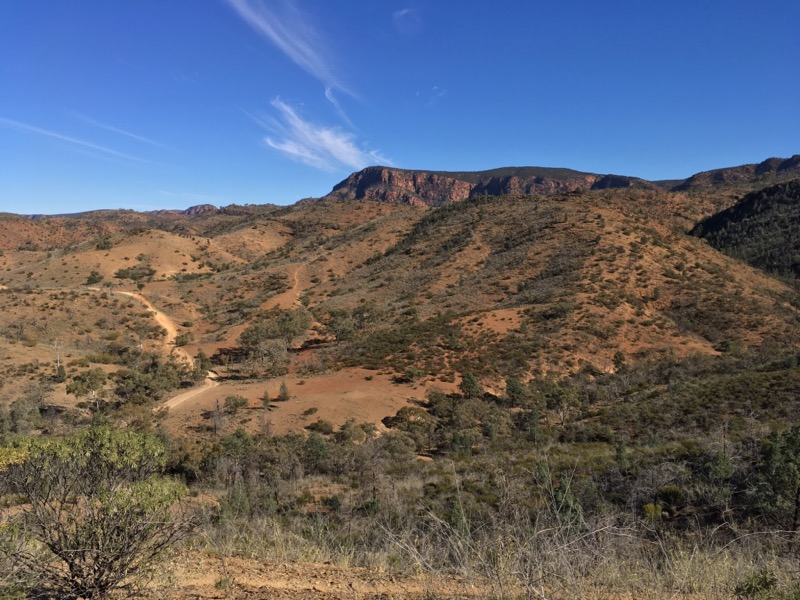
The Bonney Sandstone Formation is the result of deposition of iron-stained sand, silt and mica, eroded from older igneous rocks to the west and transported by rivers into a large delta. This formation has a distinctive reddish colour, and is often seen alongside the harder weathering prominent peaks of Rawnsley Quartzite which was formed from white sands, 600 million years ago. See the essay Legacy of Time by The Royal Geographical Society of South Australia for the riveting story of the formation of the Flinders Ranges.


Mighty upright cross-bedded quartzite lining Frome Creek, northern Flinders Ranges.


Quartzite outcrop of the Black Range, Warraweena Conservation Park