
Osteocarpum acropterum, known as Bonefruit or Waterweed in Copley, Flinders Ranges in October.

Osteocarpum acropterum, known as Bonefruit or Waterweed in Copley, Flinders Ranges in October.
Gunniopsis tenuifolia, the Narrow-leaf Pigface, growing in sand around the Cutaway outcrop to the south of Copley, northern Flinders Ranges. They are uncommon and endemic to South Australia, growing between Leigh Creek and the Painted Desert to the north of Coober Pedy.


Woolly Anacampseros (Anacampseros australiana) growing in Buckaringa Gorge in the southern Flinders Ranges. Also observed growing on the rock faces of Mambray Creek.
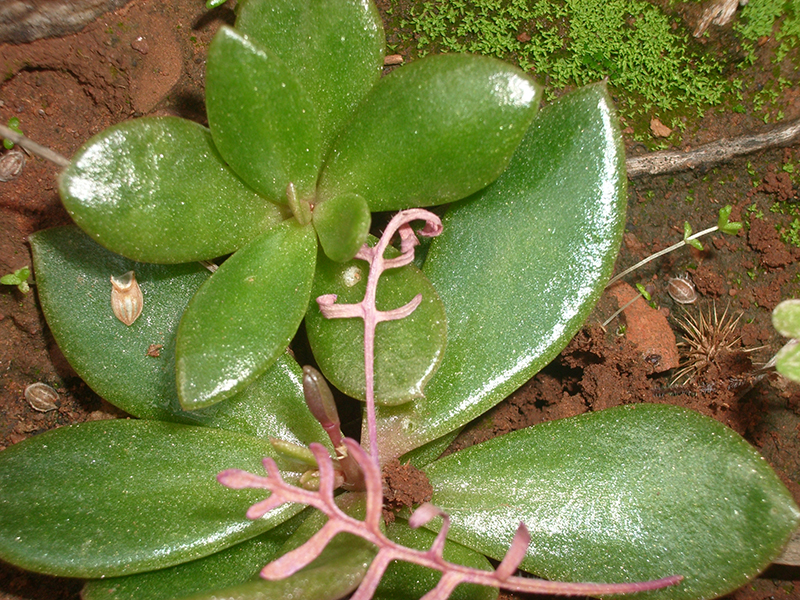
Koch’s Pigface (Gunniopsis kochii) is a compact succulent, indigenous to SA but near threatened in the Flinders Ranges. Flowering in early spring in sand near Lyndhurst.


Introduced species Psilocaulon granulicaule, the succulent Wiry Noon-flower, flowering, fruiting and seeding in Copley in winter.
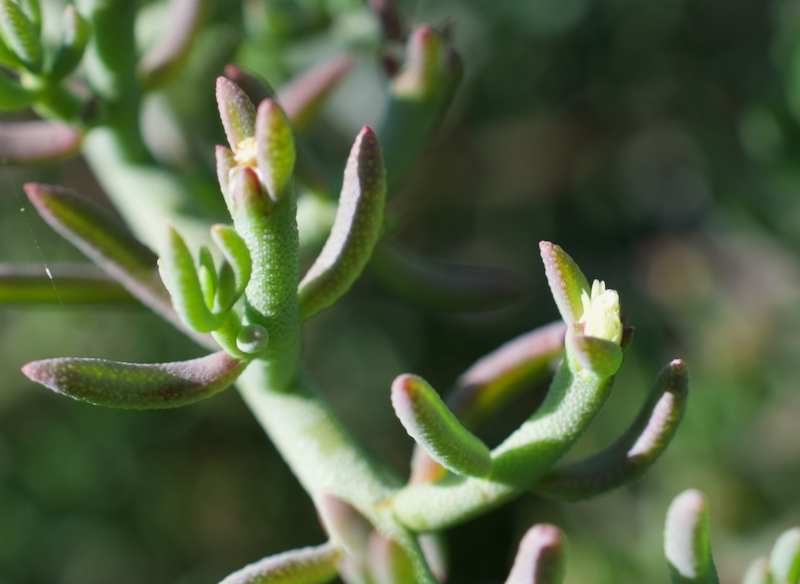
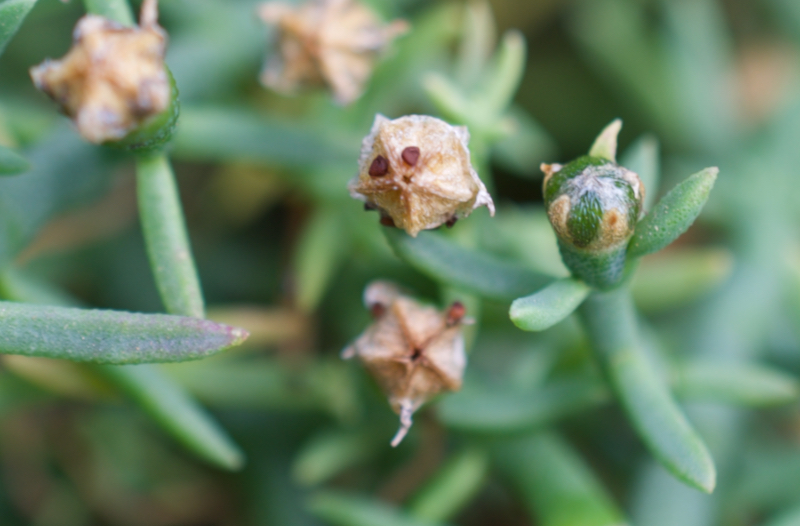

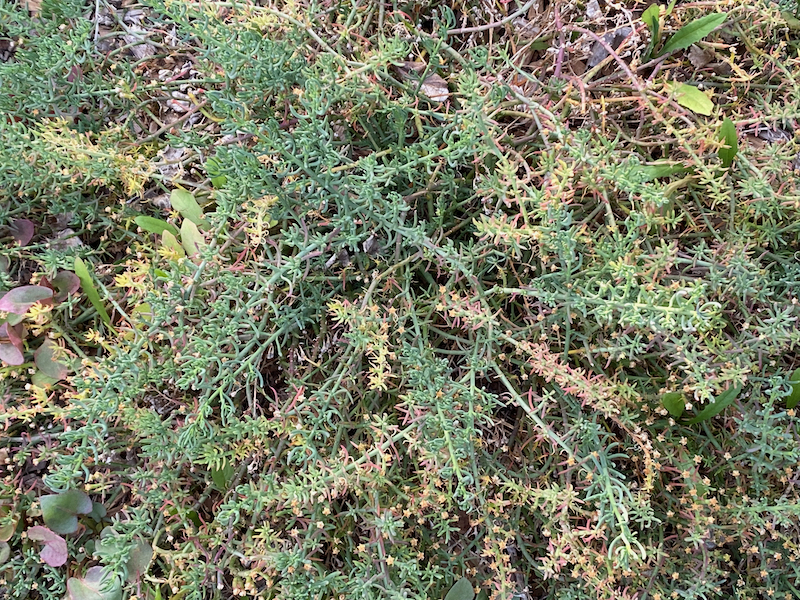
Osteocarpum acropterum, known as Bonefruit or Waterweed, typically producing yellow-red fruit but are seen in Copley fruiting in vivid pinks in July.

Native succulent Sarcostema viminale ssp astrale also known as Caustic Bush, Milk Bush, Caustic Plant, Lye Bush, Snake Plant, Pencil Caustic, Milk Vine, flowering in Copley in June.

Zygophyllum stapfii, a Twinleaf succulent variety sometimes known as Dollar Bush, growing on the edge of Spencer Gulf inlet, Port Augusta.


Notched Twin-leaf (Zygophyllum emarginatum) is a succulent annual seen in the Flinders Ranges after rains in the cooler months.
Continue reading “Notched Twin Leaf”
Native succulent Sarcostema viminale ssp astrale also known as Caustic Bush, Milk Bush, Caustic Plant, Lye Bush, Snake Plant, Pencil Caustic, Milk Vine, here seen at the Lyndhurst Ochre Pits.