
The Euro, or Common Wallaroo, are common throughout the Flinders Ranges. Stockier and smaller than Red Kangaroos, they are adapted to dry, rugged terrain. Often seen in small groups grazing at dawn or dusk.
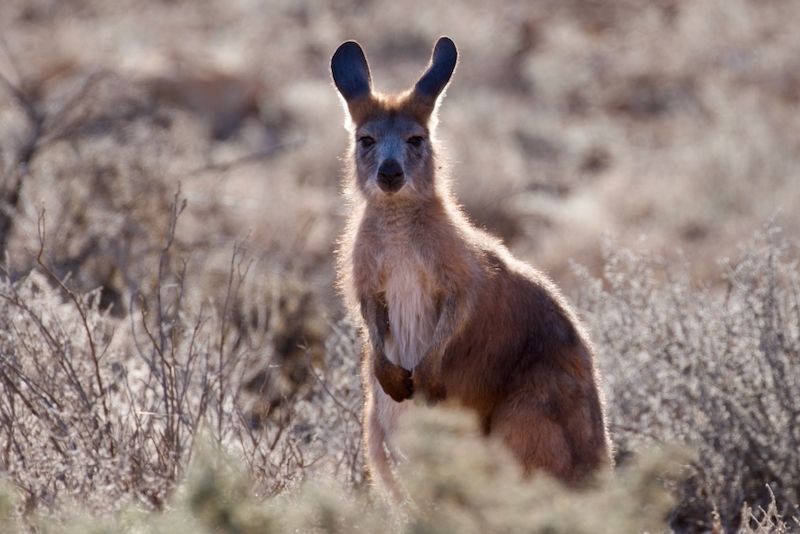
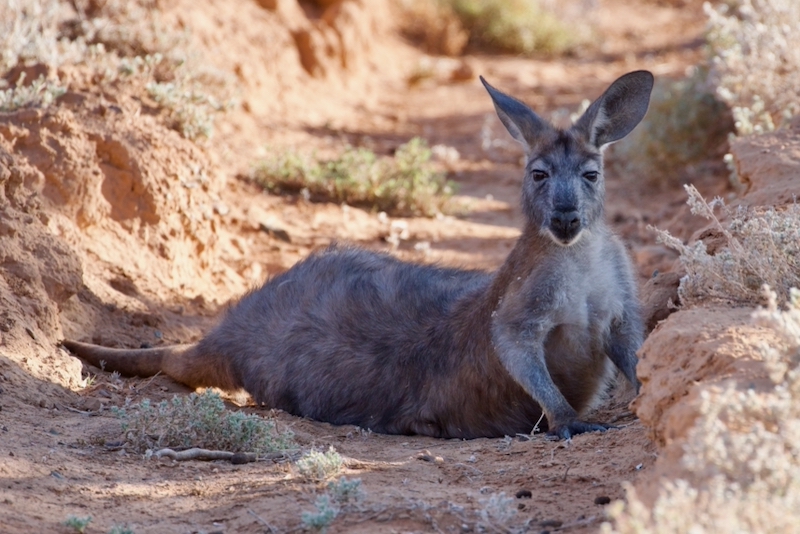
The Euro, or Common Wallaroo, are common throughout the Flinders Ranges. Stockier and smaller than Red Kangaroos, they are adapted to dry, rugged terrain. Often seen in small groups grazing at dawn or dusk.


By the 1990s, Yellow-footed Rock-wallabies (Petrogale xanthopus) in the northern Flinders Ranges were under serious threat from predation, habitat degradation, historical hunting, and genetic isolation. In 1995, the area surrounding Aroona Dam was proclaimed a wildlife sanctuary. The following year, wallabies bred in captivity at Adelaide Zoo were reintroduced to the site. At the same time, major conservation measures were implemented, including fox and rabbit control, goat culling, and revegetation programs. Thanks to continued management and monitoring, the Yellow-footed Rock-wallaby population at Aroona Sanctuary has become self-sustaining and continues to breed successfully in the wild.


The Flinders Ranges Dtella (Gehyra moritzi) is a nocturnal rock dwelling gecko endemic to the Flinders Ranges. It grows up to 70mm.


This Australian Ringneck (Barnardius zonarius) seen in the Flinders Ranges is a hybrid of the Port Lincoln Parrot and Mallee Ringneck. It has the yellow belly and dark head feathers of the Port Lincoln Parrot, and the rich blue-turquoise back and broad red frontal band of the Mallee Ringneck.


Stimson’s Python (Antaresia stimsoni) is a non-venomous constrictor, sometimes called the Inland Children’s Python. It lives in rocky gorges, hillsides and creeks throughout the Flinders Ranges, and also populates the deserts to the north. It eats small mammals and reptiles, and typically grows up to 1.2 metres long.


