
The superbly camouflaged Mallee Military Dragon (Ctenophorus fordi) in the Lyndhurst sand dunes.
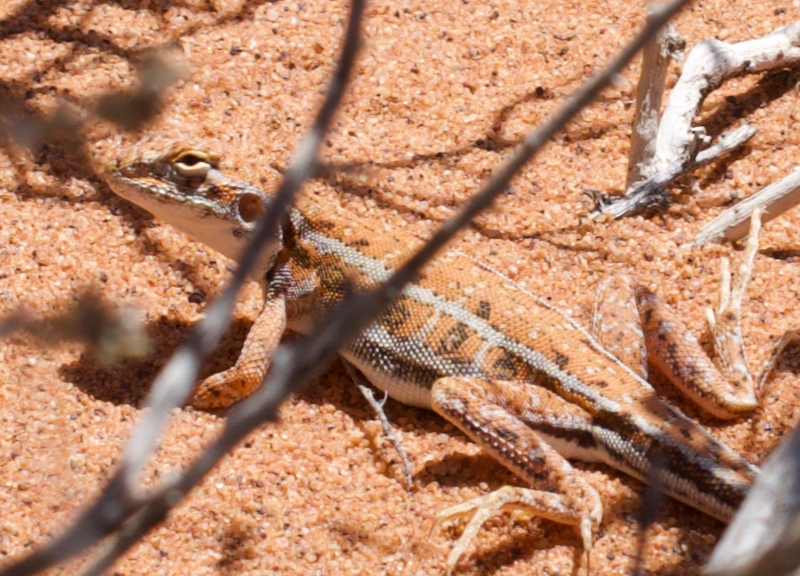
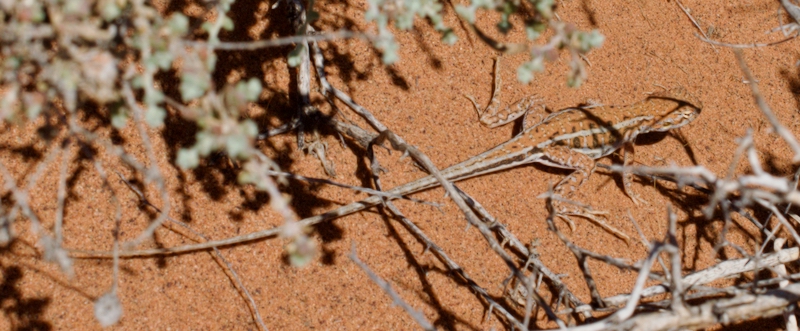
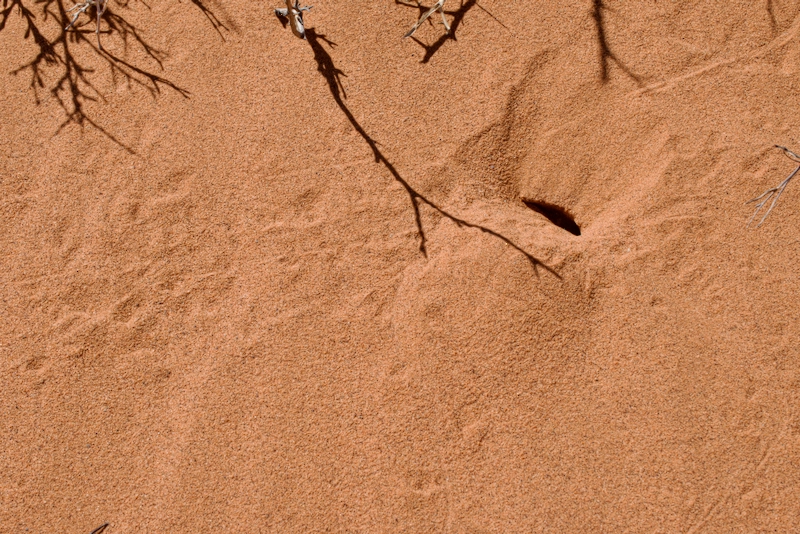
The superbly camouflaged Mallee Military Dragon (Ctenophorus fordi) in the Lyndhurst sand dunes.
Dodonaea viscosa, the Sticky Hop-bush, has winged fruits which are covered with a protective sticky resin. Sap sucking aphids feeding on these fruits are farmed by ants for their ‘honeydew’ secretions.

Chequered Swallowtail butterfly, Papilio demolius, sighted in ephemeral floodplains near Farina in the Far North Flinders Ranges.

Toward the end of the 2-4 week lifespan as an adult butterfly, fading of the wings can happen due to wear and tear, and UV bleaching, as seen in this Chequered Swallowtail feeding on an Eremophila flower in Copley.

Further information about Chequered Swallowtails can be found on the website managed by Butterfly Conservation SA.
The Large-eyed Box-owlet Moth (Grammodes ocellata), also known as the Black Triangle Moth, in Leigh Creek in early spring.

Caterpillars of the Wood White Butterfly (Delias aganippe) seen in various stages of pupation in Leigh Creek in midwinter.


This shell-less terrestrial gastropod mollusc appears to be a yellow sellar slug (Limacus flavus), originating in Europe. Seen in the Flinders Ranges, attended to by isopods in an unknown capacity.

 This albino kangaroo was sighted south of Hawker in May, 2018. In April, 2025 another sighting of an albino kangaroo was made on the road between Blinman and Parachilna. Anecdotal evidence suggests that there may be several in the central Flinders Ranges. Kangaroo hunters over the years have avoided shooting white kangaroos and report several variations in eye and fur colouration.
Also known as a Mulga Snake, this King Brown Snake was relocated from a Copley home.


