
Cheilanthes lasiophylla, the woolly cloak fern, growing in a crevice of the Pinnacles, a pegmatite intrusion formation at Arkaroola.
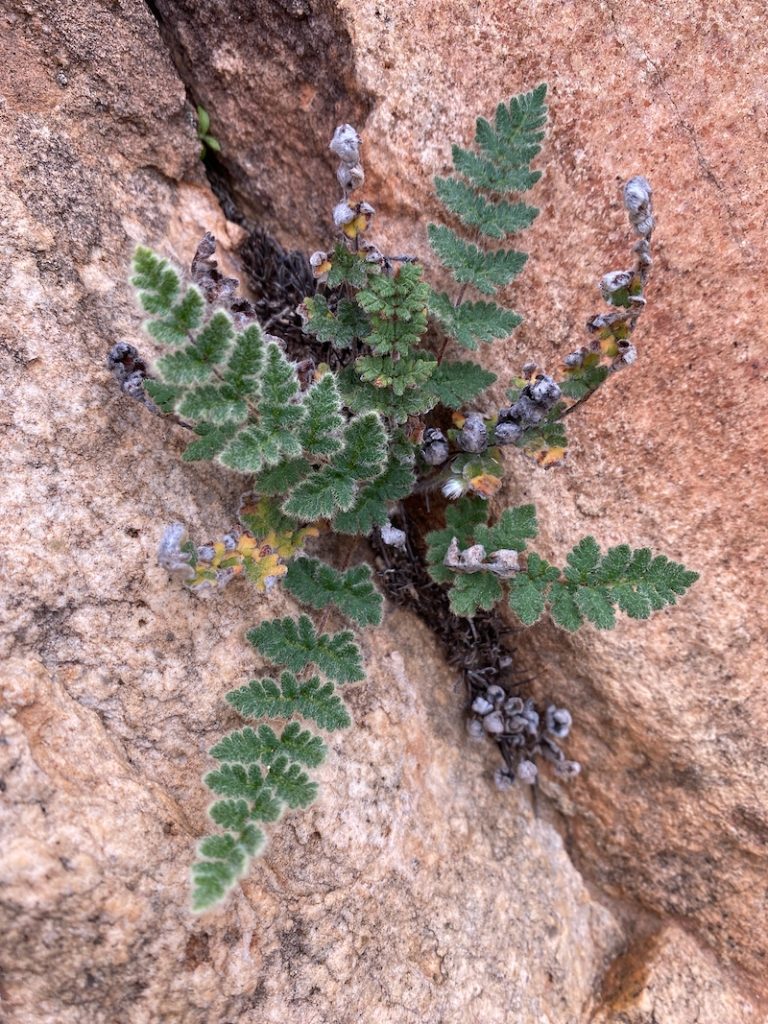
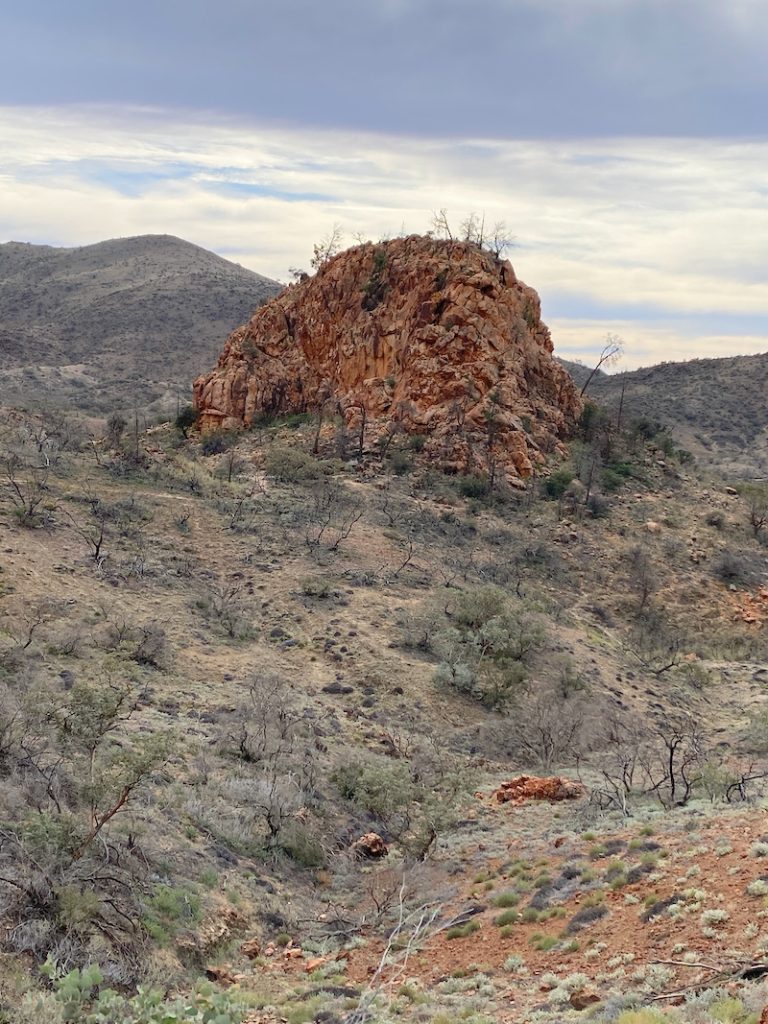
Cheilanthes lasiophylla, the woolly cloak fern, growing in a crevice of the Pinnacles, a pegmatite intrusion formation at Arkaroola.
Rough heliotrope (Heliotropium asperrinum) flowering amongst spinifex on the rocky slopes of Arkaroola in winter.


Hill Button-bush (Leiocarpa semicalva ssp. semicalva) flowering at Arkaroola in winter.


Einadia nutans, the climbing saltbush, fruiting near Mt Gee at Arkaroola in the northern Flinders Ranges in winter.


Solanum petrophilum, the Rock Nightshade, flowering at Arkaroola in winter.

Inland Fanflower (Scaevola humilis) flowering in early winter on the rocky slopes of Arkaroola.


Acacia confluens, the Arkaroola Wattle, is a small shrub with crescent shaped phyllodes which grows at Mt Lyndhurst and Arkaroola. Seen here in the steep stony hills of Arkaroola, north Flinders Ranges.


Dittrichia graveolens, known as stinkwort or stinking fleabane, is native to southern Europe, North Africa, and western Asia, now naturalized in Australia. It is considered and noxious weed and invasive species in some places. It can damage the digestive tracts of grazing animals and contact can cause severe dermatitis in humans. Seen flowering in gullies and creeks in the north Flinders Ranges during autumn.


African Boxthorn (Lycium ferocissimum), introduced from Africa for spikey hedge fences, is considered a noxious weed. With similarities to Goji Berry, the fruit (when ripened to red) is edible. Seen here fruiting in October at Warren Gorge, near Quorn.

The spiny daisy (acanthocladium dockeri) was first discovered by Dr Hermann Beckler (of the Burke /Wills expedition) in 1861 near Menindee (Pamamaroo), NSW. The specimen was sent back to the Royal Society and described and named by Dr Ferdinand Mueller. A further specimen was unable to be located until a discovery in 1910 at Overland Corner (near Kingston-on-Murray). Many years later, the species was pronounced extinct – until, in 1999, a local farmer discovered an outcrop near his farm, not far from Laura. The species is being translocated by environmentalists seeking to recover the plant from its present situation, critically endangered.
