
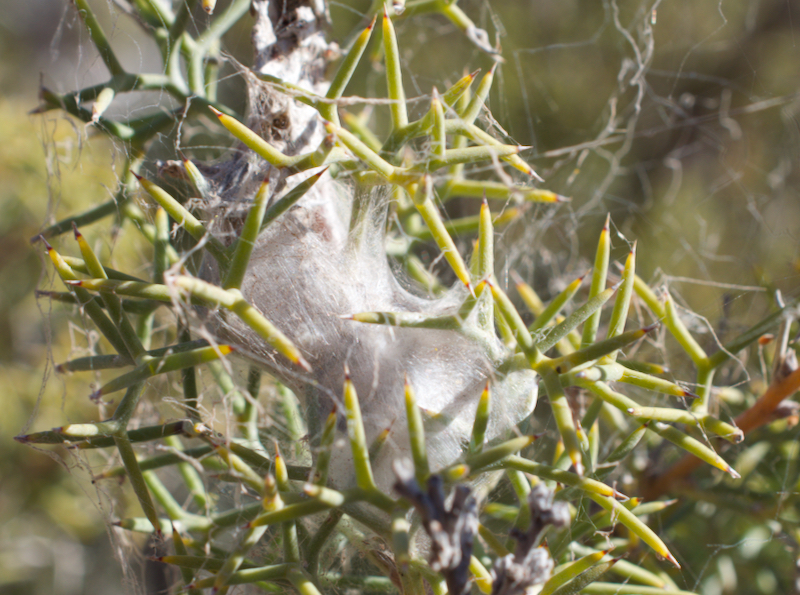
Spider nest in Hakea Ednieana
Senecio magnificus flowering in spring, in Parachilna Gorge, pollinated by bee and Australian Lesser Wanderer butterly.


Acacia pycnantha, the Golden Wattle, flowering in the Pichi Richi Pass south of Quorn in early Spring.


Spiny leaves of young and well-watered Hakea ednieana, also known as Corktree, in Brachina Gorge.

Domino bee (Thyreus lugubris) feeding on Eremophila duttonii at Wilpoorinna, north of the Flinders Ranges.

Green Emubush, Eremophila serrulata, flowering on the rocky slopes of the Acacia Ridge Trail, Arkaroola.

Following winter rains, an uncommon tinge of vivid green may be seen in the damp south side shade of bluebush and saltbush growing in floodways. This moss was observed along the Arkaroola Road in the Northern Flinders Ranges.


Wurmbea australis is endemic to South Australia. Seen here in the arid slopes of Nilpena in the Flinders Ranges in winter.


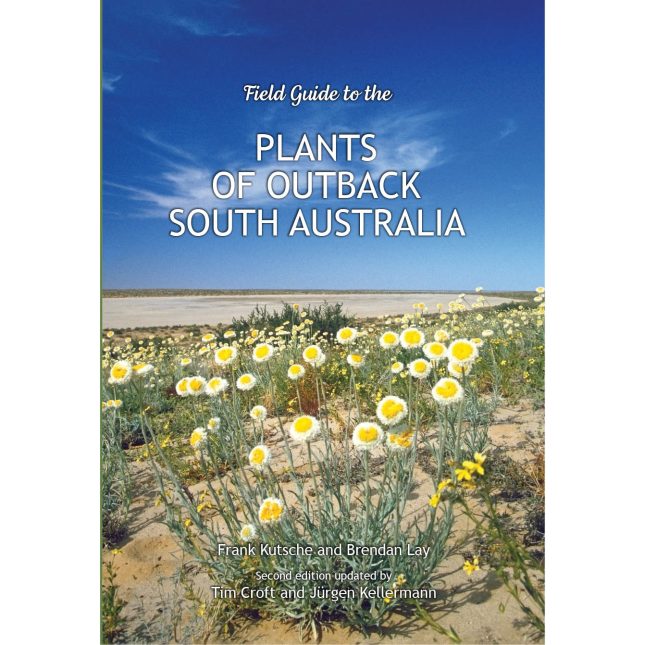
After nearly 15 years out of print, the second, fully revised edition of Plants of Outback South Australia has been published. A collaboration between the State Herbarium of South Australia (Botanic Gardens and State Herbarium) and the Pastoral Unit (Department for Environment and Water), this is a key field guide to South Australia’s arid lands.
The Kurrajong Bag Moth, or Kurrajong Leaf-tier Moth larvae creates a shelter by binding leaves with silken thread. This moth is associated with Brachychitons which are typically found in Queensland, but also seen as far south as Victoria, and here in the northern Flinders Ranges. For more information, check out One Minute Bugs by Dennis Crawford.

