
Although the Pittosporum augustifolium is known as the Native Apricot, it is poisonous to humans. Commonly seen on clay, stony and sandy soils and often around creeks and gullies.


Although the Pittosporum augustifolium is known as the Native Apricot, it is poisonous to humans. Commonly seen on clay, stony and sandy soils and often around creeks and gullies.
Cassinia laevis, the native Curry Bush in flower, pollinated by a European bee at Ikara-Wilpena Pound in mid summer.

Casuarina pauper is also known as Black Oak, Scrub Sheoak, Bulloak, Belah, and Alku. Casuarinas belong to an ancient family of plants with foliage consisting of segmented waxy photosynthetic branchlets commonly referred to as needles. Tiny leaves form a crown, or teeth-like ring, at the branchlet joints. New growth was observed in mid-summer at Ikara-Wilpena Pound.


Annual forb Proliferous Pink (Petrorhagia nanteuilii) flowering in Warren Gorge in the Flinders Ranges.

Considered an aggressive weed in much of Australia, Pimpernel (Lysimachia arvensis) is short lived low growing herbaceous plant which can survive in many habitats including the arid lands of the Flinders Ranges.

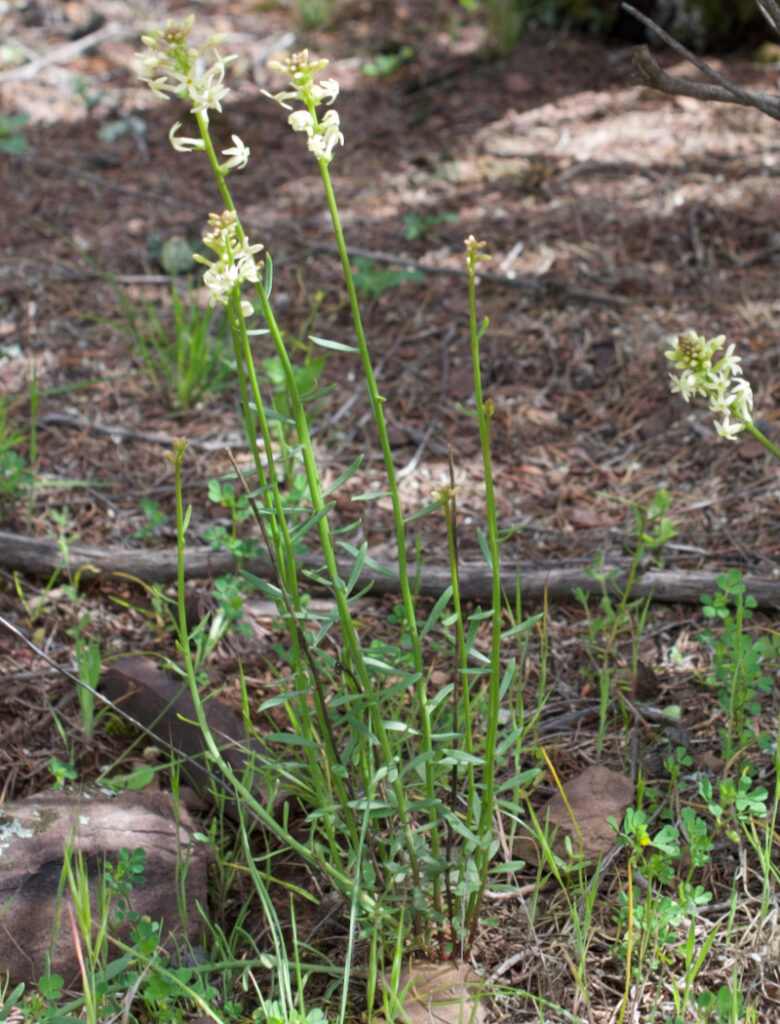
Stackhousia monogyna, or Creamy Stackhousia is a perennial growing to 50cm high. Flowering in Warren Gorge among Callitris trees.

Common Catchfly (Silene gallica) originated in southern Europe and is travelled to Australia in crop seed in the 19th century. Growing to 50cm, it is seen here flowering near a stream in the Flinders Ranges in spring.


Lomandra multiflora, the Many-flowered Mat-grass, is a tufted perennial commonly known as Iron Grass, flowering in Warren Gorge in Spring.

