
Spiked Mallow (Malvastrum americanum) is an introduced perennial forb seen in clay soils throughout the Flinders Ranges. Large stands such as this one in Copley occur after rains.
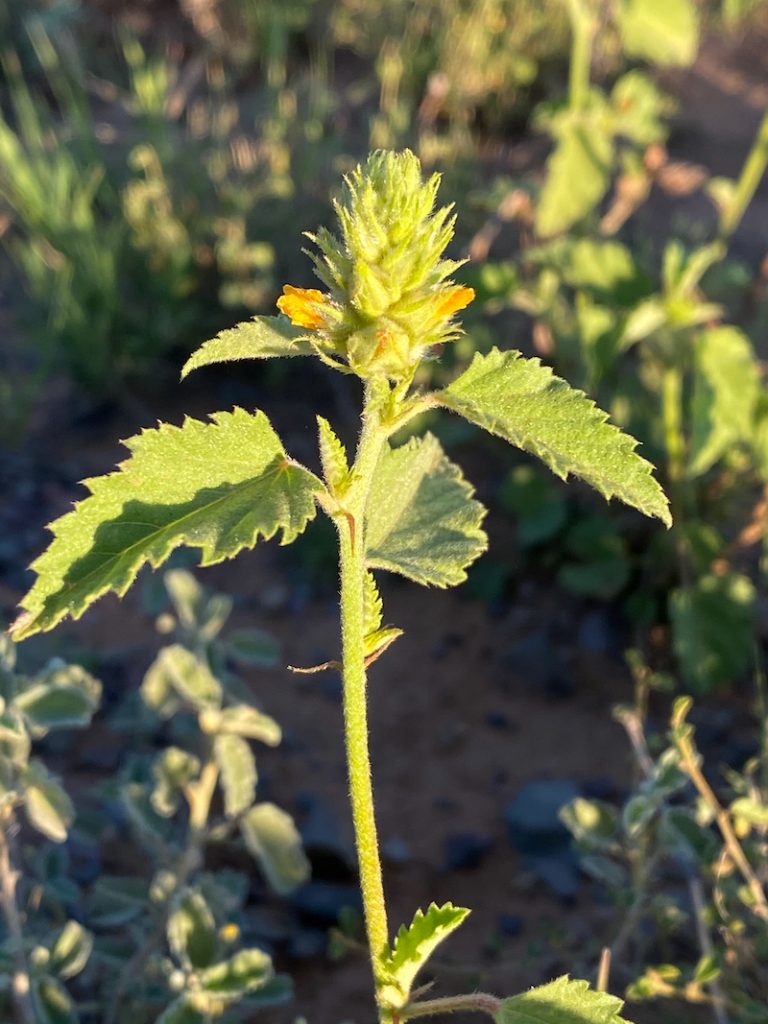
Spiked Mallow (Malvastrum americanum) is an introduced perennial forb seen in clay soils throughout the Flinders Ranges. Large stands such as this one in Copley occur after rains.
Statice (Limonium lobatum, Winged Sea Lavender) is an introduced species of growing concern, flowering here near Hawker in November.

The edible Salty Ice Plant, Mesembryanthemum crystallinum, flowering in Beltana in Spring.

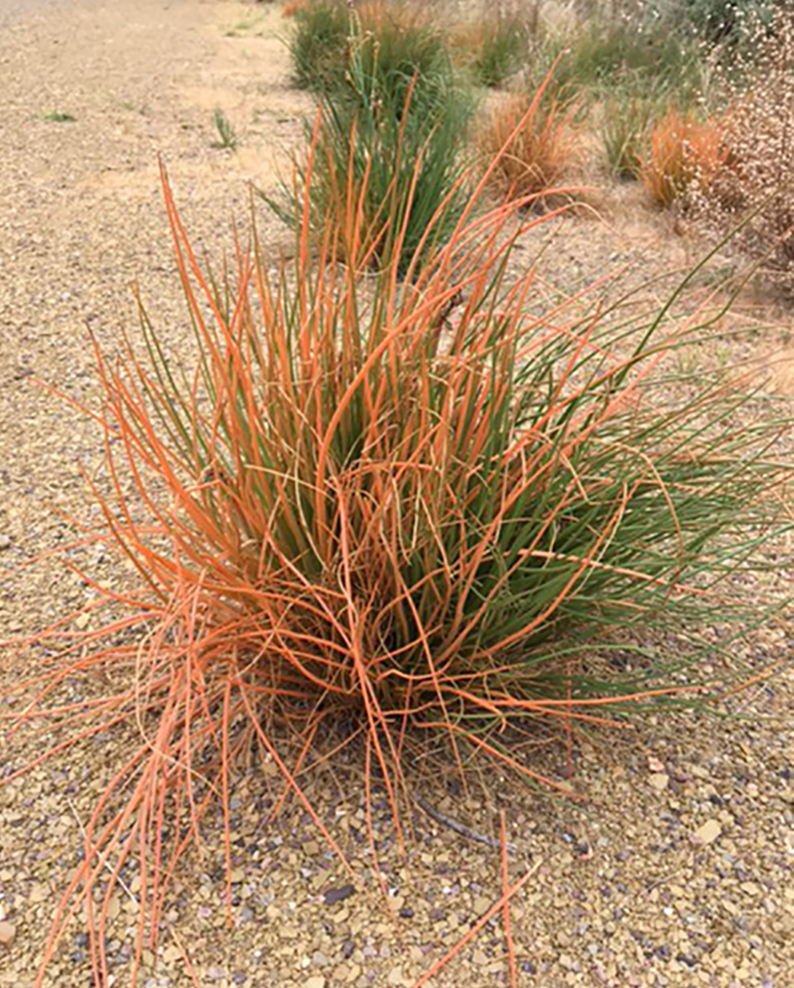
Asphodelus fistulosus, Onion Weed, seen throughout the Flinders Ranges, dies back into vivid orange in Spring.
Devil’s Claw (Ibicella Lutea) seedpod seen in Warioota Creek, Northern Flinders Ranges.


A thriving Senecio magnificus, also known as Showy Groundsel or Perennial Yellow-top, extending into the branches of an Acacia Victoriae.


Fruiting Three-spined Poverty Bush, Scleroleana tricupis, thriving in the salty damp banks of Copley Retention Dam.

Some Chenopods in the Flinders Ranges take on a winter blush of pinks, reds and purples.


The Wanderer, or Monarch, Butterfly introduced to Copley in the Northern Flinders Ranges by a local lepidopterist landing on the stunning Sturt’s Desert Pea in June.

The tiny male Mistletoe Bird has a distinct high pitched call and scarlet breast plumage similar in colour to the mistletoe flower. Seen here feasting on mistletoe fruits in June in the Northern Flinders Ranges, he will then excrete the sticky seeds onto branches of nearby native plants, enabling the semi parasitic mistletoe to germinate and embed into the branches of host plants.

