
The edible Salty Ice Plant, Mesembryanthemum crystallinum, has distinct glistening glands seen here on the banks of a flooded creek bed near Marree.

The edible Salty Ice Plant, Mesembryanthemum crystallinum, has distinct glistening glands seen here on the banks of a flooded creek bed near Marree.
Heliotropium curassavicum, Salt Heliotrope, is native to the Americas and growing prolifically along the damp banks of Copley Retention Dam in the Northern Flinders Ranges.

Harlequin Mistletoe (Lysiana exocarpi) is a stem parasite seen throughout the Flinders Ranges. The sticky seeds are deposited on branches by the Mistletoe Bird and other small birds, where they germinate and attach to the sap wood of the host plant, in this case Acacia Victoriae.

Acacia victoriae is prolific in the Flinders Ranges, seeding profusely following summer. The seeds can be ground into an edible flour.


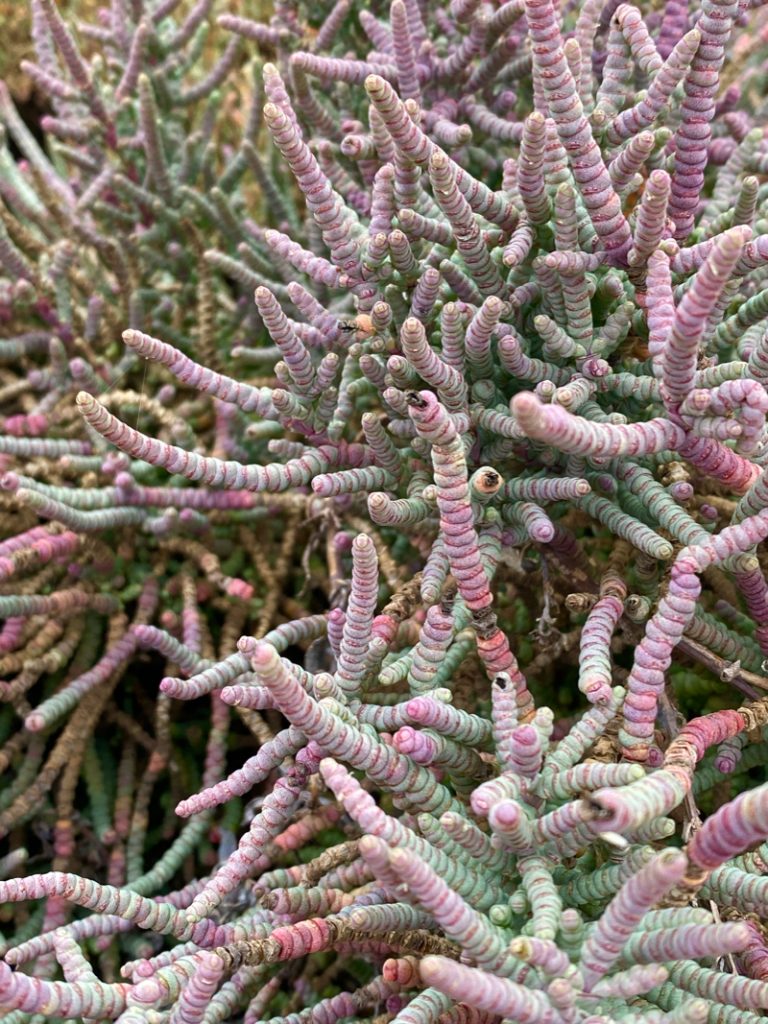
Various forbs in the Chenopodiaceae family including Maireana and its more prickly cousin Scleroleana, growing radiantly in the clay soaks of the Copley Retention Dam inlet.


Athel Pine, Tamarix aphylla, is an introduced species from Africa. A highly successful coloniser in saline waterways, Athel Pine is further proliferating with every wet season along the inlet and surrounding flood plains of Copley Retention Dam, growing into thickets along the shoreline. Seen flowering in May.


Abutilon halophilum, the Desert Chinese-lantern flowering on the rocky surrounds of Copley Retention Dam, May.


Wild Tobacco flowering on the banks of Copley Retention Dam, May.
