
Loose-flowered Rattlepod (Crotalaria eremaea) growing to about 1m in the sand dunes of Lyndhurst and flowering in the early spring.

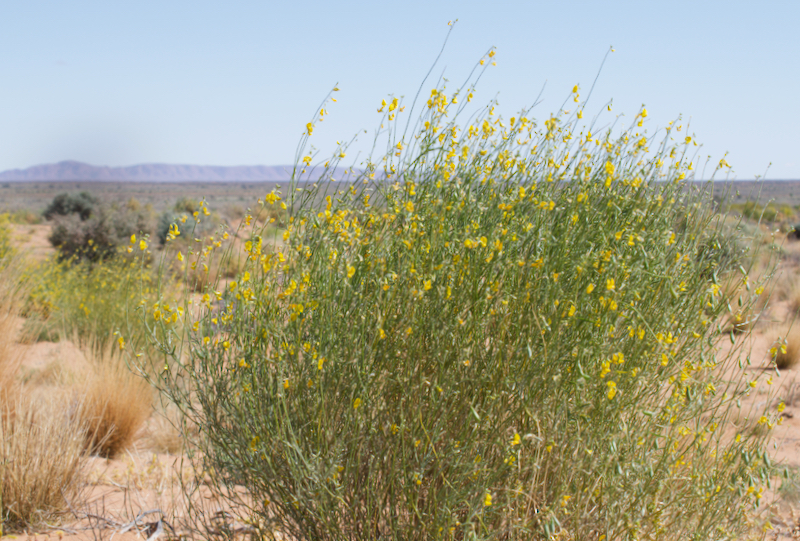
Loose-flowered Rattlepod (Crotalaria eremaea) growing to about 1m in the sand dunes of Lyndhurst and flowering in the early spring.
Orange Darling Pea (Swainsona stipularis) flowering in the Flinders Ranges in early spring.

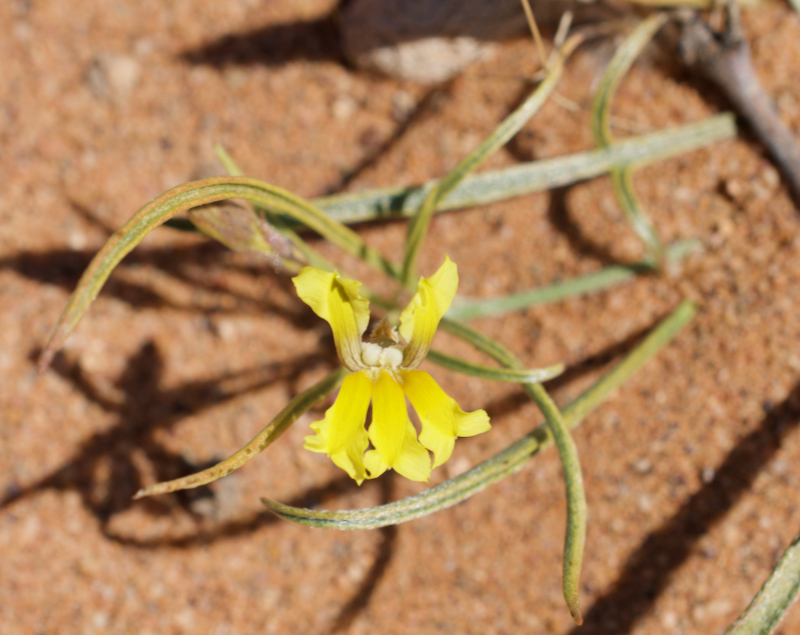
Mallee Goodenia (Goodenia fascicularis) flowering in the sand dunes at Lyndhurst, early spring.
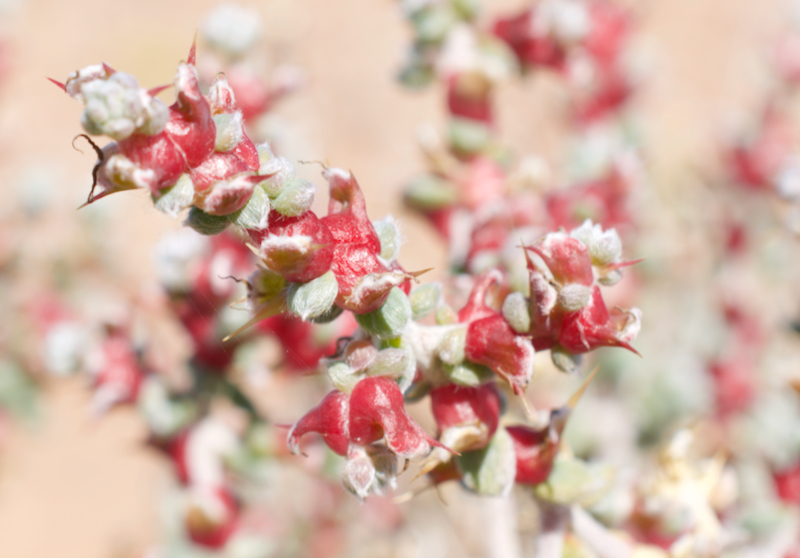
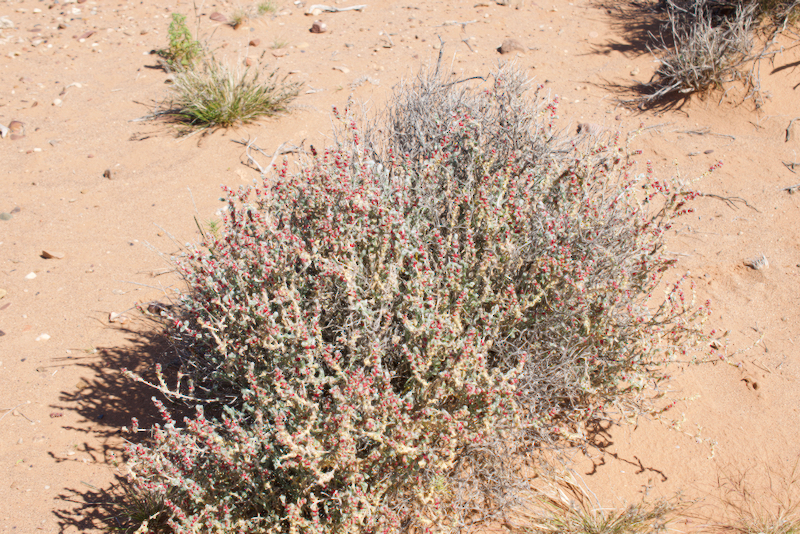
Sclerolaena tatei fruiting in sand near Lyndhurst in early spring.


This 80m long creek bank in Parachilna Gorge exposes colourful sedimentary laminae (1-25mm wide) of the Bunyeroo Formation.
As outlined in The Legacy of Time: The Story of the Flinders Ranges by the Royal Geographical Society of South Australia, the layers are likely to have been formed by marine deposition of fine-grained silts following the end of an ice age (650ma). The vertical bedding exposes micro-faults and folding that occurred during the formation of the Blinman dome.
The site is easily accessed on the northern bank of the creek at the turn-off to Glass Gorge Rd from Parachilna Gorge Rd.

Mt Neill Granite (1580ma) sand with biotite, blue quartz, red feldspar, Arkaroola:

Quartz sand from Paralana Hot Springs, northern Arkaroola:

Small White Butterfly (Pieris rapae) also known Cabbage White Butterfly, feeding in August.

Inland Painted Grasshoppers, also known as Blistered Pyrgomorphs or Blistered Grasshoppers (Monistria pustulifera) seen near Copley in August.

The Ajax Limestone in the Northern Flinders Ranges includes a significant array of Lower Cambrian Archaeocyath fossils, replaced by quartz, exposed in ground-level limestones.
This fossil site on a low gibber-covered rise to the north of Beltana represents the most species-diverse archaeocyath locality worldwide, with a count of 82 species. One of seven sites in the Flinders Ranges currently under consideration for UNESCO World Heritage status, it provides a significant record of an extinct group of marine sponges (Phylum Porifera) that lived around 525 million years ago and played a dominant role in constructing the first reefs on Earth.


Flower variation of Eremophila alternifolia, commonly known as Scented Emu Bush or Narrow-leaved Fuchsia-bush.
