

Pound quartzite range: Nepabunna
High altitude Cirrocumulus clouds are formed of supercooled water droplets and ice crystals which can diffract light, such as in this instance of lunar iridescence.

While often little more than shallow pools or soaks, springs are essential for life in the arid Flinders Ranges. When combined with a flushing rain, creeks throughout the Flinders Ranges can house pristine waterholes supporting a wide range of wildlife, including frogs.


Crinia flindersensis (Northern Flinders Ranges Froglet, Flinders Springs Froglet) is a vulnerable species seen here in spring waters. With long toes and fingers, markings are typically bars and stripes across the body and limbs with some variations as seen below.


Eremophila glabra, commonly known as Tar Bush, at the end of flowering in the Northern Flinders Ranges.


Also known as the Clustered Sea-heath or Bristly Sea-heath, Frankenia serpyllifolia flowering in the sandy clays near Lyndhurst.


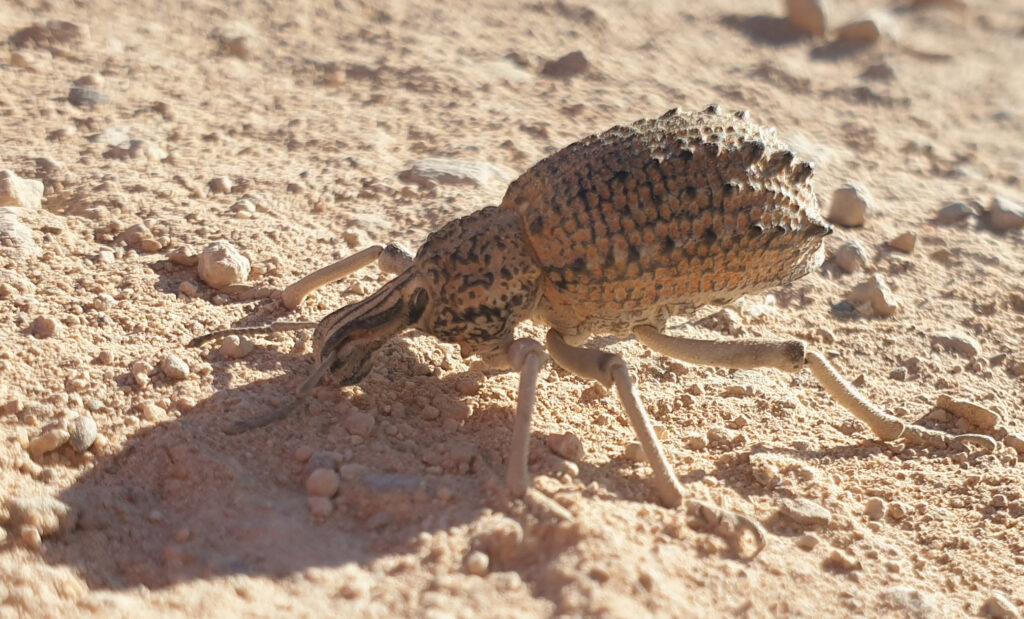
5cm weevil (Leptopius gravis), also known as a Wattle Pig or Elephant Weevil, Beltana.
The Golden Orb-weaving Spider (Nephila edulis) produces a high tensile, highly elastic golden silk strong enough to ensnare small bats and birds. Not only is the silk being used traditionally as fishing line in New Guinea and Vanuatu, Australian Geographic tells us that “there are high hopes for bulletproof vests, as well as violin strings, tennis rackets, nets, textiles and surgical products”.
