
Blistered Grasshoppers, also known as Inland Painted Grasshoppers or Blistered Pyrgomorphs (Monistria pustulifera) seen near Beltana in March.

Blistered Grasshoppers, also known as Inland Painted Grasshoppers or Blistered Pyrgomorphs (Monistria pustulifera) seen near Beltana in March.
Castor oil plant (Ricinus communis) is an introduced species historically cultivated for its oil which is used in food, medicine, industry and, some would argue, as a way of torturing children. Escaping from gardens, it can be seen in some waterways in the Flinders Ranges. Following floods, this stand south of Parachilna is growing up to 4 metres tall.
While flowers lack petals, female flowers have showy red stigmas and male flowers have numerous creamy yellow stamens. Flowering here in March.


Newly hatched Stink Bug nymphs with their eggs, at Mt Lyndhurst. A gallery of the many Stink Bugs of South Australia can be seen at iNaturalist.
The Convolvulus Hawk Moth larvae pupate underground. The distinct spiralled form is due to the proboscis of the pupa not fusing to the body.

Praying Mantis nymphs under observation by junior field naturalists at Mt Lyndhurst. These day old nymphs look like adult mantids but have no wings or reproductive organs. The egg sac, or ootheca, is 3cm long and the nymphs are approximately 1cm. If the nymphs are not separated soon, they may start cannibalising each other in their second instar.
About 10cm long, this is the caterpillar of an Owlet Moth (family Erebidae). It is feeding on a Broughton Willow in early March. A number of different erebid genera feed on Acacia in the Flinders Ranges, but few have been reared in order to associate the moth species involved. The white eggs on the body behind the head are the eggs of parasites.


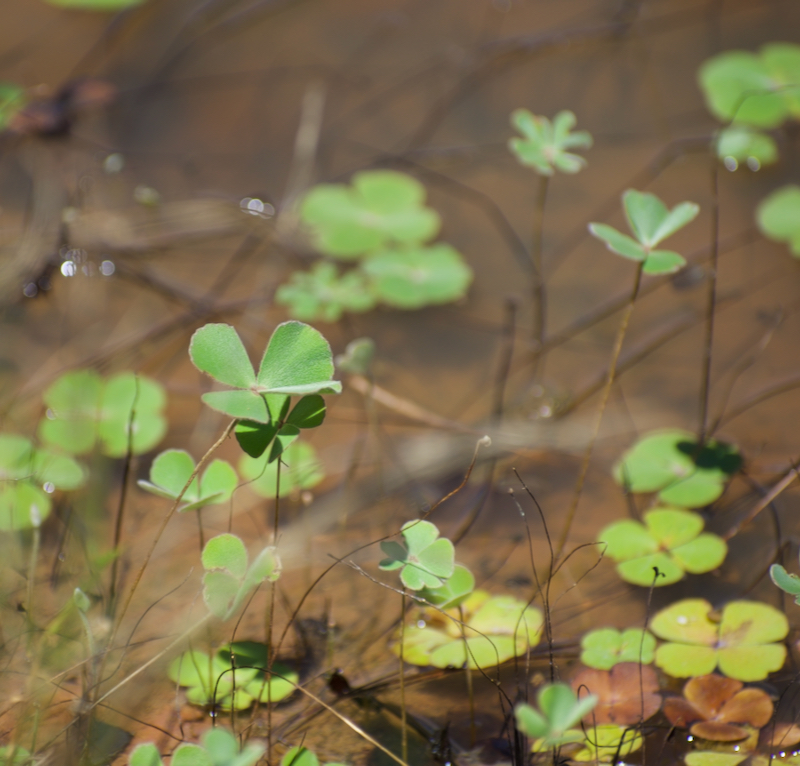
Nardoo, Marsilea drummondii, is a perennial fern with underground stems or rhizomes. It shrivels up during dry periods and withstands wet periods with leaves floating on the surface of the water. Found in floodplains and creekbeds, Nardoo is a known bush tucker. Preparation requires spore cases to be roasted, cases to be removed, with the remaining spores ground into flour.

A tiny female Crimson Chat with distinctive red uppertail coverts watches over her chicks nested in a nearby cotton bush (Maireana), in the sandy pastoral plains south of Marree.


