
At 10.2 kilometres in from the turnoff from the Outback Hwy into Parachilna Gorge, the geological boundary between Precambrian period and Cambrian period sediments can be sighted.


At 10.2 kilometres in from the turnoff from the Outback Hwy into Parachilna Gorge, the geological boundary between Precambrian period and Cambrian period sediments can be sighted.
On the northern fringes of the Flinders Ranges, White Cliff Hill is formed out of gypcrete layers over the older precambrian dolomitic shales and magnesite of the Skillogalee formation.
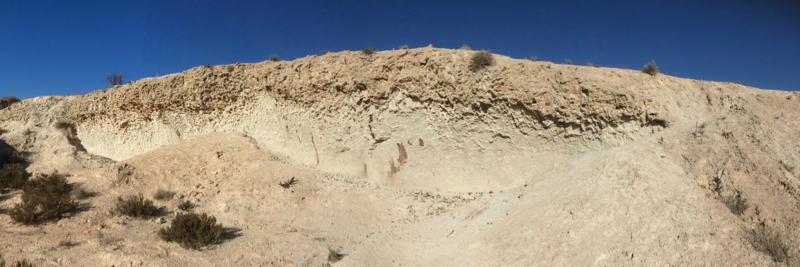

Coursley crystalline gypsum in the Gypcrete formation.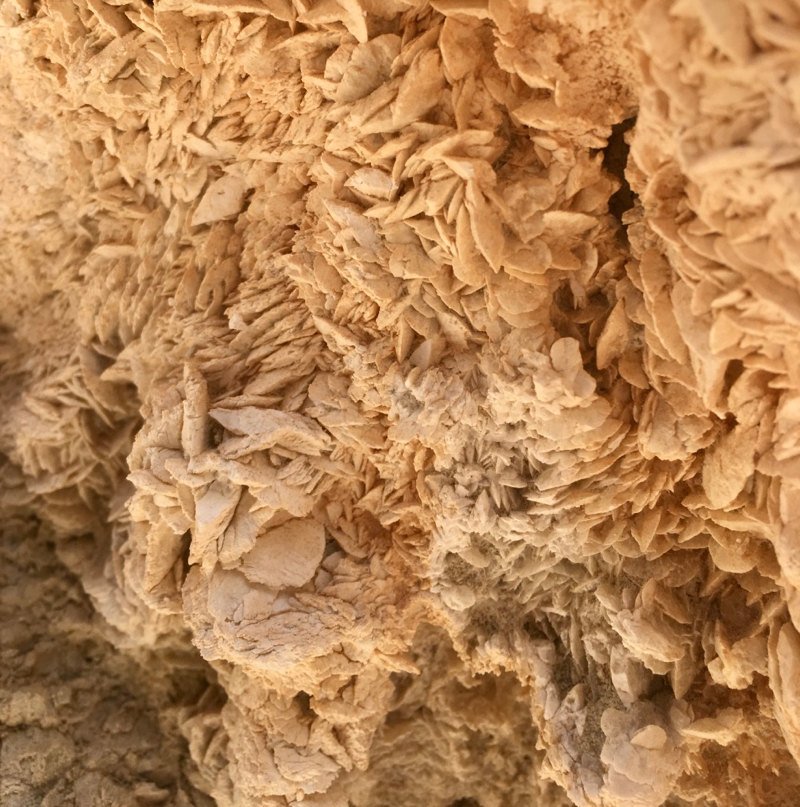
Outcropping sheets of gypsum. Continue reading “Gypcrete formation: White Cliff Hill”
Ripple rock formations can be seen throughout the Flinders Ranges. This sandstone deposit near Melrose was formed by wave action in the waters of the Adelaide Geosyncline 650 million years ago.

The ripple sandstone layer was preserved under a subsequent layer of finer sediments deposited in calmer waters, suggesting a rise in sea level, resulting in the siltstone layers (to the left of the image below). This formation was upended 500 million years ago when the Adelaide Geosyncline folded into a mountain chain. Continue reading “Ripple rocks”
Malachite pseudomorph after azurite crystals.

Goethite replacement of pyrite crystals.
 Continue reading “Goethite pseudomorph after pyrite: Copley”
Dolomite and limestone of the Balcanoona formation with silicified red chert bands and veins of quartz resulting from hydrothermal vents.
 Continue reading “Balcanoona Formation: Leigh Creek Station”
Quartz outcropping amongst colourful siltstones and claystones in the Lyndhurst area.


Callitris glaucophylla, the Native Pine is seen thriving in a dense monoculture in the purple shales of the Bunyeroo Formation at Warraweena.


In view from Old Warraweena, ascending geological formations from Bunyeroo purple shale in the foreground, slumping dolomitic Wonoka Formation hills in the midground and hard weathering Pound Quartzite in the background.
