
This page has some great links to identification resources for various insects including moths, jumping spiders, nematodes and flies.
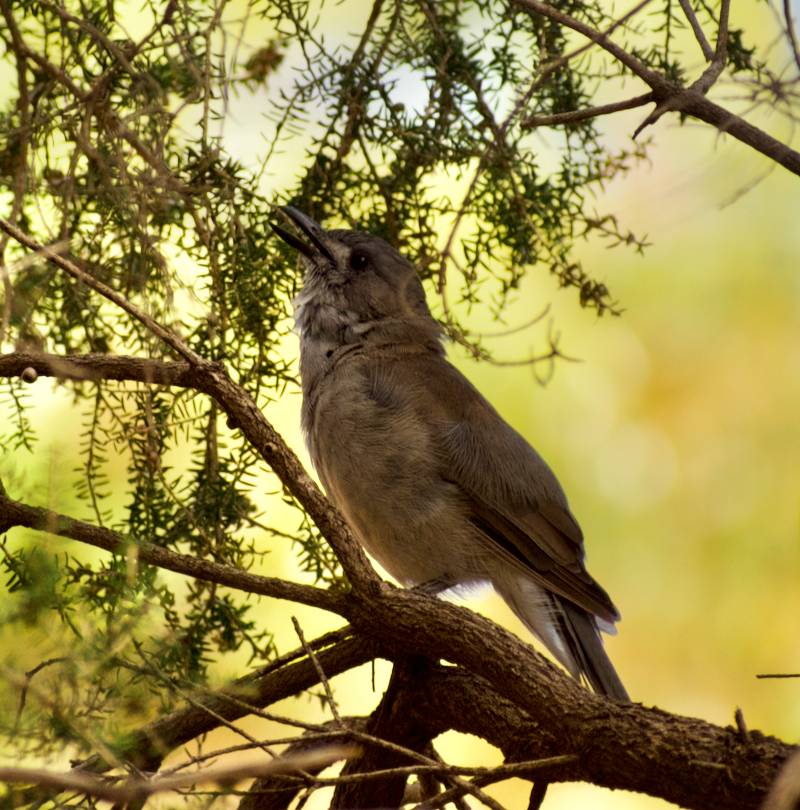
Grey Shrike-thrush
The hills are alive!
The Flinders Ranges have long been recognised for a striking range of colour from ochre and iron oxide to dusty violets and ghostly purples. Following summer rains, a vibrant flush of green has temporarily transformed the look of the landscape.


Desert Lily
Also known as Darling Lily, Andamooka Lily and Flaccid Lily, Crinum flaccidum is a native perennial lily growing from a bulb. Commonly growing in alluvial soils, flood plains and in sand surrounding salt lakes, this spread of Desert Lilies was seen near Stirling North in the Flinders Ranges in Feburary after heavy rains.
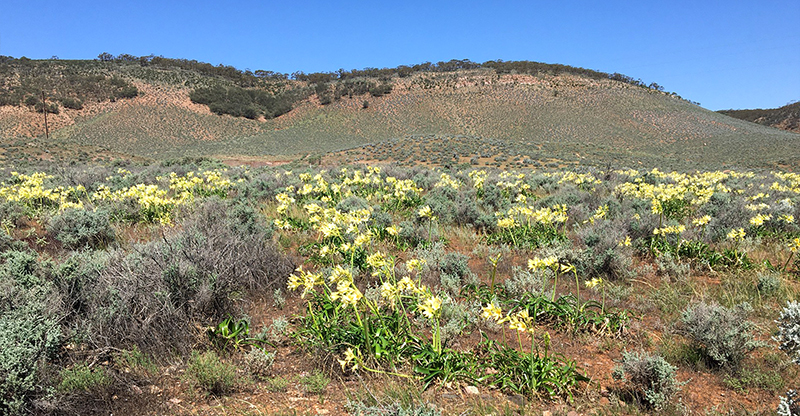
Further Desert Lilies were seen on the same day on the rocky slopes of Pichi Richi Pass, south of Quorn in the Flinders Ranges.

Vine Hawk-moth life cycle
Vine Hawk Moth (Hippotion celerio) observed by the students of Leigh Creek Area School from caterpillar, through pupation, to stunning adult moth.


Wanderer Butterfly: Copley
The Wanderer, or Monarch, Butterfly introduced to Copley in the Northern Flinders Ranges by a local enthusiast. Both caterpillar and adult feed on a variety of cultivated Milkweed hosts plants. Wingspan 100mm.


Vine Hawk Moth feeding on Milkweed
Vine Hawk Moth seen feeding on the nectar of cultivated Milkweed in Copley. Wingspan 72-80mm. Distinctive red hind wings are exposed when in flight.


White-lined Hawk Moth: Copley
White-lined Hawk Moth, common in arid and semi-arid inland areas such as the Flinders Ranges. Wingspan 50-65mm.

Broughton Willow


Saturated ochre: Lyndhurst

